Silent Figure: Lighthouse Legend – Iceland
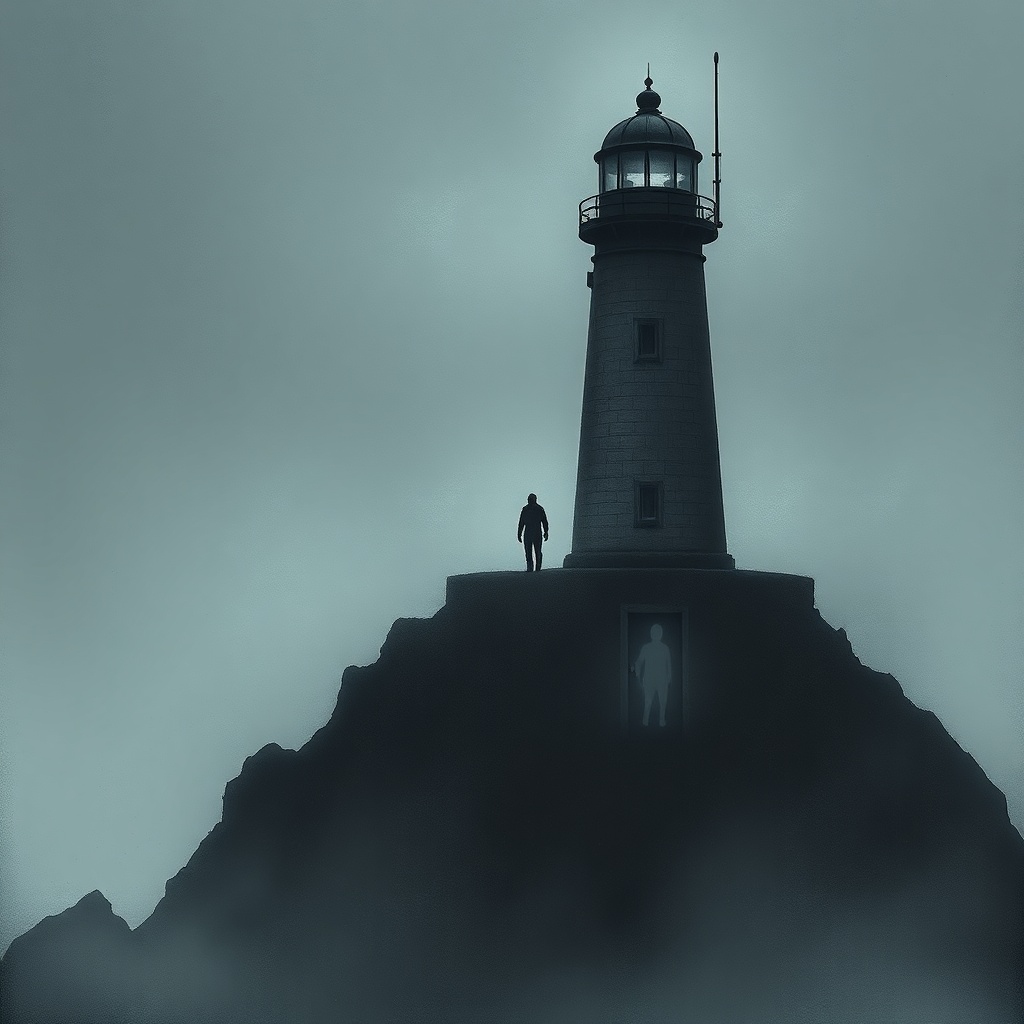
Some places don’t feel haunted until you try to leave. Iceland has a handful of those, but the lighthouse legend people whisper about isn’t the dramatic kind with chains and screaming. It’s worse. It’s quiet. It’s polite in the way a locked door is polite. It’s the story of the silent figure that blocks the way.
The version I first heard was in the capital, told the way Reykjavik stories get told, as if they’re embarrassed to be spooky. A friend of a friend worked maintenance runs along the coast, checking weathered structures the road authorities don’t want to talk about because tourists love them and storms hate them. The story clung to a specific kind of place, not one famous lighthouse with a gift shop, but the smaller ones, the older ones, the ones that sit on black rock like a chess piece left out in the rain. The legend turns up in local retellings around the late twentieth century, when more people had cars, more people had cameras, and more people started treating remote sites like weekend dares. It isn’t ancient saga material. It’s modern folklore, born from isolation, weather, and the kind of architecture built to stand alone.
People usually describe it the same way. You enter an abandoned lighthouse. Sometimes it’s technically “disused,” sometimes it’s privately kept but unlocked because Iceland has that stubborn trust in strangers. Inside, the air is colder than it should be, and you realize the wind has a voice when it funnels up a spiral stairwell. The higher you go, the more you feel watched, not like eyes, more like attention. Then, when you decide you’ve had enough, you turn back and find someone standing on the stairs below you, or in the doorway, or in the narrow passage where there’s no room to slip past.
They never speak. They don’t threaten. They don’t grab. They simply occupy the only way out.
Belief varies. Some say it’s a drowned keeper. Some say it’s a sailor who mistook the beam for land and came in too close. Others swear it’s not a ghost at all, but a “huldufólk” thing, the hidden people, irritated that you climbed into a tower that wasn’t meant for you. The skeptical interpretation is always the same too, and it’s said with a shrug: someone is playing a prank. But the stories don’t end like pranks.
The usual ending goes like this. The trapped person tries politeness first, because we all do.
“Excuse me,” they say, and the figure doesn’t move.
They try bravado.
“Are you messing with me?” Nothing.
They try to squeeze past and discover the space is wrong. The figure seems to take up more room than a person should. Not wider, exactly. More final. Like trying to walk through a closed gate by pretending it’s open.
And then comes the part every retelling repeats in a lower voice. You look away for a second, because your eyes water from the cold, or you blink, or you glance up the stairs to reassure yourself you’re still oriented. When you look back, the figure is closer. Not by steps. By presence. The distance is shorter in a way that doesn’t match the geometry of the place.
If you’re lucky, someone finds you outside at dawn, barefoot on the rocks or sitting in the grass with your hands shaking, unable to explain how you got out. If you’re not lucky, the story ends with your car still parked by the path days later, salt dried on the windows, as if the sea had been breathing on it.
I didn’t go looking for it because I believed. I went because I’m the kind of person who hears “don’t” and thinks, fine, but what if I’m careful? Which is usually how adults die in folktales and how I, personally, learned to stop fixing my own plumbing.
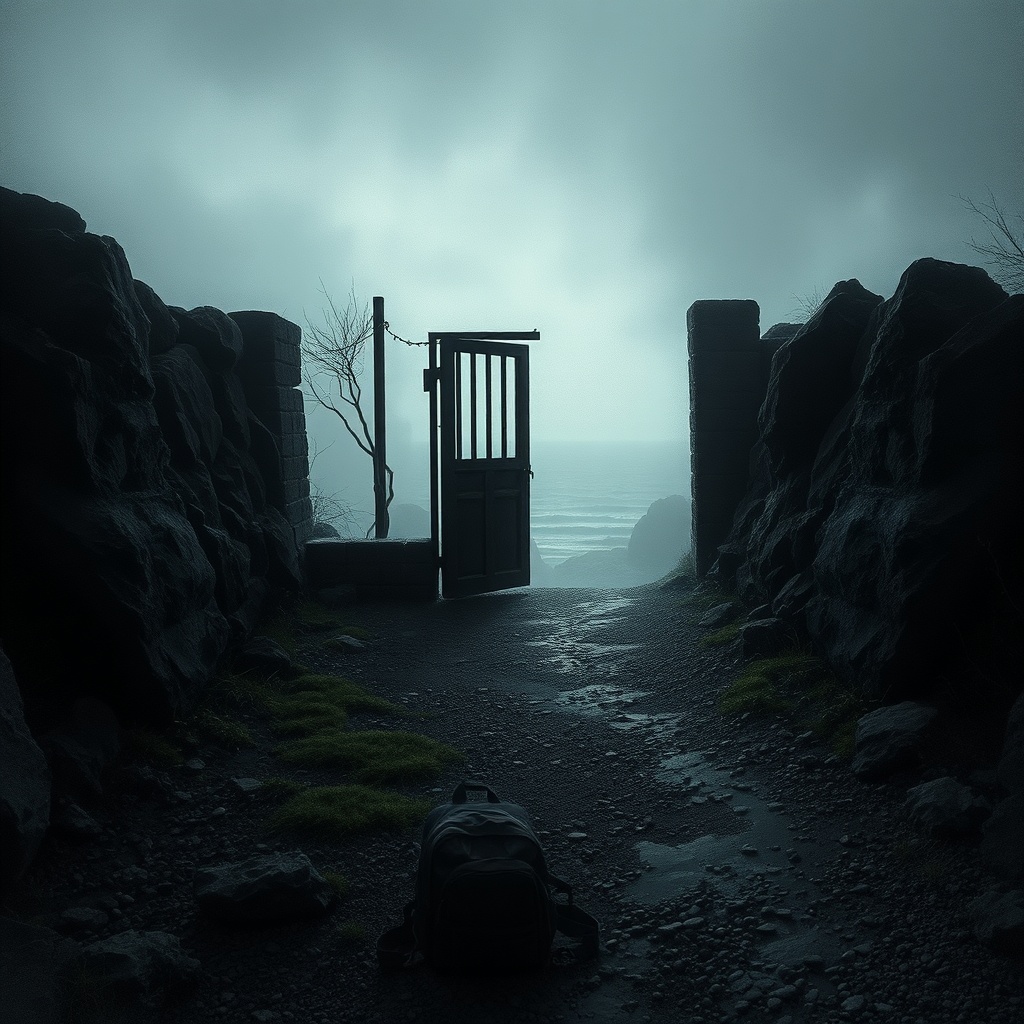
It was late afternoon when I drove out, the kind of Icelandic light that feels like it’s already remembering itself. The road narrowed. The sea kept appearing between humps of lava rock, gray and patient. I parked where the track gave up, and the wind took over, pushing at my jacket like it wanted something.
The lighthouse wasn’t tall. That surprised me. In my head, lighthouses are romantic giants. This one was a blunt white column with peeling paint, its metal door scabbed with rust. No postcards. No tour bus. Just the tower and a low auxiliary building hunched beside it, both crouched against the weather.
I told myself the sensible thing. I’m going in for a look. Ten minutes. I’m not doing the stupid thing, which is staying until the light changes.
The door didn’t creak when I pulled it open. It sighed. Inside, the air smelled like cold stone and old damp, not rot, more like a basement that has accepted its fate. A spiral staircase rose tight along the wall, iron steps worn in the center. I put my hand on the rail and felt grit, the black powder of oxidized metal.
There were scraps of human life in the corner. A broken broom handle. A coil of rope stiff with salt. Somebody had been here not too long ago, or else these things would’ve been swallowed by time. I thought of the maintenance stories. I thought of pranksters. I thought, briefly, of someone sleeping in here, and that made my skin itch.
I climbed anyway, because curiosity is a reliable idiot.
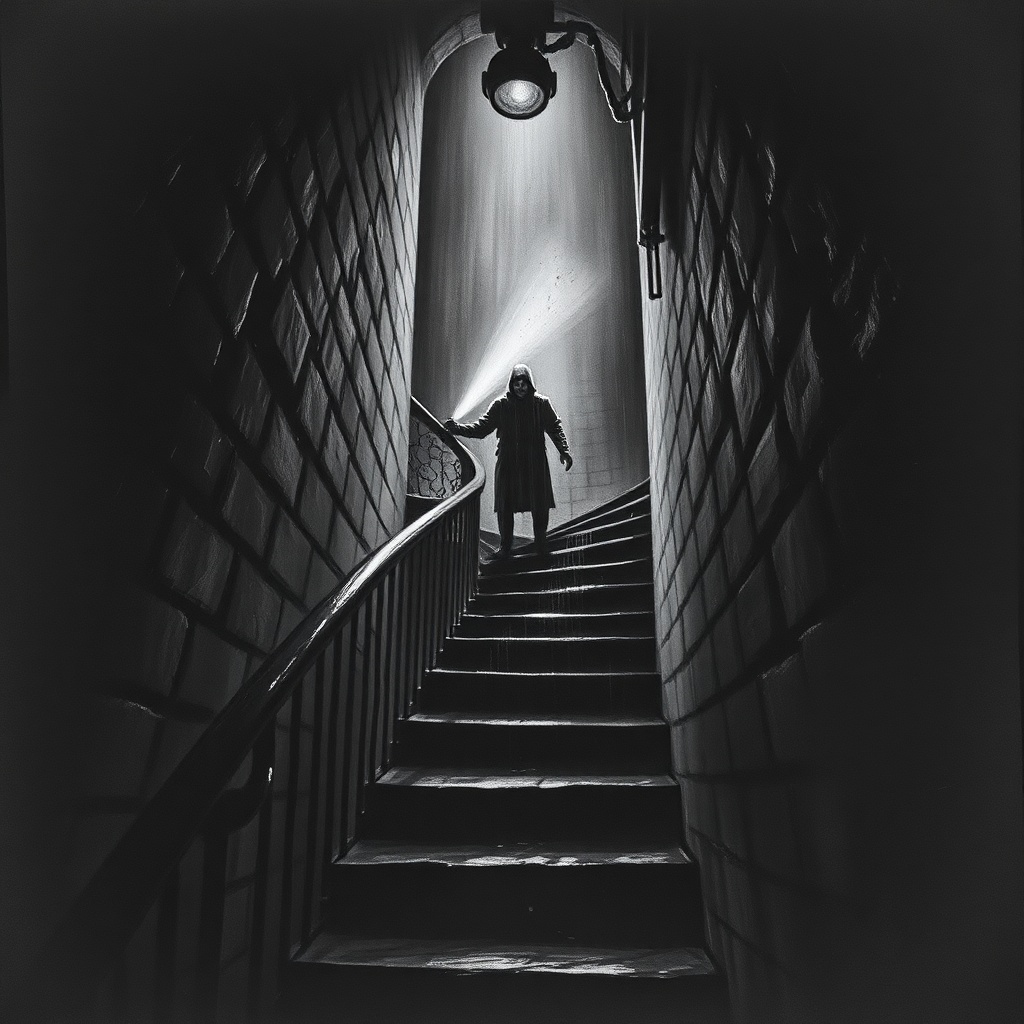
Halfway up, the wind found a gap and spoke through it, a low note that vibrated the stairwell. It sounded like a throat clearing on the other side of a wall. I stopped and listened. Nothing else. My own breath, too loud. The creak of my boot. The faint, steady shudder of the tower as it took the weather on its shoulders.
I kept going.
At the lantern room, the glass panes were filmed with salt. The world outside looked smeared, like a memory you can’t quite focus on. I could see the black shoreline curving away, the ocean chewing at it. I could see my car as a small dark shape, absurdly fragile. For a moment I felt the normal, tourist kind of awe. Then something shifted in my chest, a subtle click of wrongness, like realizing you’ve been calling someone by the wrong name for months.
I turned slowly, and there was nothing in the room with me. No footprints, no movement, no reflection I didn’t recognize. Just the hollow, circular space and the metal housing where a light once turned.
I laughed once, short. “Okay,” I said to no one, because talking out loud makes you feel less alone. A trick my brain loves.
Ten minutes, I reminded myself. Time to go.
Going down should’ve been easier. It wasn’t. The stairwell felt tighter, as if it had used my climb to learn my shape and now wanted to keep it. The wind had changed. The tower’s note deepened. I gripped the rail, and my palm came away damp, though I couldn’t tell if it was condensation or sweat.
Three turns down, I saw him. Or it. A figure on the stairs below, standing where the spiral cut away the view, so I only saw it in slices at first. A shoulder. The slope of a head. The suggestion of a coat hanging straight, too straight, as if gravity loved it more than it loved me.
I froze. My first thought, ridiculously, was relief. Oh thank God. A person. Someone else is here. Then my second thought arrived, cold and sharp. If someone climbed up after me, how did I not hear a single footstep?
“Hey,” I called, keeping my voice steady. “Sorry. I didn’t know anyone else was in here.”
No response.
I leaned over the inner curve of the stairwell, trying to catch a clearer angle. The figure didn’t look up. It didn’t look anywhere. It just stood, exactly centered on the steps like it had been placed.
“You okay?” I tried again, and my voice came out thinner.
It didn’t move. It didn’t sway with the tower. It didn’t breathe in any way I could see. The air between us felt packed, like wet wool.
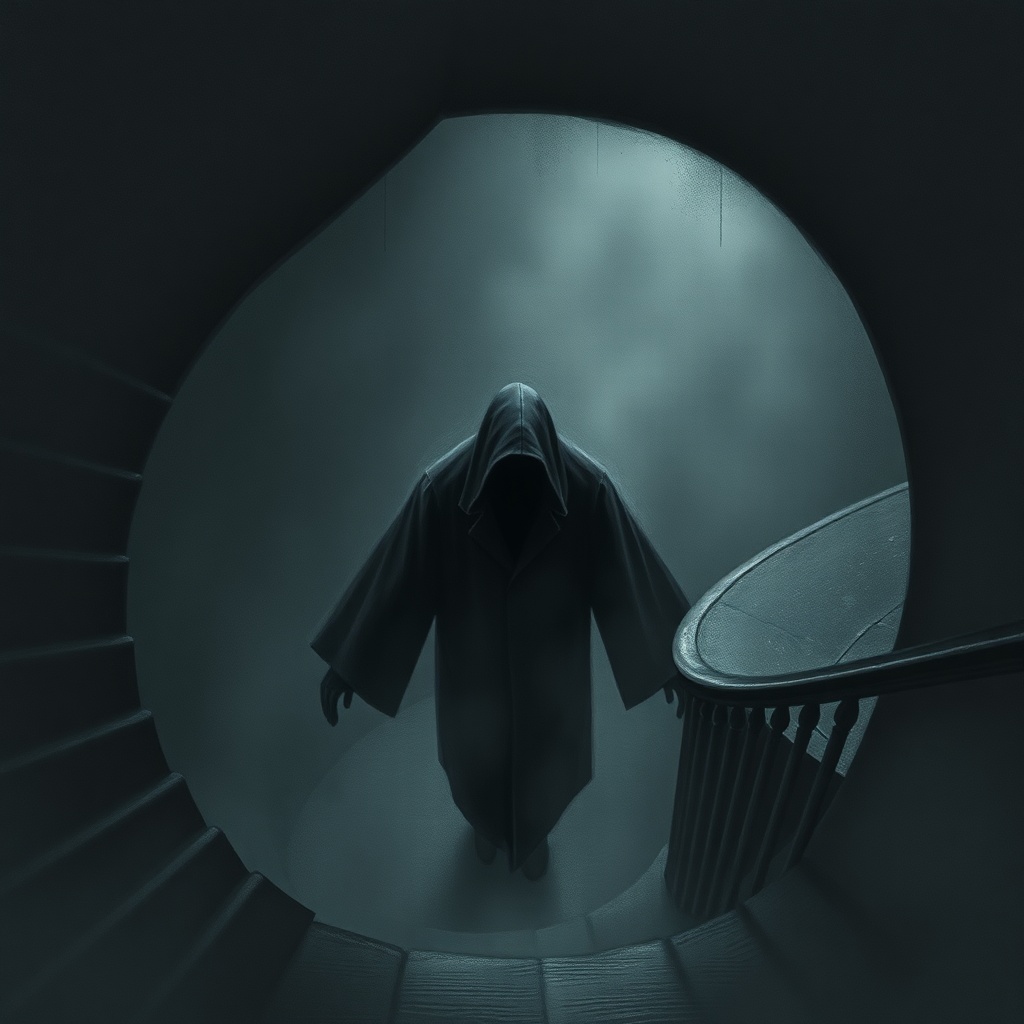
Politeness first. I swallowed and started down, slowly, one step at a time, keeping a careful distance. As I got closer, the figure’s edges sharpened in the dim, but not into details. It remained stubbornly featureless. A person-shaped absence.
“Excuse me,” I said, and tried to angle my body sideways. There was no room. The stairwell wasn’t wide enough for two people to pass comfortably, but it should’ve been possible if one of us pressed back. I waited for it to shift.
It didn’t.
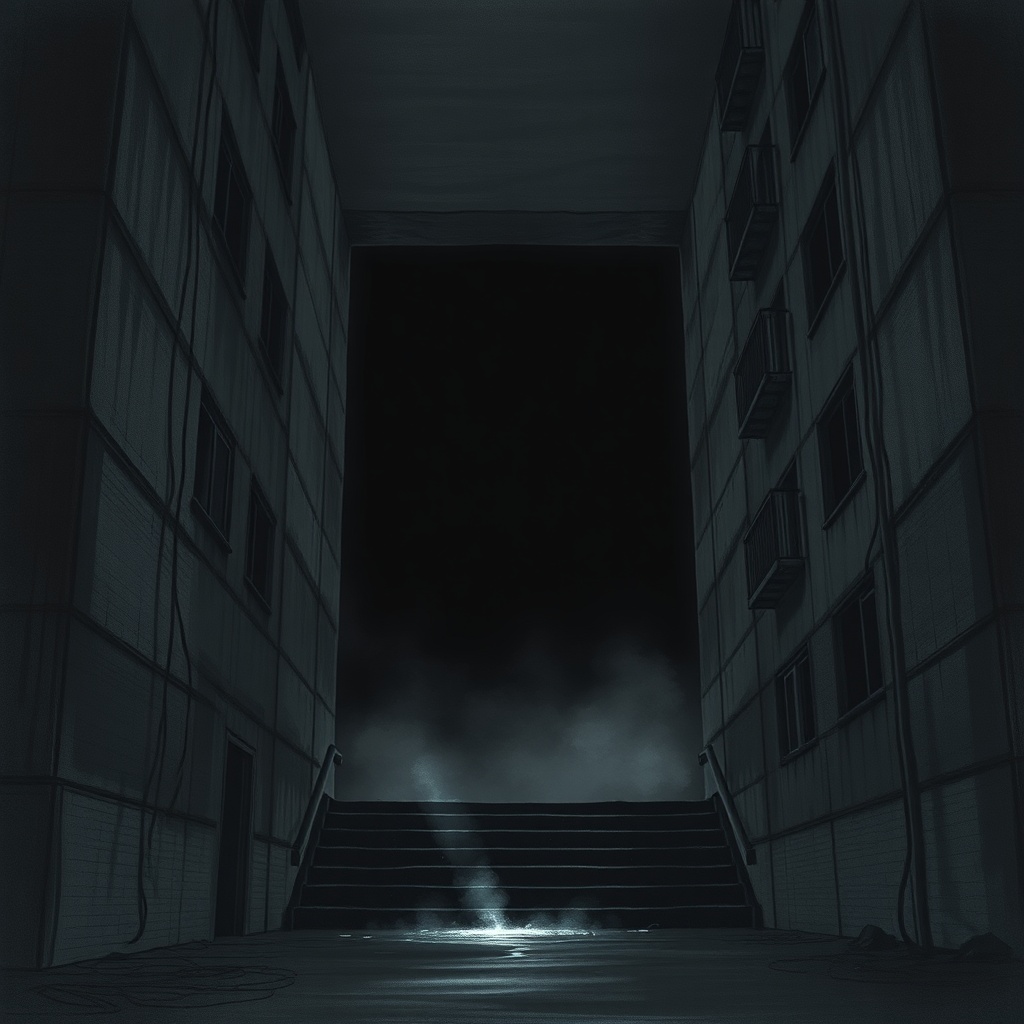
I tried to look past it to the door at the bottom. The spiral made that impossible. All I could see was the figure, the curve of the wall, and the iron steps leading down into a darkness that now felt like a mouth.
“Are you messing with me?” I asked, and this is where I’ll admit something humiliating. I wanted it to be a prank. I wanted a teenager to jump out laughing so I could be angry and alive.
The figure lifted its head. Just enough to suggest it had heard.
Then, very gently, it took one step up.
Not a lunge. Not an attack. A calm, ordinary step, the way you’d close distance with someone you’re speaking to. The step made no sound.
I backed up. The rail bit into my hand. My heel caught the edge of an iron tread and I nearly sat down hard, which would’ve been funny if I weren’t suddenly calculating how long it would take someone to find me here. I didn’t tell anyone exactly where I was going. Of course I didn’t. That would have been responsible.
I blinked, a reflex against the sting in my eyes. When my eyes opened, the figure was closer again, without stepping. The space had shrunk like a belt pulled tight. I could smell it now, not rot, not perfume. Sea-wet fabric left in a closed room. Old rain.
I turned and ran up, because there was nowhere else to go. The stairs seemed to tilt, the tower’s curve becoming a funnel. I burst into the lantern room and slammed the door that wasn’t really a door, just a half barrier. My heart hammered so hard it made my vision throb.
I spun, scanning for anything. A window to break. A hatch. Some alternate way down. There wasn’t. The lighthouse was a single idea built in a straight line: up and down. That’s all it offered.
I heard the step then. The softest scrape of iron, as if the tower itself was shifting its weight.
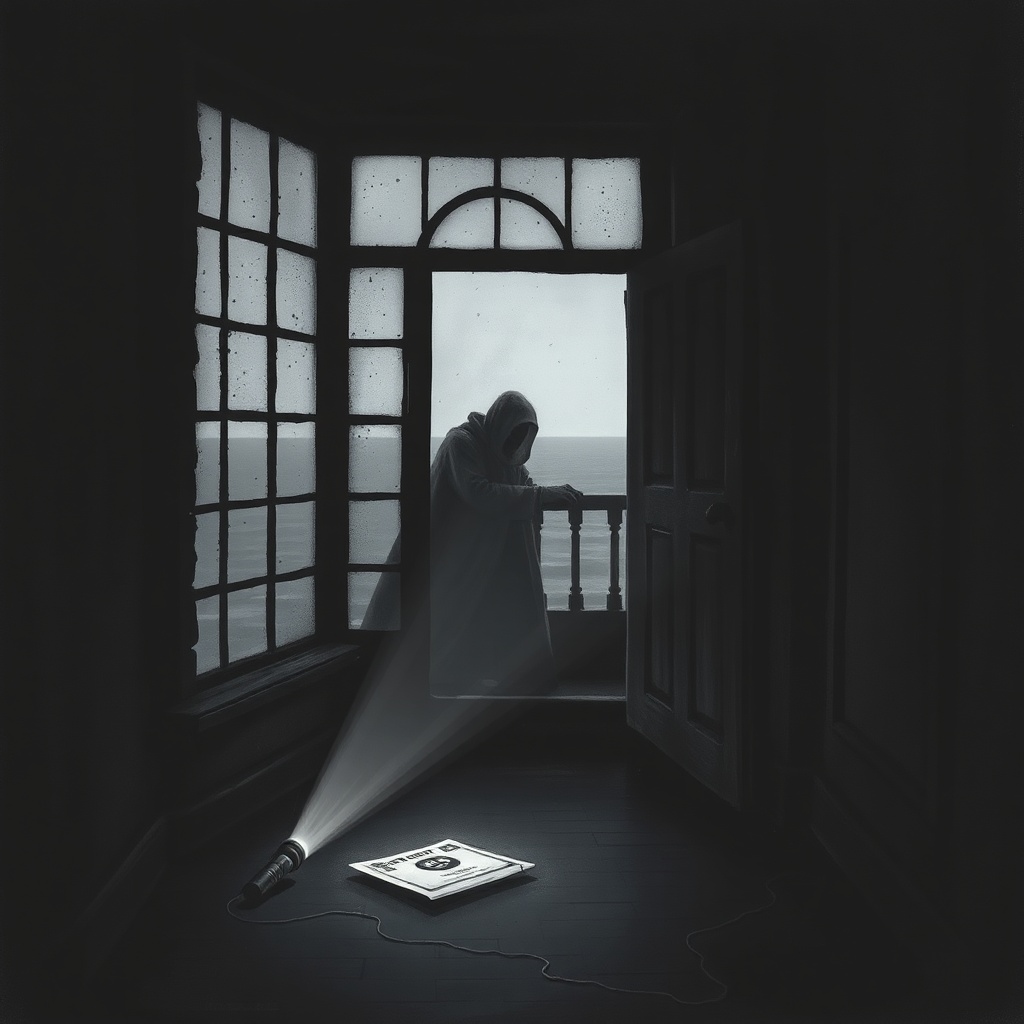
I backed against the glass, and for a second I had the stupid thought of jumping. The sea was too far. The rocks were too close. Even if I lived, I’d be broken in a place where broken things don’t get found quickly.
The figure emerged into the room like it had been waiting for permission. It didn’t rush. It didn’t have to. It took the doorway and made it irrelevant, because it wasn’t guarding the exit anymore. It was filling the room with itself.
I tried something else. I tried not looking at it. My grandmother used to say that about certain things, don’t give them your eyes, as if attention is a kind of food. So I stared at the glass panes, at the blurred horizon, and spoke into the air like I was addressing an unseen clerk.
“Okay,” I said. “You can have it. I’m leaving. This is yours.”
Silence. Then, from behind me, a sound like cloth dragging lightly over stone. The figure was moving, not toward me, but toward the center of the room, as if taking its rightful place. I risked a glance.
It stood where the old light would have rotated, facing outward toward the sea. Not toward me. Not toward the stairs. It had no interest in my body. It wanted the tower.
That was almost comforting, until I realized what that meant. It wasn’t trying to hurt me. It was simply returning something to how it should be, and I was a mistake in the wrong place.
I took one careful step toward the stair opening. The figure didn’t react. Another step. My breath came in tight, controlled pulls, like I was trying not to spook an animal. I got to the first stair and looked down.
The stairwell was empty.
No shape below. No waiting coat. Just the spiral dropping into darkness like a throat.
I didn’t question the gift. I went down. Fast, but not running. I kept one hand on the rail so I wouldn’t fall. I told myself not to look up. I looked up anyway, because my mind hates me.
The lantern room above was dim, the glass a ring of gray. In the center, a silhouette stood perfectly still, facing the sea. It didn’t watch me go. It didn’t need to.
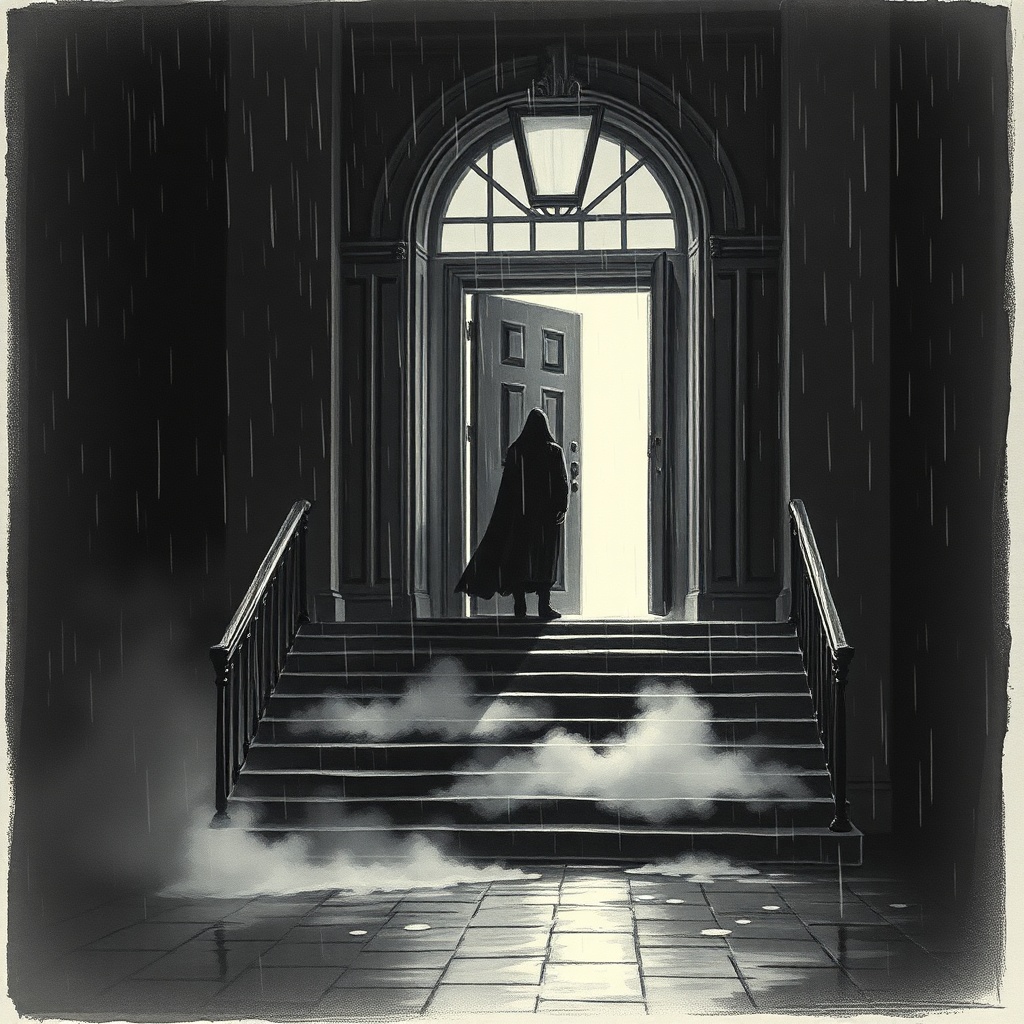
At the bottom, the door stood open exactly as I’d left it. Outside, the wind hit me with the hard, clean slap of the living world. I crossed the threshold and didn’t stop moving until I reached my car. My hands shook so much I had to try the key twice. When the engine turned over, it sounded indecently cheerful.
I drove away without looking back, which is another lie. I looked back once, because that’s what people do. The lighthouse stood in its lonely place, white against black rock, fog curling around its base.
In the lantern room, there was no light. Just a darker patch of darkness, a suggestion of someone standing where no one should be, keeping watch over a sea that doesn’t care.
Later, at my kitchen table, I tried to make it smaller by telling it like a story. A maintenance prank. A trick of the spiral. Wind and nerves. It almost worked, until I remembered the one detail that doesn’t fit.
When I opened the car door, there was salt on the inside handle, crusted white as dried breath, as if a cold, wet hand had tried it before I did.
Loved this story? Pulse it.
Pulses bubble up to the channel — they help us see which stories deserve sequels.