Silent Shape in the Basement – Tajikistan
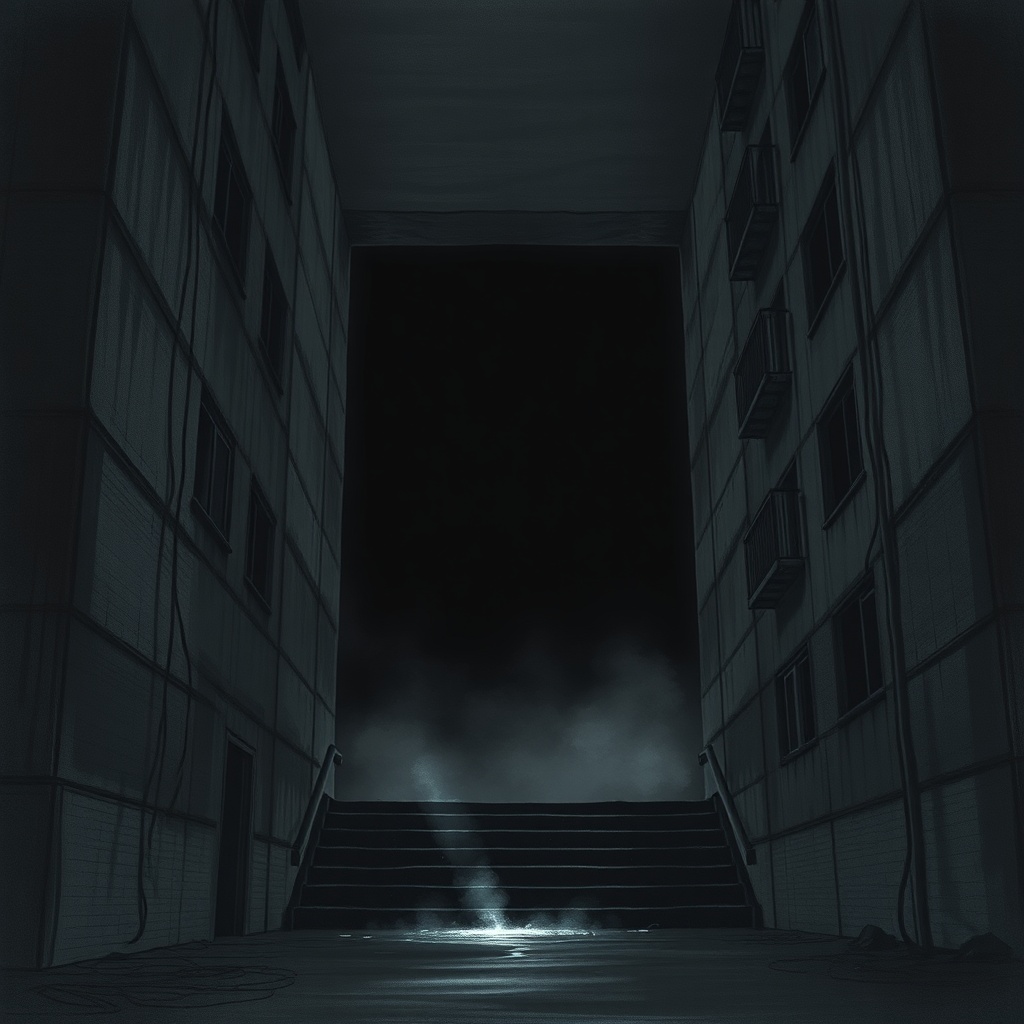
In Dushanbe, people don’t ask, “Is there a basement.” They ask, “Is the basement awake.”
That’s the version I heard first, over tea that tasted faintly of smoke, from a friend of a friend who’d grown up in the Soviet-built microdistricts where the stairwells echo like empty drums. He said the legend has a dozen names depending on the neighborhood. The Silent Shape. The Basement Guest. The One Who Stands Wrong. But the details line up with uncanny discipline, like everybody’s copying from the same sheet and pretending they aren’t.
It’s not an ancient folktale, not one of the old mountain jinn stories with rules and talismans. This one feels newer, born from concrete and utility closets. Most people trace it to the rough stretch after the Soviet collapse, late 1990s into early 2000s, when basements became unofficial storage, improvised shelters, sometimes places you didn’t go unless you had to. Buildings aged fast. Locks disappeared. And there were real fears down there. Strangers. Addicts. Live wires. Floodwater. Rats that didn’t flinch.
That’s the soil the legend grows in. A rational fear, given a silhouette.
The first “known” tellings weren’t written down in any official way. They moved by voice, by warning, by the way your aunt grabbed your sleeve a little too hard if you drifted toward the basement door. Later, when Tajik social media got louder, the story traveled as short posts and shaky phone videos. Always the same claim. Someone filming in a basement corridor catches a shape that isn’t quite a person. It’s there for a second. Then it’s not. No sound. No footsteps. Sometimes it’s in a frame behind them, sometimes reflected in a puddle like a smear of night.
What people believe about it depends on how religious they are and how tired they are. Some say it’s a jinn, because of course they do. Jinn are convenient. They explain the unexplainable and they don’t require maintenance fees. Others insist it’s just a man, a squatter who learned that silence keeps him alive. The most unsettling believers aren’t the ones who pick a category. It’s the ones who say, quietly, that it’s a “thing” that moved into basements when people stopped looking down there, the way mold moves into walls when you stop airing the room.
And the way the story usually ends, in its most repeated form, is painfully simple. Someone goes down for something ordinary. Potatoes. A wrench. Old jars. They see the shape at the far end where the corridor turns. It doesn’t run. It doesn’t advance. It just stands, like it’s waiting for the rules of the world to be remembered. The witness blinks. The light flickers. The shape is closer. The witness leaves without the potatoes, without the wrench, without the part of themselves that used to laugh at stories like this. The final line is always a warning with teeth. If you speak to it, it comes. If you run, it follows. If you pretend you didn’t see it, it makes sure you do.
I didn’t go looking for it. I had the sort of reason that makes you feel adult and invulnerable. A utility problem. A little drip that became a steady, petty leak in the stairwell, and the building’s older residents took turns blaming each other until somebody had to check the main valve in the basement.
“You’re young,” the caretaker told me, pressing a ring of mismatched keys into my palm. His hand was dry as paper. “Go. Just look. Don’t touch anything. And don’t talk down there.”
It came out like a joke, almost. Don’t talk down there. Like the basement had feelings. I gave him the polite smile you give older men when they’re being dramatic. Later, I would think about how he didn’t smile back.
The basement door was metal, painted a green that had given up. The kind of door that never quite closes unless you pull it like you mean it. The stairwell smell changed the moment I opened it. Upstairs, it was dust and cooking oil, a neighbor’s detergent, old concrete warming itself. Down there, it was wet earth and rust and something else. A cold, breathy odor. Like the room had lungs.
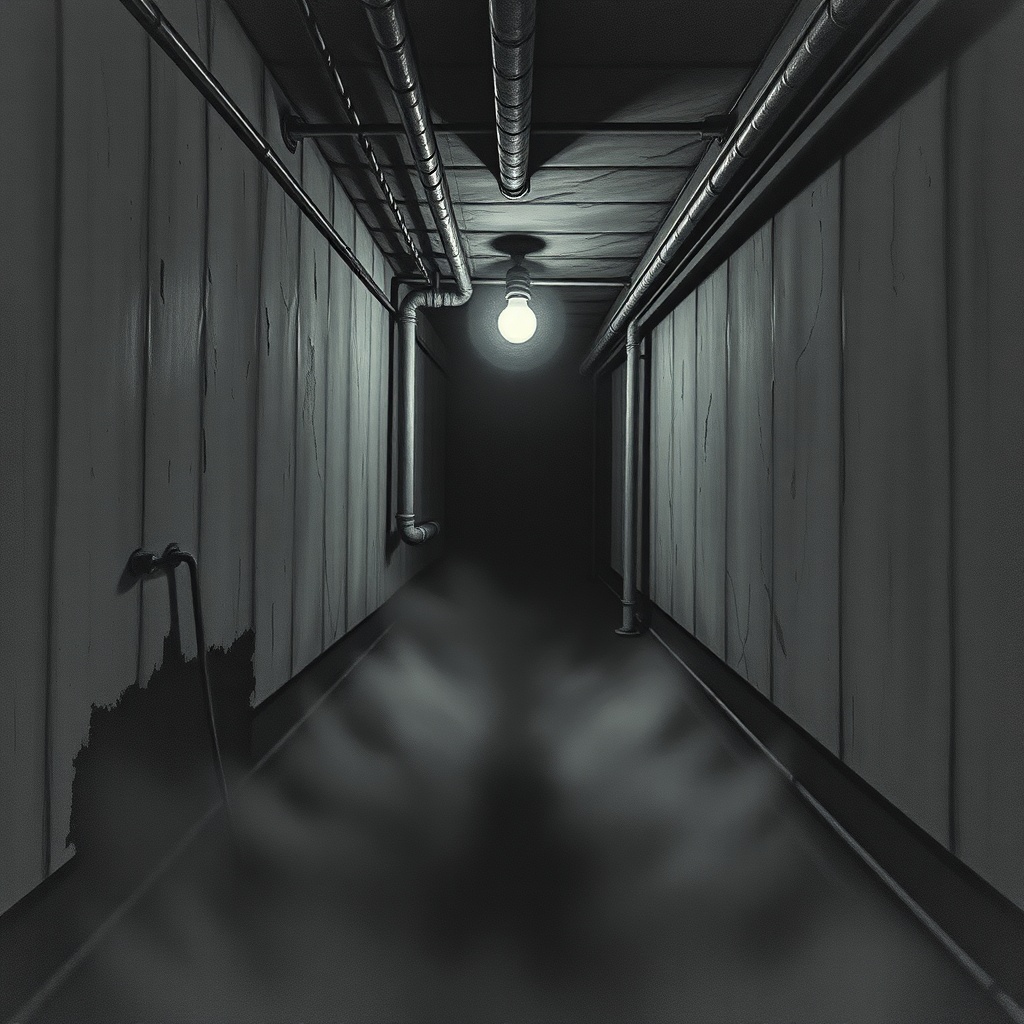
My phone flashlight made everything look flatter, meaner. Pipes ran along the ceiling like veins. Water dripped steadily somewhere, a patient metronome. I counted steps without meaning to. One, two, three. A childish habit, like counting could keep me safe.
At the bottom, there was a corridor. Doors along it, some locked, some bowed as if someone had leaned their whole weight into them. A puddle spread across the floor, trembling with each drip, reflecting my light as a thin, sickle-shaped glare. I aimed the beam down the hallway and saw nothing but a bend to the left.
The silence down there isn’t true silence. It’s the absence of human noise. No voices through walls. No televisions. No kettles. Just the building’s insides shifting and sweating. I could hear my own swallow. It sounded rude.
“Main valve is by the left corner,” I muttered to myself, because apparently I am the kind of person who narrates their own doom.
I started walking.
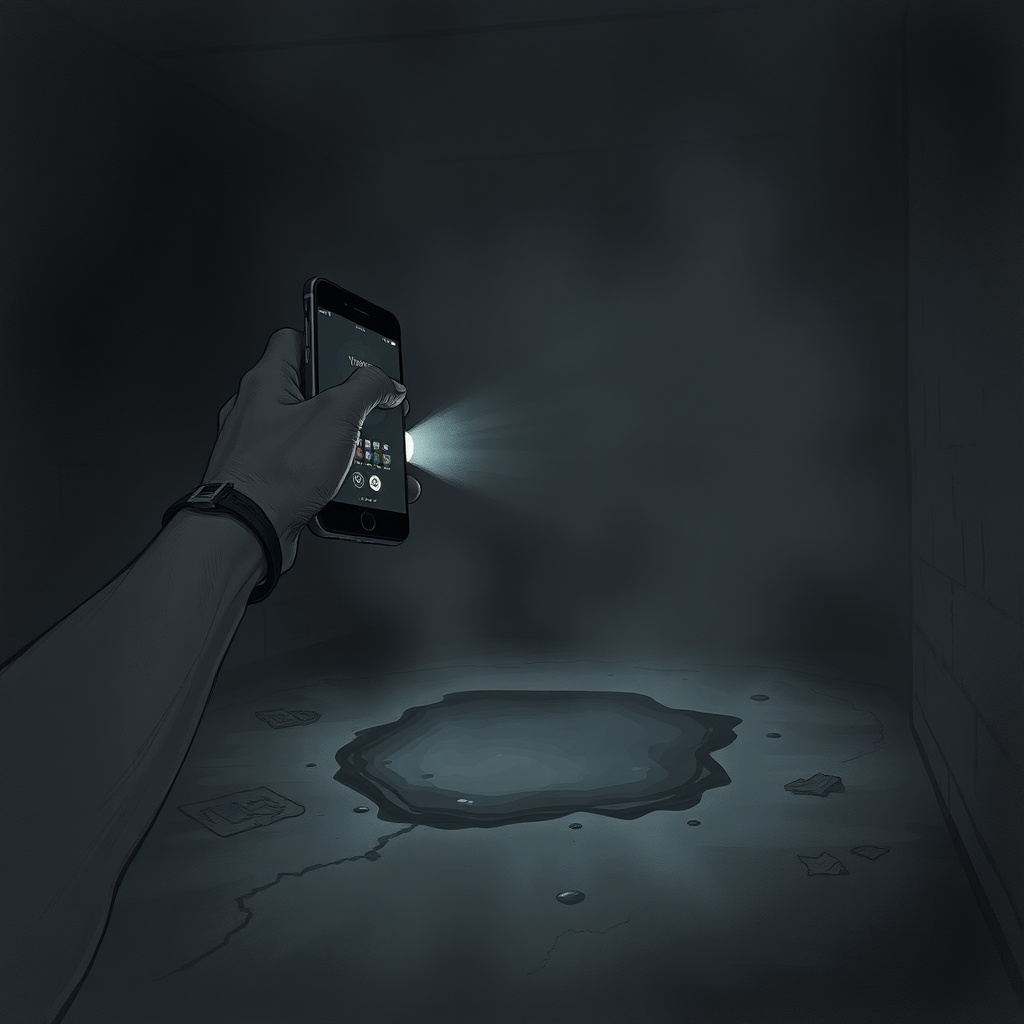
Halfway down, I stepped around the puddle and the beam slid across the water. For one stupid second, I saw two reflections. Mine, warped and shaking. And behind it, a tall smear that didn’t move with me. It wasn’t like a person standing behind you. It was like the idea of standing. Upright, wrong, as if someone had drawn a human posture from memory and missed an important detail.
I stopped so hard my shoes squeaked.
The second reflection stayed.
I did what you do when you’re trying not to be the kind of person who runs from reflections. I lifted the phone. I turned, slowly, like a man in a movie who thinks caution is the same as control.
There was nobody behind me. Just the stairwell mouth, a rectangle of darker dark, and the wet shine on the steps.
I laughed once. It came out thin. “Okay,” I said, because I needed the air to vibrate with something human.
The laugh died on the pipes.
I turned back toward the corridor. The bend waited. My beam reached it and stopped. The light didn’t go around corners. It just gave up.
I remembered the caretaker’s voice. Don’t talk down there.
So I shut my mouth and walked again, slower, my shoulders tight, listening for footsteps I didn’t want to confirm.
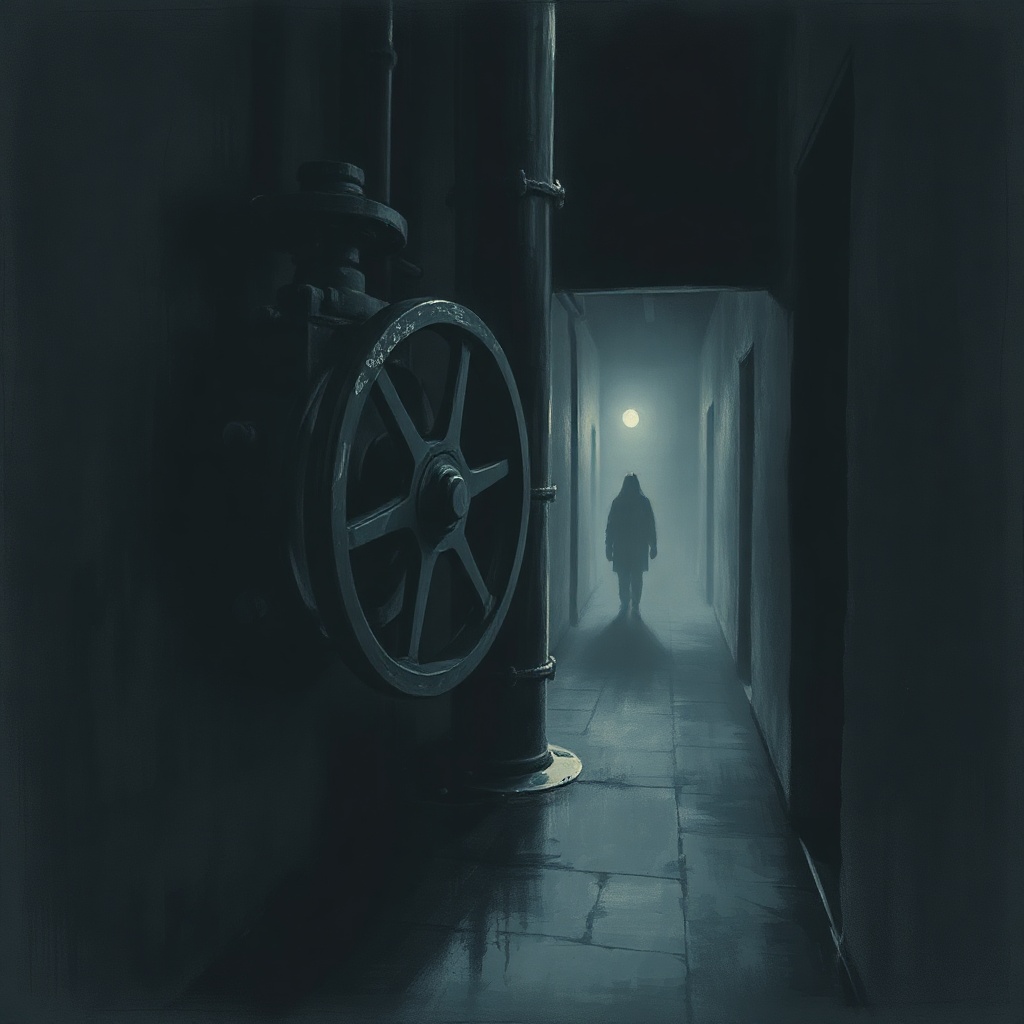
At the left corner, the main valve wheel was exactly where it should be. Big, red once, now a dark bruise of paint. Condensation beaded on the pipe and ran down in nervous lines. I crouched and leaned in, and that’s when I felt it. Not a sound. Not a touch. The sensation of being watched from a place that didn’t have eyes.
I kept my flashlight on the valve like a man refusing to look at a shadow in the corner of his room. The drip was louder here. The metal smelled like pennies in the rain.
I checked the pipe joint. I followed it with my hand without fully gripping, because the caretaker had said don’t touch anything and I was suddenly eager to obey. It wasn’t even a leak down here, not really. The drip must’ve been above. Which meant I didn’t need to be here at all.
That’s when the bulb in the corridor behind me flickered. A single weak light, far away, that I hadn’t noticed at first. It dimmed, brightened, dimmed again, like someone breathing over it.
My phone beam trembled. Not from fear, I told myself. From the cold.
The dripping stopped.
Silence poured into the space, thick as syrup.
Behind me, in that silence, something adjusted its weight. No footstep. Just the subtle shift of presence, like a coat settling on a chair.
I didn’t turn. My body wouldn’t let me.
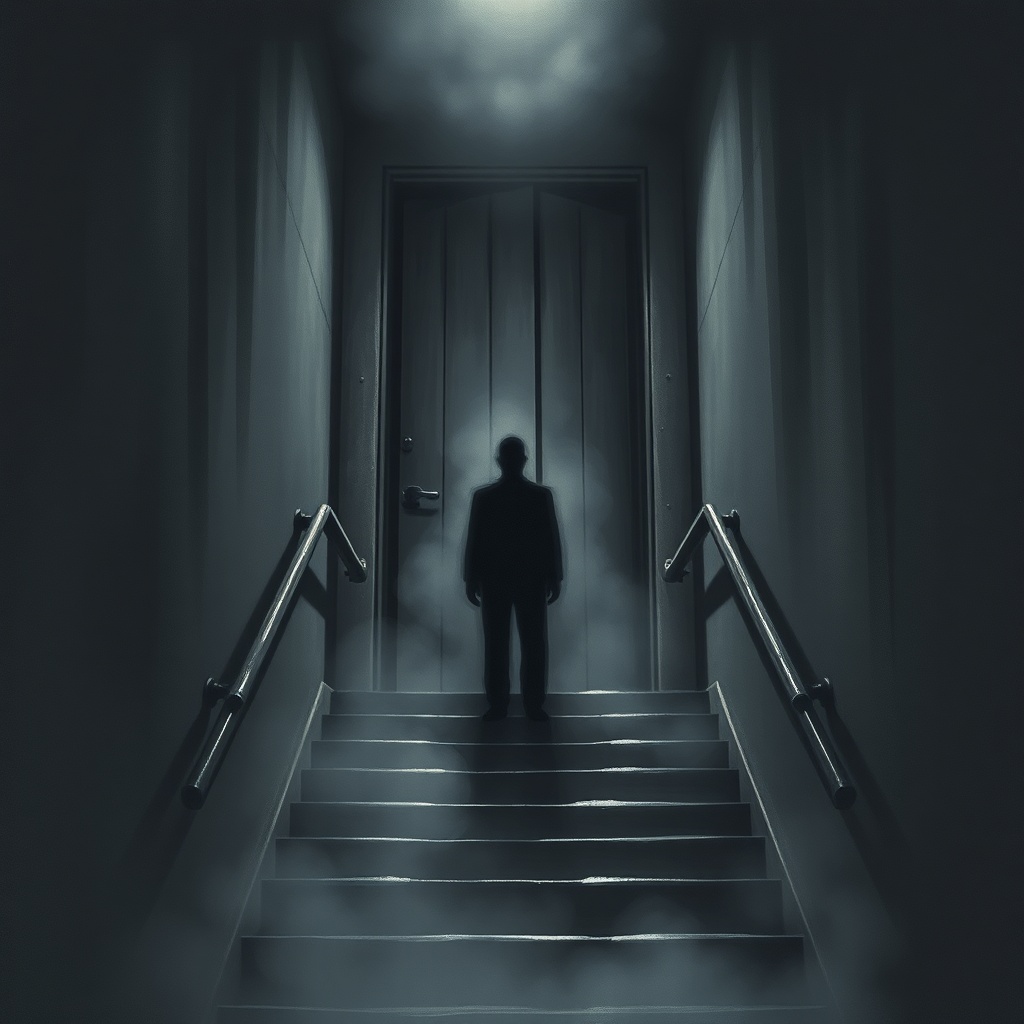
The smartest thing I’ve ever done in my life might be the least dramatic. I stood up and walked, not fast, not slow. Just a steady walk back the way I came, as if I had finished my errand and was returning with nothing but boredom.
My phone light stayed aimed ahead. I refused to look into puddles. I refused to glance at the doors. My whole mind narrowed into a tight, bright tunnel. Stairs. Door. Hallway. Normal air.
Halfway down the corridor, I heard it. Not a step. Not a breath. A soft scraping, like fabric sliding across concrete.
Something was coming without walking.
I kept walking. My face felt numb. I could feel my heartbeat in my teeth.
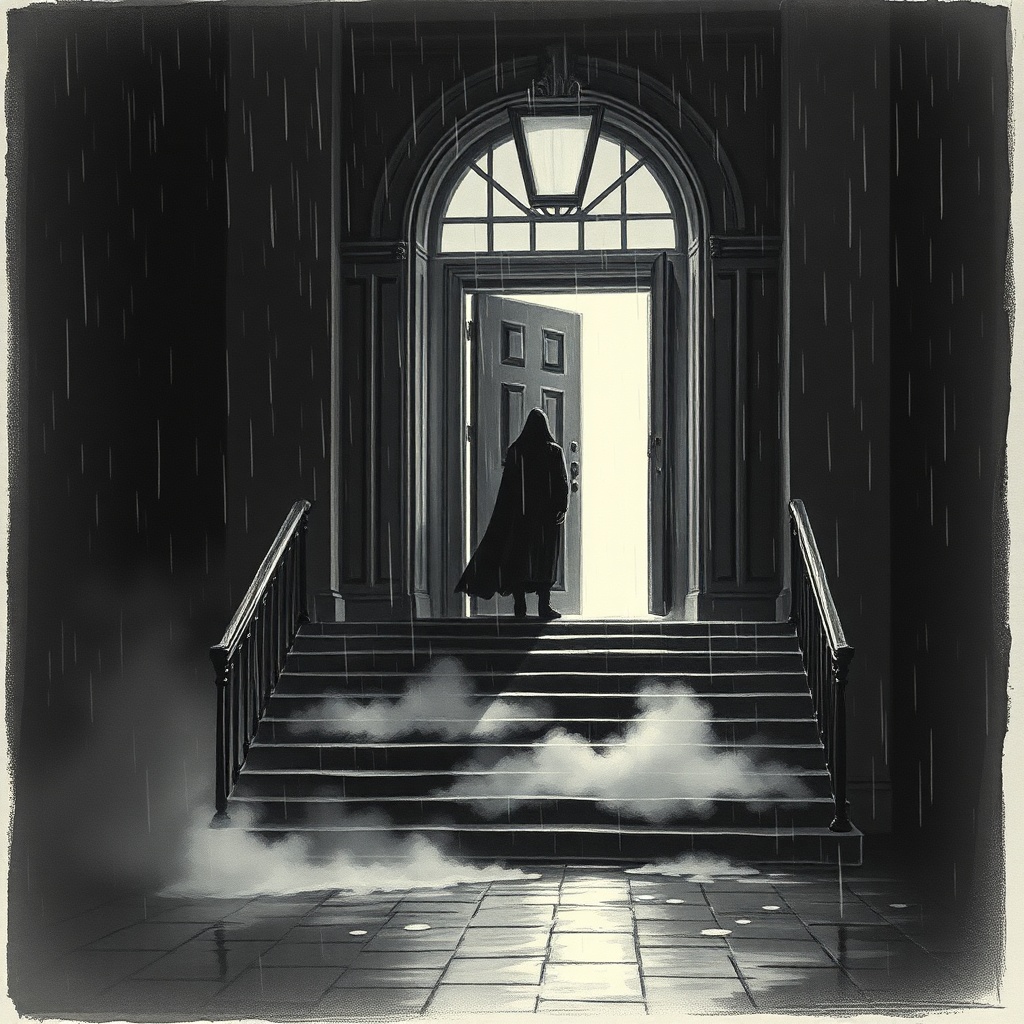
At the stairwell, the metal door was still open, but the darkness beyond it seemed heavier than it had been. Like it had thickened while I was gone. I climbed two steps at a time. My hand hit the door edge and for a second my skin stuck to the cold metal.
I pulled. The door resisted, then moved. And as it moved, the phone beam swung and caught the bottom step.
A shape stood there. Not fully in the light. Not fully outside it. Taller than it should be, narrow as a thought. No face I could swear to. Just the suggestion of a head tilted slightly, as if listening.
It didn’t rush me. It didn’t need to.
I yanked the door shut and the latch caught with a clack that sounded absurdly small.
I stood in the stairwell above, breathing like I’d run a kilometer, my hands shaking so badly the keys chimed like tiny bells. Above me, someone’s TV blared a comedy. Laughter seeped through concrete. Life kept going, inconsiderate as ever.
I went to the caretaker and handed back the keys. He looked at my face and didn’t ask what I’d seen. He just said, “The drip.”
“Not the valve,” I told him. My voice cracked on the last word.
He nodded slowly, like he’d won an argument he didn’t want to win. “You spoke down there?”
I thought of my laugh. That thin, stupid sound.
“No,” I lied, because the truth felt like inviting something into the room with us.
That night, I woke to the sound of dripping in my own apartment. Not the kitchen tap, not the bathroom. Somewhere closer. Somewhere structural. Like the building had brought the basement upstairs in small, patient increments.
I got up and stood in the dark hallway, listening. The sound wasn’t coming from the pipes. It was coming from the front door.
A slow, wet rhythm. As if someone on the other side was letting water fall from their fingers, one drop at a time, waiting for me to remember the one rule I’d broken.
I didn’t open the door. I didn’t speak. I just stood there until the dripping stopped, and in the silence that followed, I understood why the legend never ends with somebody fighting back.
Because down there, in the wet concrete lungs of the building, it isn’t hunting you like an animal.
It’s answering.
Loved this story? Pulse it.
Pulses bubble up to the channel — they help us see which stories deserve sequels.