The Dark Figure: Abandoned Post Office, USA
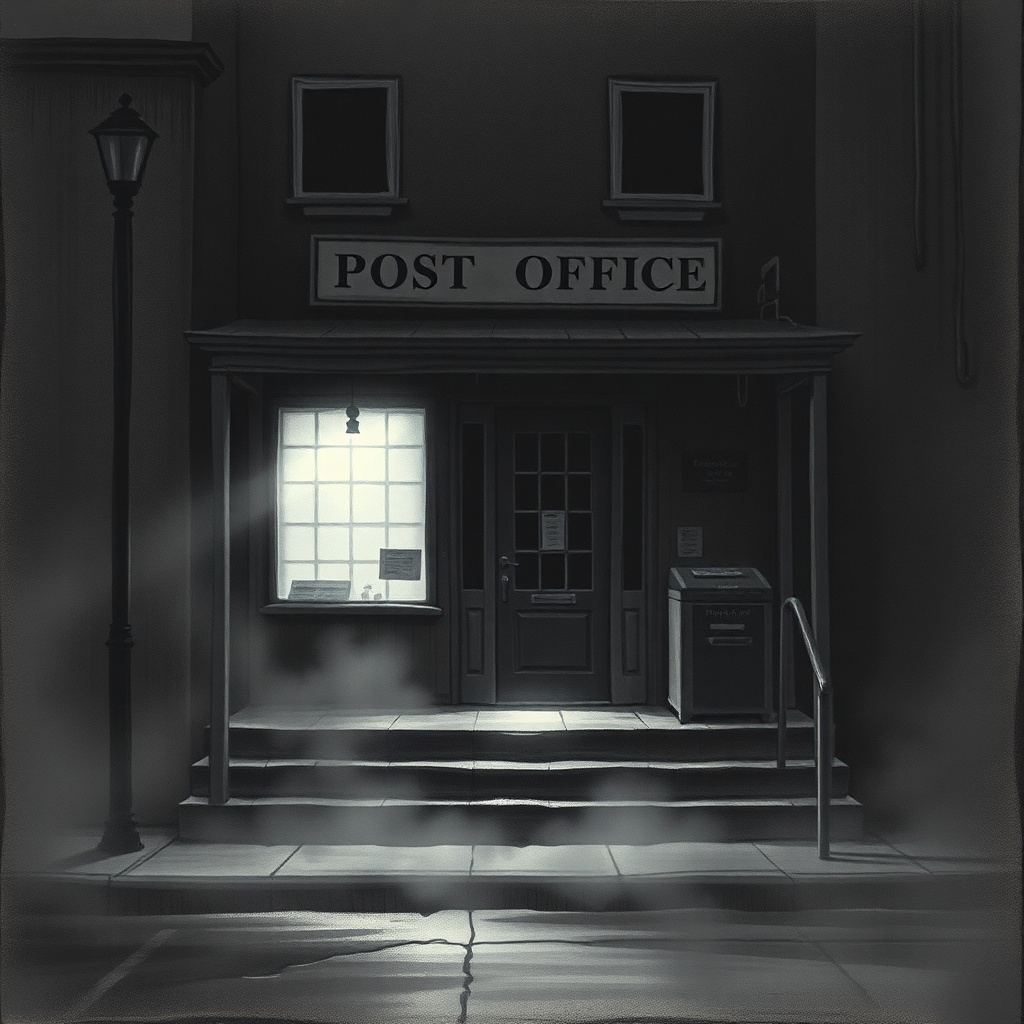
Have you ever noticed how some hallways feel like they’re waiting for you to turn your back?
The “Dark Figure” is one of those American urban legends that doesn’t belong to a single town so much as a type of building. It shows up wherever public space used to mean something. Abandoned schools. Closed hospitals. Empty municipal offices. And, weirdly often, old post offices, the kind built in the early to mid twentieth century with terrazzo floors, thick plaster walls, and corridors designed to funnel people past counters, cages, and back rooms you were never meant to see.
The story as people tell it now started bubbling up in the early 2000s, right alongside the first wave of urban exploration forums and grainy night vision YouTube. Someone would post: “We hit an abandoned post office in the Midwest and saw a man-shaped shadow at the end of the hall.” Another would chime in from two states away with the same detail. No footprints. No sound. Not a ghost in a sheet, not a pale Victorian lady. Just a standing absence. A dark density that seems to drink the available light and then decide, very calmly, whether you’re allowed to leave.
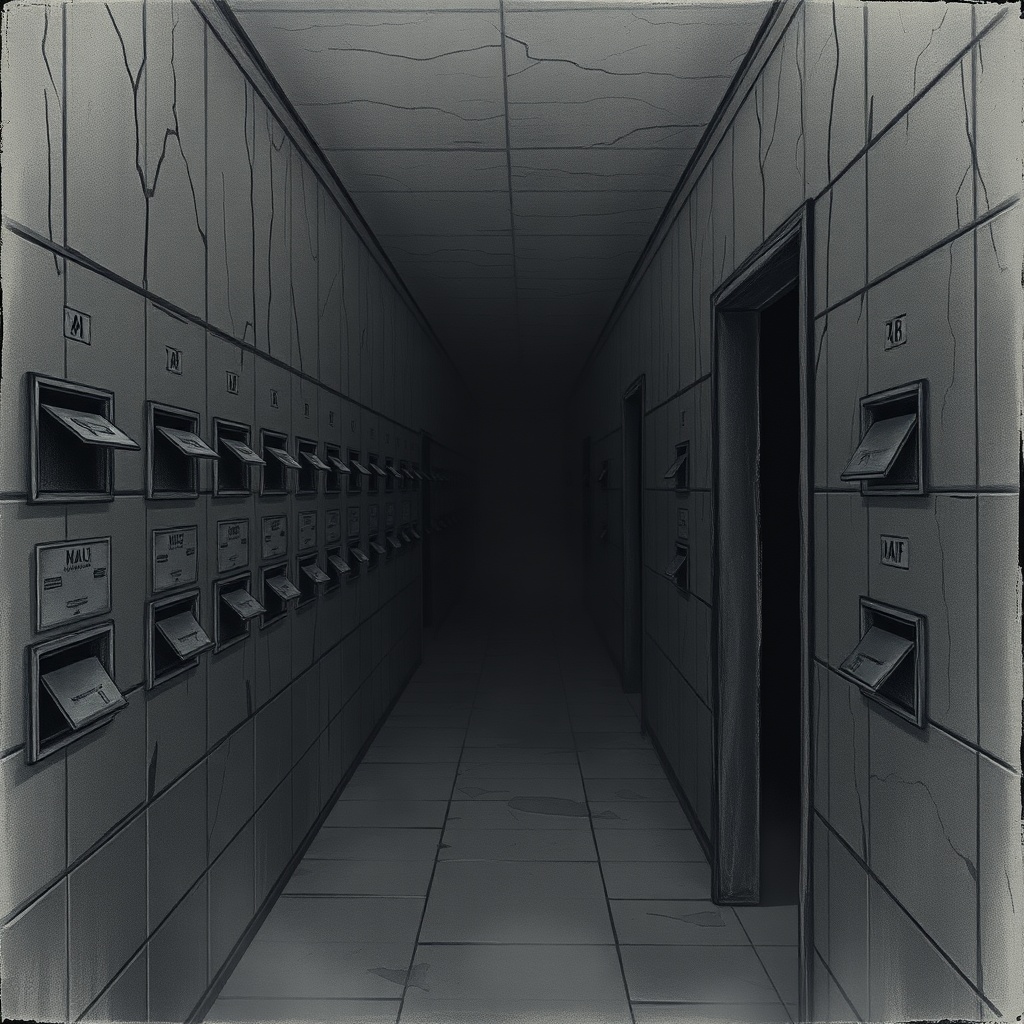
The legend got its shape from repetition. The Dark Figure doesn’t chase. It doesn’t jump out. It blocks. Witnesses describe it positioned at the only exit they remember, as if it’s been waiting there the whole time but only becomes visible when you think, Okay, we’re done. Time to go. People say their flashlights dim when they point directly at it. Some swear their cameras refuse to focus, like the lens can’t find an edge. A few tell the unnerving version where the figure “steps aside” politely, and when you pass it, you realize you’re no longer in the same building. Same hallway, sure. But the air is wrong. The echoes are wrong. The doors don’t lead anywhere you recognize.
What do people believe it is? The practical skeptics blame low light and panic, a human silhouette made out of shadow and suggestion. The folklore-minded go for something older. A “watchman” spirit, sometimes tied to the dead-end bureaucracy of the mail itself, the idea that letters carry grief, threats, apologies, ashes, money, last chances. There’s a strain of the legend that anchors it to an employee who died on site, a night sorter or custodian found too late in a locked back corridor. Another version says it isn’t human at all, but something that learned the shape of a person because that shape opens doors. It stands where you’ll look. It waits until you need an exit. It doesn’t want you screaming. It wants you choosing.
And the story usually ends one of three ways. The narrator runs past it with their eyes shut and wakes up outside with no memory of crossing the threshold. Or they loop, turning corner after corner, always returning to the same hallway and the same patient silhouette. Or, the bleakest one, they find the exit clear, sprint for it, and only realize later, in the car or at home, that their shadow is no longer behaving like theirs. It lags. It leans the wrong way. Sometimes it stands still when they move.
I didn’t go looking for a Dark Figure. I went looking for architecture. That sounds like a lie, but it’s true. A friend of mine, Wes, collects old building plans and closure notices the way other people collect records. He sent me a pin drop and a single line. “Old post office. Shut down in the nineties. Still open through a service door. Don’t bring anyone loud.”
I brought someone loud anyway. Myself. I talk when I’m nervous, and I’m always nervous in abandoned places because the silence feels like it’s taking notes.
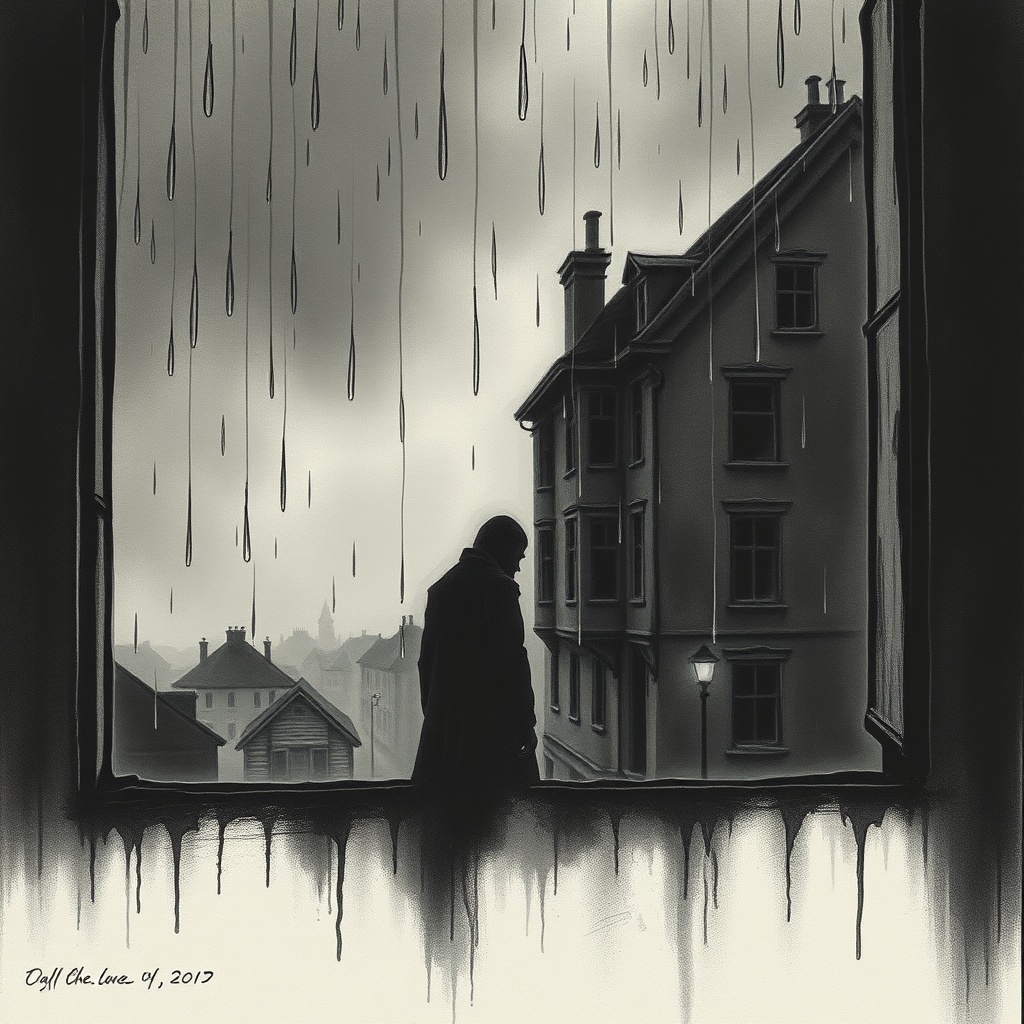
The building sat behind a line of scraggly trees, brickwork dark with moisture, windows filmed over like cataracts. The air tasted metallic, that wet penny taste that always makes me think of old radiators and old blood, though there was no gore, no drama. Just neglect. I popped the service door with a little too much confidence, and it opened like it had been expecting me. Hinges sighing. A warm, stale breath of paper and dust.
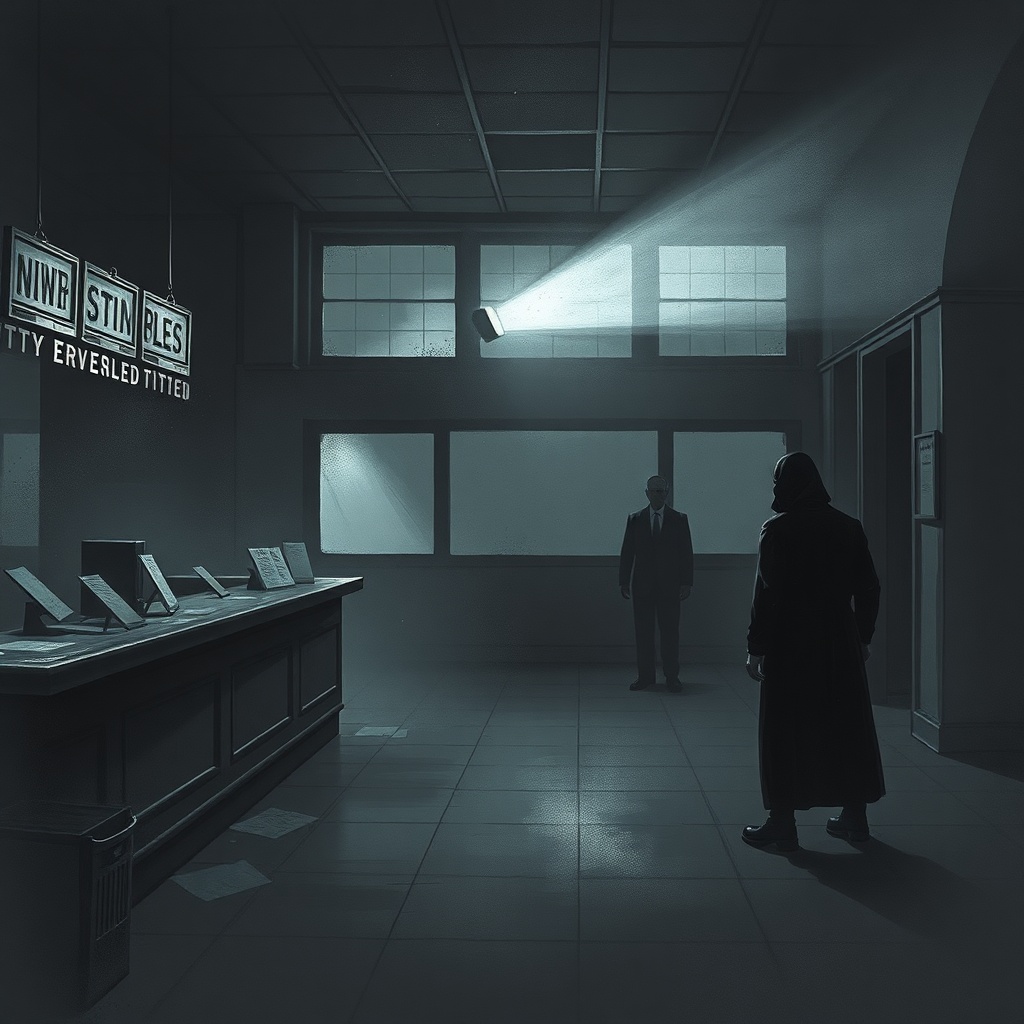
The lobby was stripped, counters removed, but the bones were there. Those heavy frames where glass once separated people from their mail. The floor had that hard shine beneath grime, like it would still reflect you if you deserved to be reflected. I swung my flashlight and made the mistake of speaking into it.
“Hello. America’s most haunted customer service desk.”
My voice bounced off plaster and came back slightly rearranged. Same words. Different emphasis. Like someone mocking me with perfect manners.
We moved deeper. Past a doorway that still had a faded outline where a sign used to be. Past a corridor with old mail slot doors, their little brass fingers tarnished, each one a tiny promise that something was once kept safe. Wes wasn’t there, but his voice was in my pocket through a text thread, making me feel less alone than I deserved.
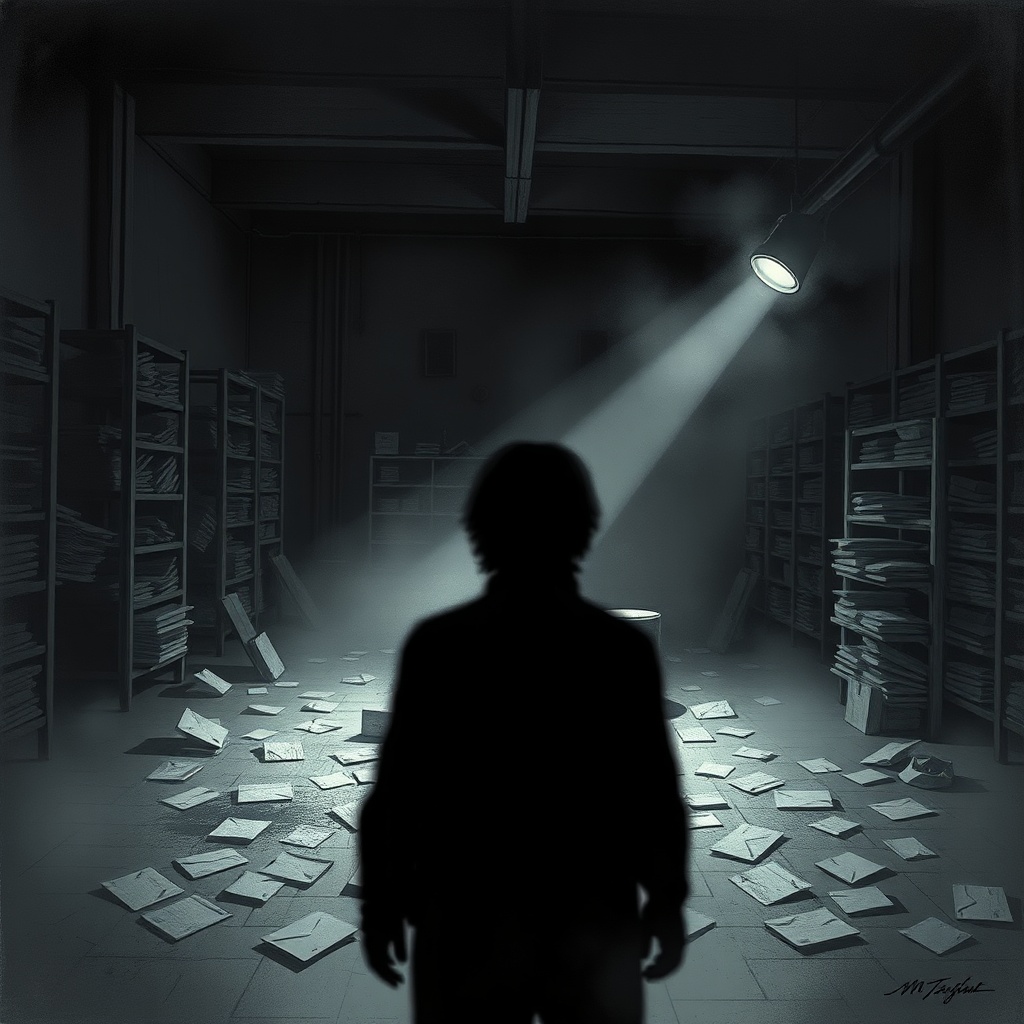
Back rooms are always worse because they were never meant to be seen by the public. They’re utilitarian, and that makes them intimate. I found a sorting area with metal racks like empty rib cages. Envelopes, water-buckled and stuck to the floor, had melted into pale shapes that looked like dead moths. There was a sound then, not footsteps exactly. More like the building settling into a shape it preferred.
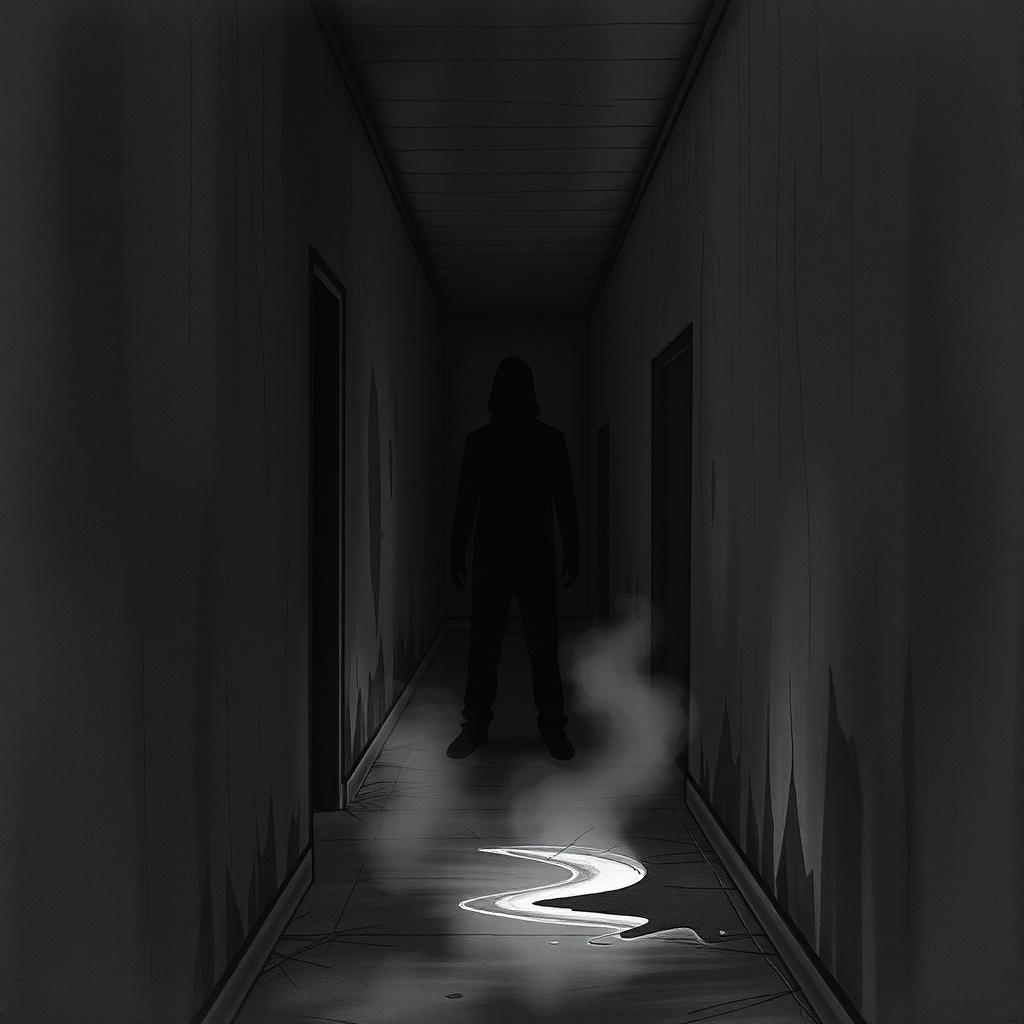
The hallway beyond the sorting room was narrow. No windows. Paint peeling in long curls. The kind of corridor you could walk down with your shoulders slightly tensed and not know why until later. My flashlight beam didn’t travel far. It hit a point where the darkness seemed thicker, as if the air itself had a bruise.
I stopped. The stupid joke in my throat died young.
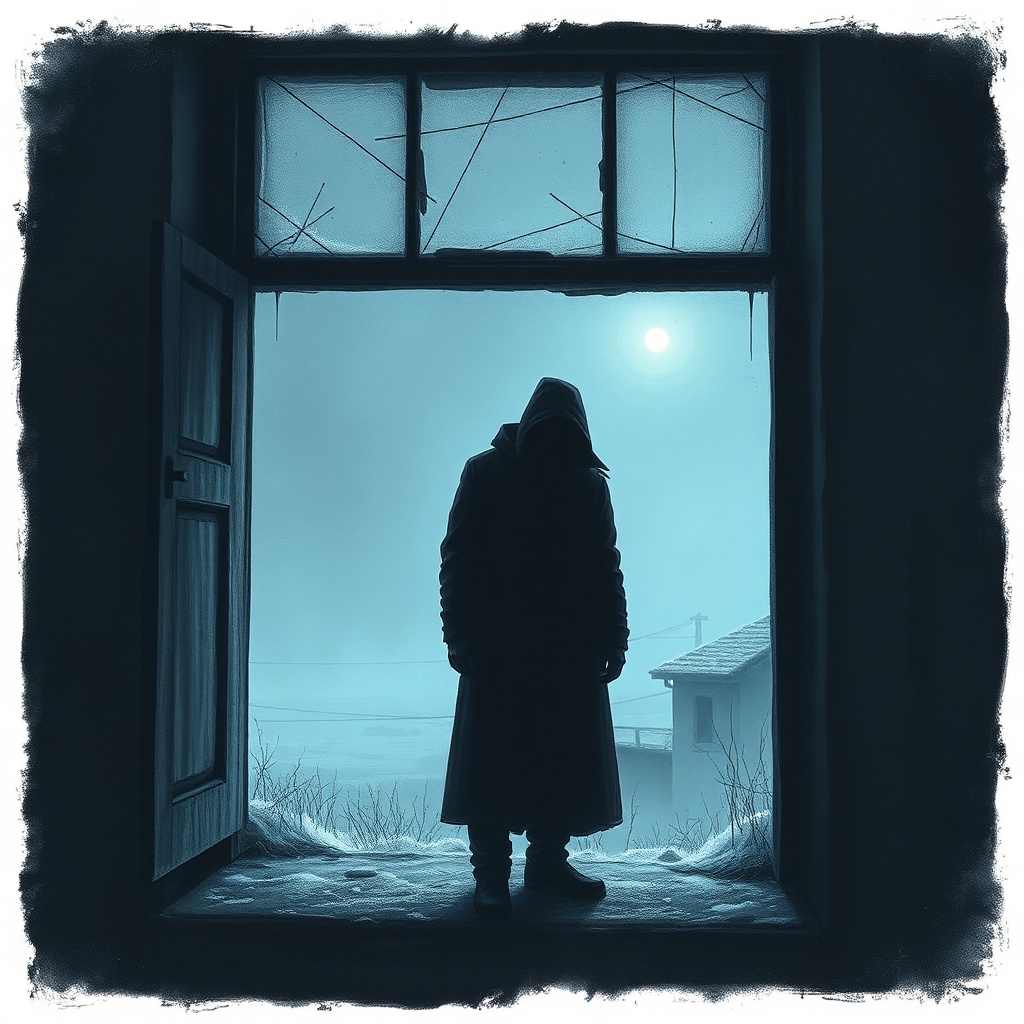
At the far end, where the corridor met a T-junction, there was a figure. Not a person. A person-shaped absence. It wasn’t the black of shadow cast by something else. It was its own black. It stood upright with the patience of a postmark.
I did what everyone does in these stories. I told myself it was a trick of light. I adjusted the angle. I blinked hard. I lifted the flashlight higher like that would give me authority.
The beam landed on it and looked weaker, as if the light had suddenly remembered it had a limited budget.
My phone buzzed in my hand. A text from Wes. “You in yet?”
I typed back with my thumb without taking my eyes off the end of the hall. “Yeah. Something’s here.”
Three dots appeared, then vanished, then appeared again. “Leave. Now.”
I almost laughed, because of course he’d say that. It’s the correct line. It’s the line you want someone to say from a safe kitchen table miles away. I took one step backward.
The figure didn’t move. My shadow, thrown behind me against the wall, did. It stretched strangely, lengthening up toward the ceiling, like it was trying to see around my head.
I took another step back. The corridor behind me felt longer than it had a minute ago. Like the building was unspooling.
The figure at the end of the hall shifted. Not forward. Not sideways. It simply… adjusted its relationship to the darkness around it, and suddenly I understood the thing that makes the legend stick. It wasn’t blocking a hallway. It was blocking the idea of leaving. The exit wasn’t behind it. The exit was a concept, and it had its hand over the word.
I turned, fast, to go back the way I came. My flashlight caught the mail slot doors again, and for a second, I saw them as mouths, all of them slightly open, waiting for something to be fed to them. The air was colder. My breath sounded loud, rude.
Then I hit the lobby. The counter frames were there, yes. The doorway to the outside was there too, a rectangle of slightly lighter dark. Relief hit me so hard my eyes watered.
I ran for it.
Halfway across the lobby, the temperature dropped like someone opened a freezer. My footsteps sounded wrong. Not muffled. Not echoed. Late. Like the sound was arriving after my feet did.
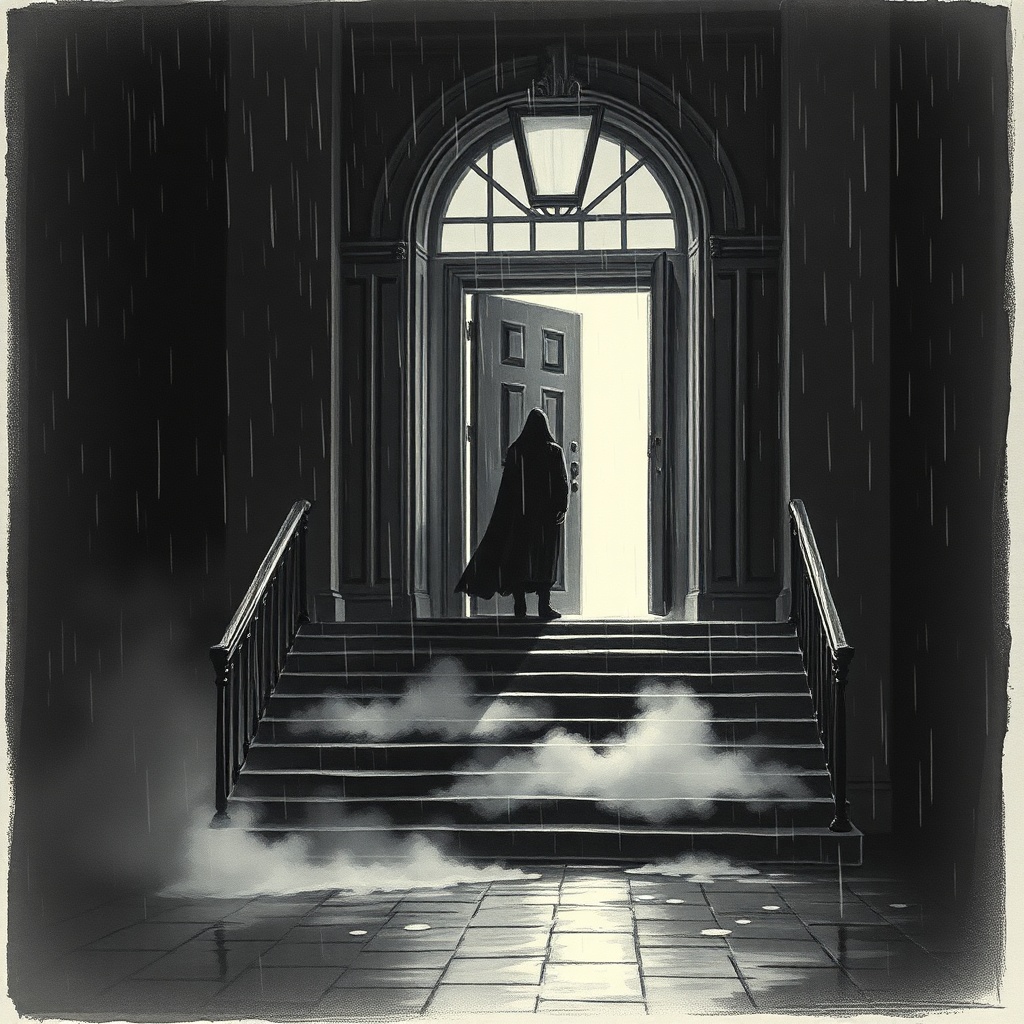
I reached the door and shoved it open. Night air. Damp leaves. The honest smell of outside. I stumbled down the steps and didn’t stop until I was in the parking lot, hunched over, hands on my knees, laughing the kind of laugh you do when your body can’t decide between relief and vomiting.
I looked back at the entrance. The service door hung open. Black inside. No movement.
“Okay,” I told myself, because apparently I needed an audience. “Okay. We’re done. We’re done. Great architecture. Ten out of ten. Never again.”
My phone buzzed again. Another message from Wes. “Send pic. Prove you went.”
I lifted my phone, aimed it at the building, and snapped a photo.
The screen showed the post office front in smeared grayscale. The open doorway. The fog at the threshold. And in the glass of the lobby’s inner frame, behind where I’d been standing, a darker shape than the rest. Not at the end of a hall. Not in a corner. Right behind me, like it had followed the shortest route.
I lowered the phone and felt something shift at my feet. My shadow, cast by the weak lot light behind me, wasn’t attached to my shoes anymore. It lay a few inches away, separated, like a cutout someone forgot to tape down.
It didn’t move when I moved.
I took one slow step to the left. My shadow stayed put, perfectly still, as if it were waiting for me to walk out of it the way you step out of a coat.
From the open doorway, deep inside the building, something made the softest sound. A settling. A satisfied click. Like a lock turning, finally, into place.
Loved this story? Pulse it.
Pulses bubble up to the channel — they help us see which stories deserve sequels.