The Silent Figure in Japan’s Library
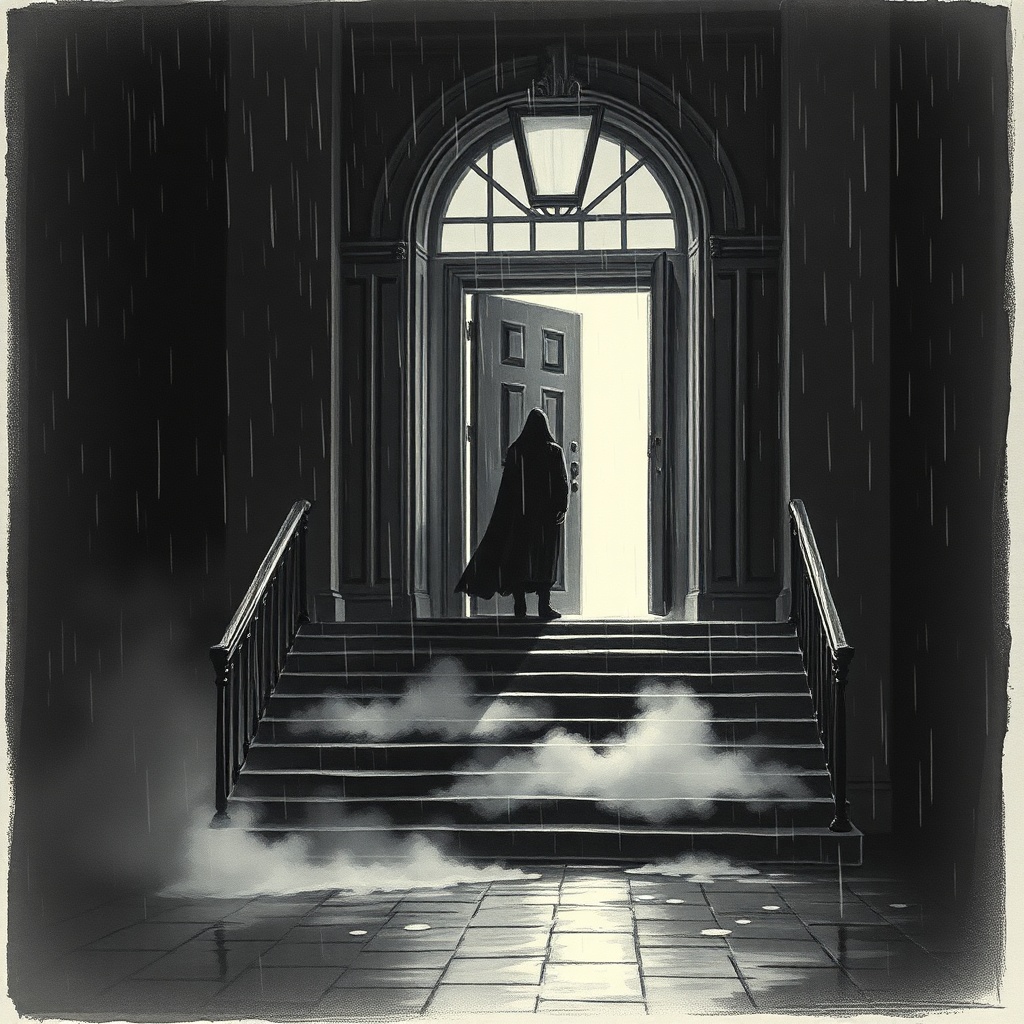
Have you ever noticed how a library at night stops feeling like a public building and starts feeling like a mouth.
The story you’re asking for gets passed around in Japan the way the best urban legends do. Quietly, locally, with a lot of shrugs and, “Well, my friend’s senpai said.” It’s usually called something plain, like the Silent Person at the Library Door, and it doesn’t belong to one famous building the way some legends do. It shows up attached to municipal libraries, university stacks, small-town reading rooms. Anywhere with fluorescent lights, motion sensors, and an after-hours entrance that never quite shuts right.
The earliest versions people point to started circulating heavily in the late 1990s and early 2000s, when message boards and late-night “true story” variety shows were hungry for short, repeatable scares. It fits that era’s rhythm. No elaborate backstory, no complicated rules. Just a single image you can’t unsee, like a stain on paper.
Here’s what stays consistent. Someone goes to a library late. Maybe they’re studying for exams, maybe they’re returning books in the drop slot and they swear they didn’t go inside, maybe they’re a part-time staffer locking up. They notice a figure blocking the doorway. Not outside. Not fully inside. Exactly where you’d have to squeeze past to enter or leave. The figure doesn’t speak. Not a word. Not a cough. Not even the little throat-clear people do when they’re about to ask for directions.
And the figure never moves out of the way.
People believe different things about what it is. Some versions call it a ghost of someone who died in the stacks, a patron who collapsed and wasn’t found until morning, the kind of tragedy libraries try to forget by repainting the wall and moving the shelves. Some versions say it’s not dead at all, just wrong, like a living person who’s forgotten how to be human. A few fold it into older folklore, a boundary spirit that guards thresholds, the idea that certain doors aren’t just doors. Libraries already feel like temples if you grew up being scolded for whispering. Give a temple a locked exit and a silent attendant, and you get a myth.
The ending is almost always the same shape. The witness tries to speak. “Excuse me.” “Sumimasen.” Nothing. They try to edge around. The air gets heavy, like walking into wet cloth. Sometimes they reach for the door handle and it’s warm, too warm, as if a palm has been resting there for hours. Sometimes the lights flicker and the building’s automated voice announces closing time in a cheerful tone that makes everything worse. Eventually, the witness looks down, because everyone does. We look for shoes. We look for shadows. We look for proof that we’re dealing with a person.
And in the versions people retell with a lower voice, there’s no shadow. Or there are no feet. Or the shadow is facing the wrong way.
They look back up and the figure is closer. Not rushing. Just, somehow, having used the moment of being seen to shorten the distance. A few tellings end with the witness squeezing past anyway, and afterward they find damp fingerprints on their arm, like someone pressed them with cold, careful hands. Others end with the witness turning around to run deeper into the library and getting lost between shelves that don’t match the floor plan, aisle after aisle repeating like a stutter. The bleakest endings have them making it outside, only to realize, once home, that they have been checked out. Their library card is missing, and their name appears stamped in a book they never borrowed.
That’s the legend as it’s commonly believed. It’s a doorway story. A threshold story. And it works because everyone understands the dread of being politely trapped. Japan, especially, has a talent for horror that doesn’t need a monster to roar. Just something refusing to yield.
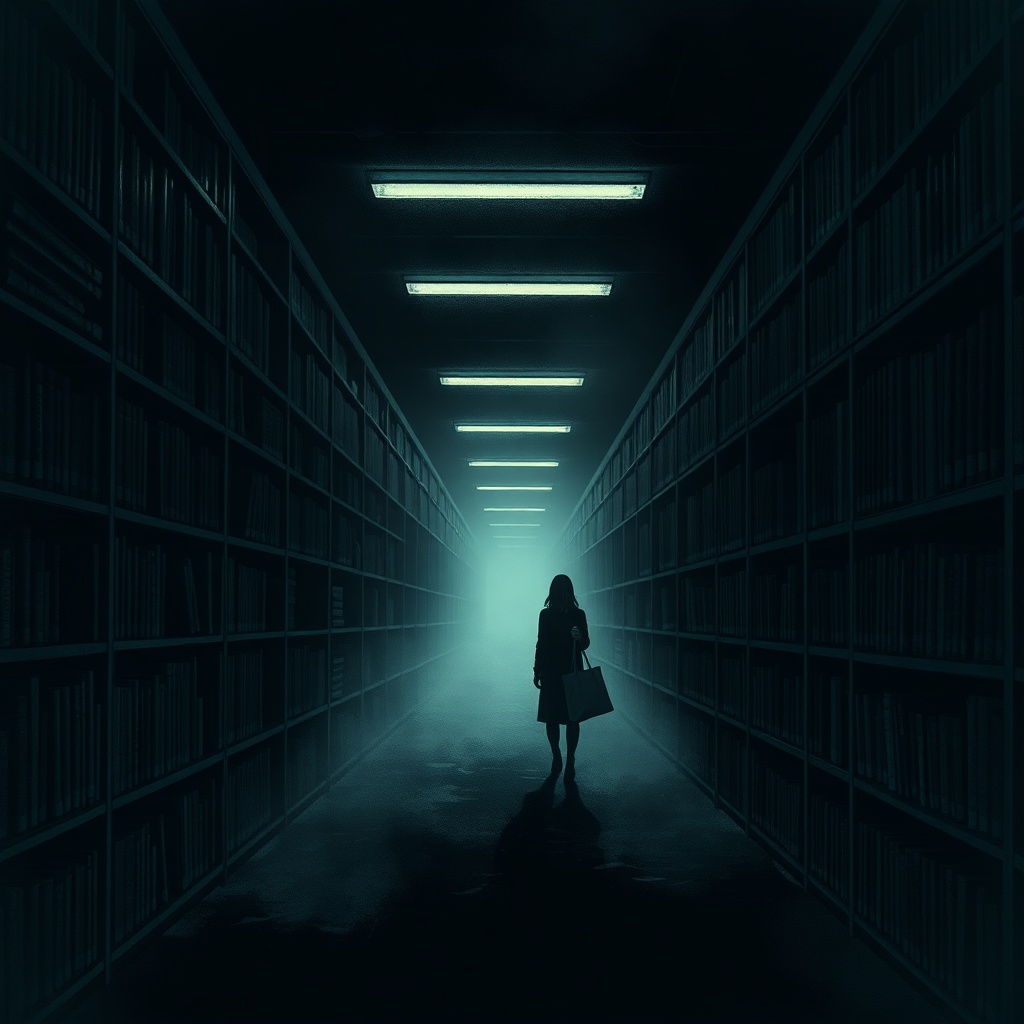
I first heard it from a friend of mine who did a few months as a night security fill-in at a public facility, the kind of job where your biggest enemy is boredom and the second biggest is your own imagination. He told it like a joke at the kitchen table, because that’s how you tell someone you’re still scared without giving them the satisfaction.
“You know what’s funny,” he said, poking at his rice like it had offended him. “Libraries smell the same at midnight as they do at noon. Like paper and dust and somebody’s old breath.”
He laughed, but not much.
A week later, I ended up with a reason to be in one after hours myself. Not a daring thing. A stupid, human thing. I’d left a notebook on a table in a small ward library, the kind tucked under a community center, and inside the notebook was a spare key I couldn’t afford to lose. The staff were kind over the phone. Too kind.
“It’s probably in lost and found,” the librarian said. “But we lock up at seven. If you come right now, I can meet you at the side entrance. Quick.”
Quick is the word that gets people killed in stories. In real life it just makes you jog in the rain.
When I got there, the building was already dim, the front windows black as closed eyes. The side entrance sat under a concrete overhang, a little metal door with a keypad and a sensor light that blinked on when I approached. For a second, it was just me and the wet parking lot and the soft hiss of traffic somewhere beyond the trees.
Then I saw someone inside the glass vestibule.
Not fully inside, not fully outside. Exactly in the doorway, like a misplaced coat on a hook.
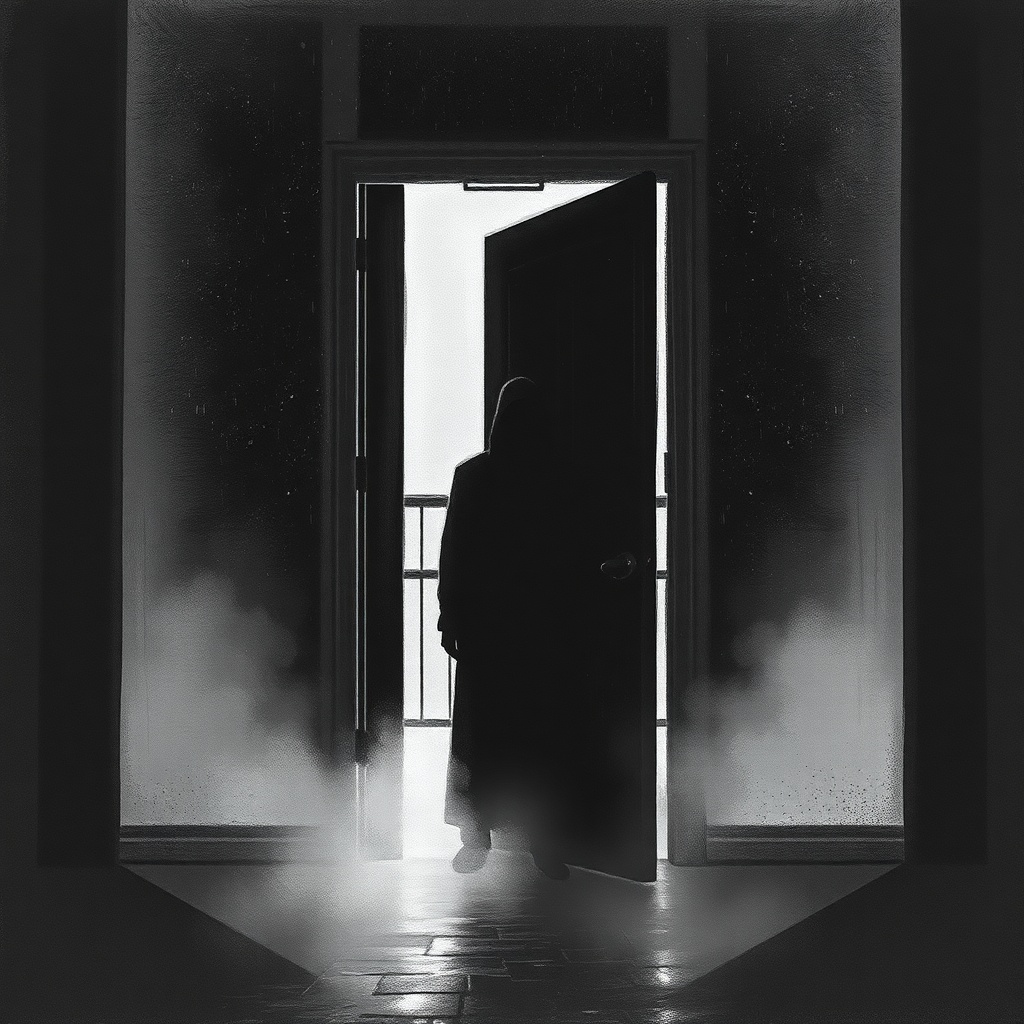
I did what everyone does. I assumed it was the librarian. I even raised my hand in a friendly little wave that made me feel like an idiot the second my fingers lifted.
The figure didn’t wave back.
It didn’t do anything.
The sensor light above me buzzed. The rain ticked against the concrete. The glass between us reflected my own face in ghostly layers, and behind my reflection was that person-shaped darkness, patient as a bookmark.
I leaned toward the intercom button and pressed it. A small chime sounded. No voice answered. Maybe it was broken. Maybe they were finishing up. Maybe.
I tapped the glass lightly. Not a knock, more of a polite suggestion.
The figure’s head tilted, just a few degrees, as if it had heard something far away. Still no face. Just the impression of a face where one should be, smudged by the glass and the poor light. It stood so close to the door that I couldn’t imagine how it was breathing.
“Excuse me,” I said, and my voice came out louder than I meant. “I’m here for the lost and found. We spoke on the phone.”
Nothing.
You know the rational tricks you do at moments like that. You start narrating your own safety. It’s a person. They’re messing with you. They’re hard of hearing. It’s a mannequin. Libraries have displays. Sure. A mannequin at a side entrance at night. Very normal. I almost laughed. That’s my defense mechanism. If I can make it stupid, it can’t make me afraid.
The figure shifted. Not forward. Not back. More like it adjusted its weight without changing position, as if the doorway itself had moved under it.
My phone buzzed in my pocket. A text. From an unknown number.
Here.
No punctuation. Like the sender didn’t have time, or didn’t understand it.
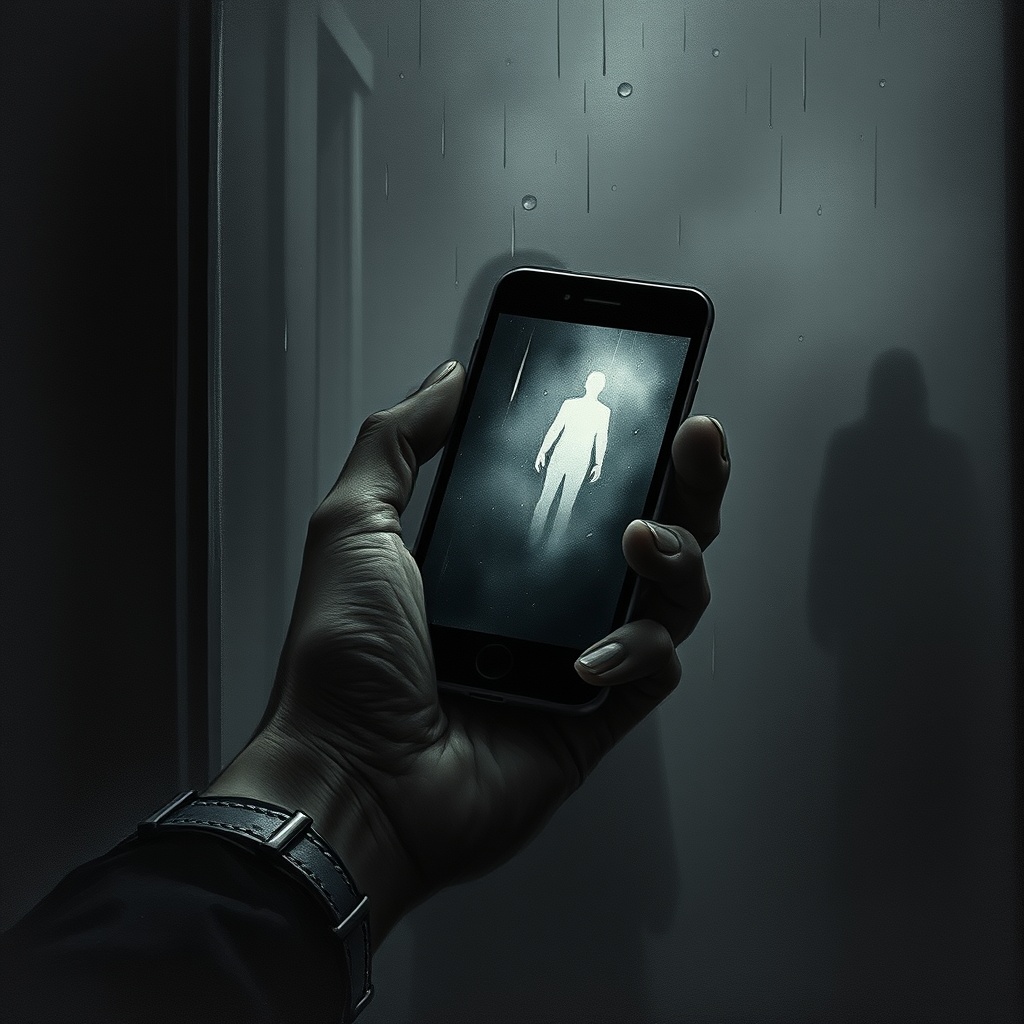
I typed back, Who is this. My screen showed the typing bubble for a moment, then nothing.
Inside the vestibule, the figure raised its hand. Slowly. The palm came up against the glass, and I felt, absurdly, that it was looking at the lines of my own hand through the barrier, comparing.
I didn’t want to look down. I did anyway.
There were shoes. That should have helped. Dark, plain, the kind anyone could wear. But they were pointed the wrong way. The toes faced into the building, while the body was angled toward me, like an animal that had learned to imitate standing without understanding which part means what.
My throat went dry. “Are you okay,” I asked, because I am the kind of person who offers help to a bear trap.
The fluorescent lights inside flickered, and for a single beat the vestibule went dim enough that the figure seemed to vanish. When the lights steadied, it was still there, but closer to the glass, its palm now perfectly aligned with mine, as if I’d lifted my own hand to match it. I hadn’t. I swear I hadn’t.
Behind it, deeper in the building, an automated voice crackled to life. Cheerful. Bright.
“The library is now closed. Please proceed to the exit.”
Proceed to the exit. Right. The exit it was blocking.

I stepped back. My heel caught the curb and I nearly went down, a little slapstick moment that would’ve been funny if the audience weren’t a silent thing in a door. I steadied myself and tried the handle anyway, because maybe it was unlocked, maybe the glass would swing outward, maybe I could just, I don’t know, solve the problem like a normal adult.
The handle was warm. Not sun-warm. Body-warm. Like someone had been holding it from the other side for a long time, patiently waiting for my hand to meet theirs through the metal.
The figure’s head tilted again, that same tiny angle. And then, finally, it did something new.
It opened its mouth.
No sound came out. No breath fogged the glass. But my phone buzzed again.
Come in.
I didn’t. I couldn’t. I backed away into the rain until the sensor light clicked off and the entrance went dark. I stood there with my heart banging like a fist against a door, staring at my own reflection in black glass.
In the dark, the vestibule became a mirror. The figure became harder to see. And that’s when I understood the part of the legend people always skim past. It’s not just that it blocks you. It’s that it uses your attention. The moment you stop seeing it clearly, it doesn’t have to look like anything at all.
I walked to my car without taking my eyes off that glass, which is a neat trick when you don’t want to trip over parking curbs. When I finally turned, my stomach dropped, because my passenger door was slightly open.
I don’t leave my doors open. I’m not that carefree.
Inside the car, on the seat, was my notebook. Damp around the edges. Open to a blank page that had never been written on.
In the center of that page, pressed so hard the paper fibers looked bruised, was the clean imprint of a hand. Five long fingers. No ink. No dirt. Just pressure, like someone had been practicing being real.
And under it, faint but certain, was the warmth of a palm that had only just lifted away.
Loved this story? Pulse it.
Pulses bubble up to the channel — they help us see which stories deserve sequels.