Shadow in the Greenhouse – Netherlands Legend
Have you ever noticed how a doorway can feel occupied even when it’s empty. Not haunted, not cursed. Just. Taken.
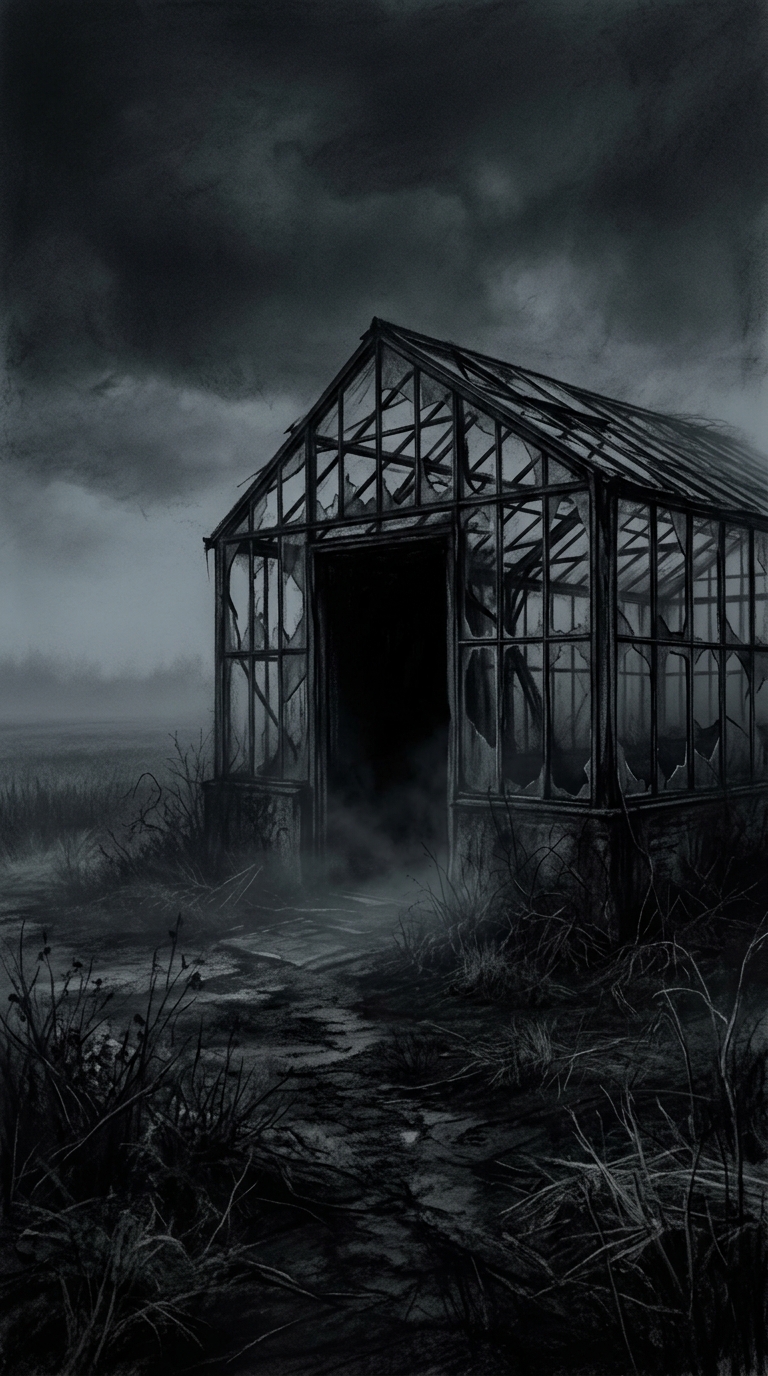
In the Netherlands, where land is measured, claimed, drained, and made obedient with ditches and pumps, there’s a stubborn little legend that refuses to be managed. People call it the Shadow in the Greenhouse, and it clings to the Westland region in Zuid Holland, that sprawl of glasshouses and industrial horticulture that makes the night sky glow orange on humid evenings. You’ll hear it tied to abandoned kassen at the edges of towns like Naaldwijk, Monster, and ’s Gravenzande, places where new development chews through old frames and sometimes leaves a structure standing for years because demolition permits, asbestos inspections, and money all move at their own pace.
The story started showing up the way these things usually do now. Not in a newspaper, not in a church sermon, but in late night posts and local dare culture. Early 2000s, then louder again around the 2010s, when urban exploring got a little more performative and everyone suddenly had a phone camera and the confidence to trespass. Teenagers would bike out in groups, park near a service road, and push through brambles to a greenhouse that “wasn’t used anymore.” They weren’t chasing ghosts exactly. They were chasing that specific kind of fear that’s clean and sharp, the kind you can laugh about later at the snack bar with your hands still smelling like rust.
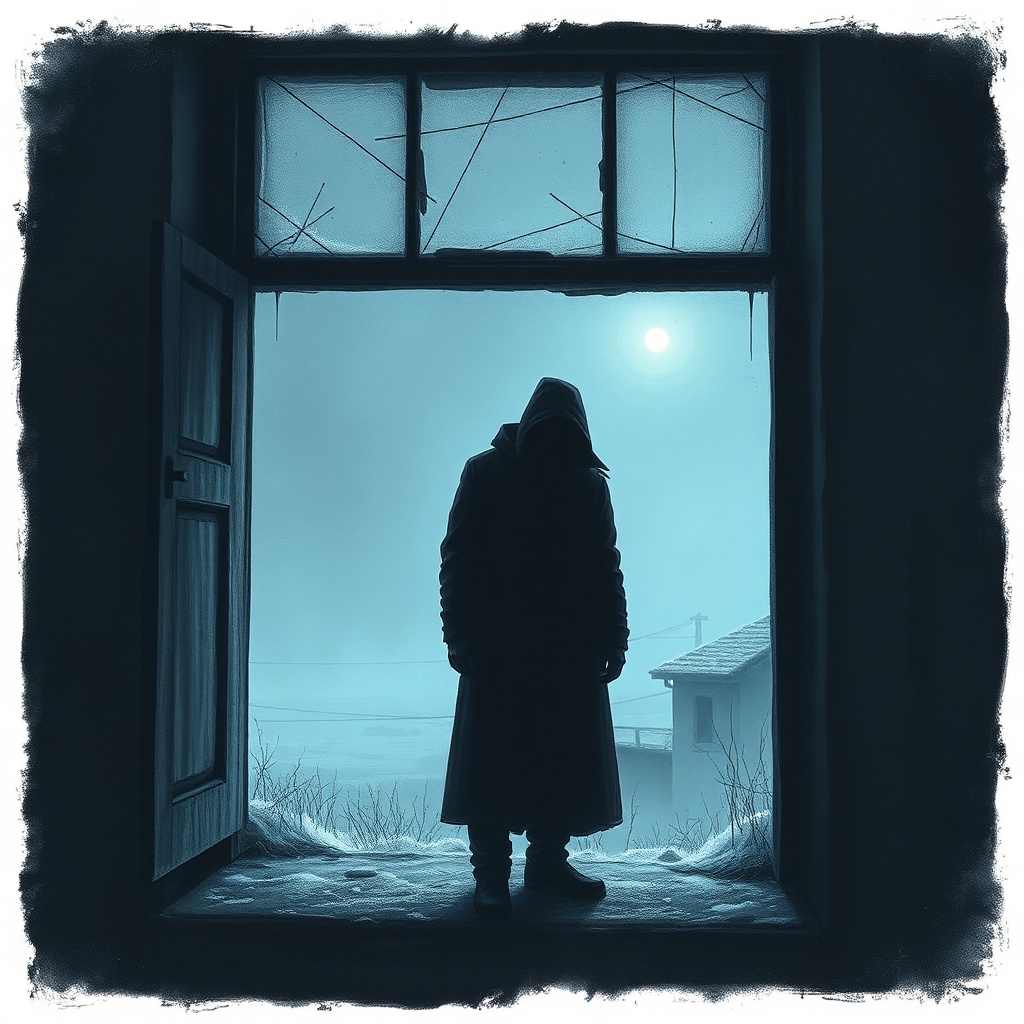
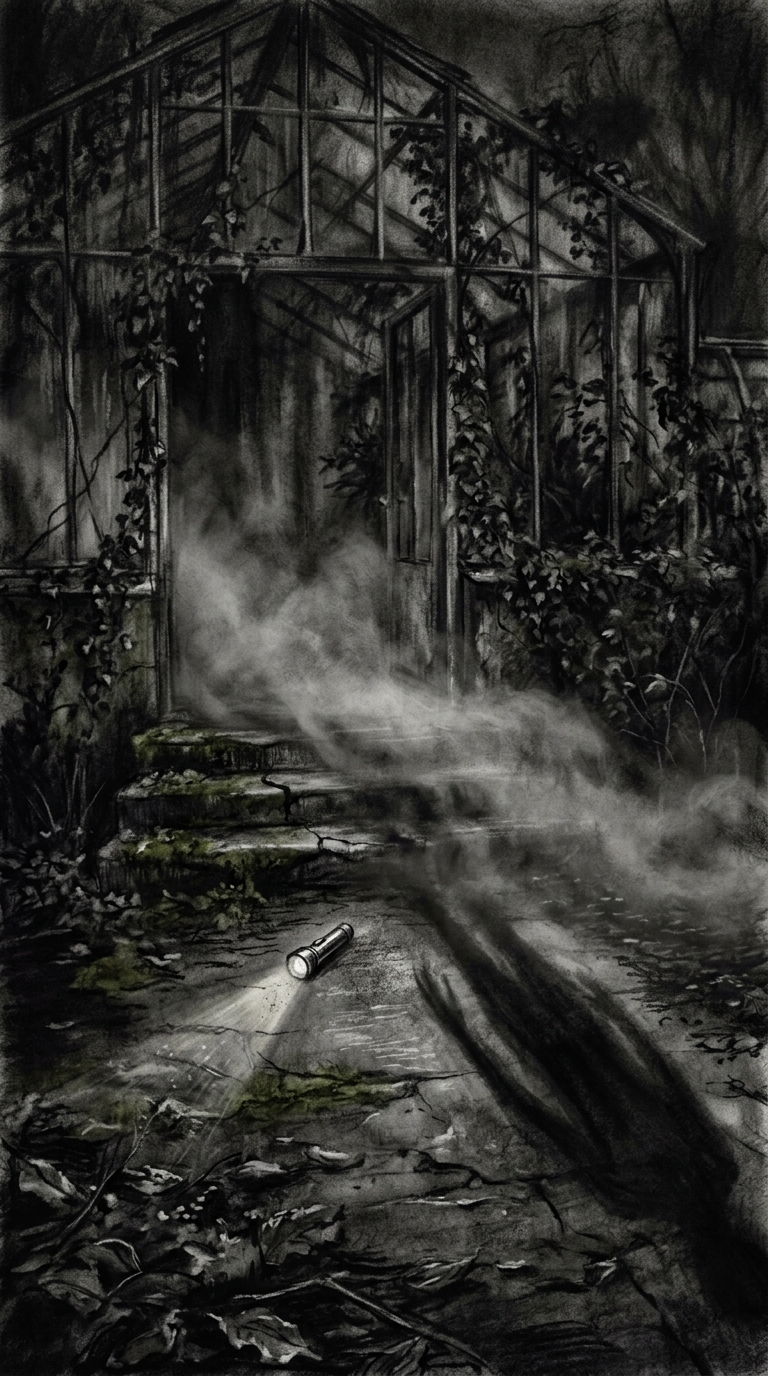
What people believe about it is weirdly consistent across retellings. There’s an abandoned greenhouse. The glass is broken in a way that suggests years, not one act of vandalism. The air inside is warmer than it should be. You can hear dripping, even in dry weather, and sometimes the soft tick tick tick of something settling that isn’t wind. And at the doorway, always at the doorway, there is a shadow that doesn’t detach from the frame. It doesn’t roam. It doesn’t chase. It just stands in the threshold like it owns the concept of entering.
Some versions attach a “real” cause. A worker who died in a heating accident when the boilers were still running. A night watchman who hanged himself from a beam after being blamed for a theft. A migrant laborer who fell and wasn’t found until morning. Westland has enough hard work and quiet tragedies that any one of these could be true somewhere, which is part of why the legend sticks. It doesn’t need a specific name. It feeds on the fact that greenhouses are built for life, but they’re also built like machines. When they’re abandoned, they don’t feel like empty houses. They feel like equipment left running in the dark.
And the ending, in most tellings, is a dare that turns into a rule. You go in. You see the shadow. Someone shines a flashlight, and the beam refuses to land on it properly, like it’s swallowing light. If you’re brave or stupid, you step toward it, and the temperature drops right at the threshold. The shadow doesn’t move, but you feel pressure, like walking into a strong wind that isn’t there. Then one of three things happens. You blink and it’s closer. You look away and hear a footstep behind you, even though no one is there. Or you make it out, laughing, and later that night you wake up and your bedroom doorway is occupied by something that is not your coat on a chair. The moral is never spoken, but it’s understood. Don’t bring it home. Don’t cross a threshold that isn’t yours.
I first heard it from a friend of mine who grew up near the green glow of the glass. He told it the way people tell you something they half believe and fully respect.
“Don’t go into the old kas at night,” he said, spooning sugar into coffee at my kitchen table like he was trying to weigh his words. “You’ll think it’s just kids talking. Then you’ll see the doorway.”
I did the stupid thing you do when a person sounds sincere. I asked which one.
He gave me a look. “That’s the point. It can be any of them.”
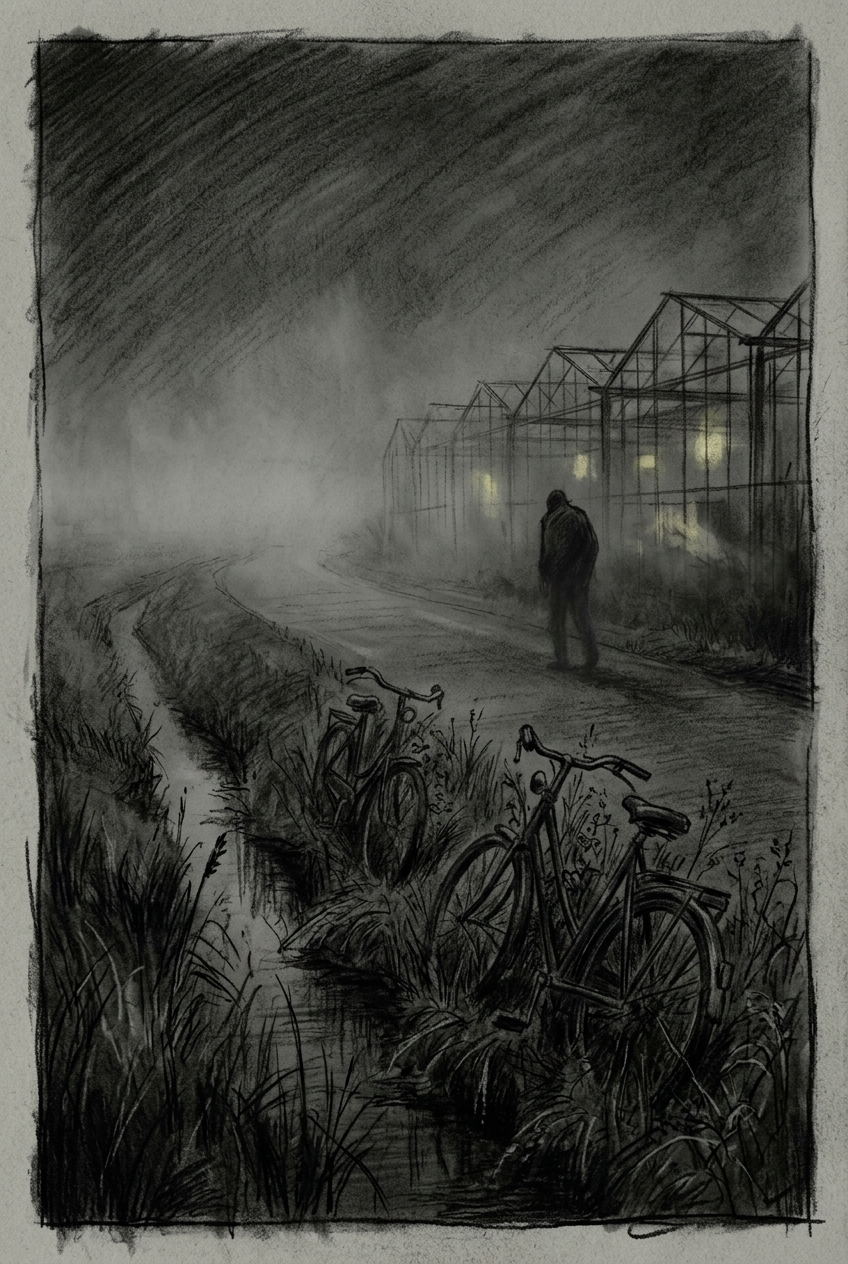
A week later, because I’m apparently the sort of person who can’t leave a sentence like that alone, we drove out after dark. No big expedition. No headlamps and walkie talkies. Just two phones, a small flashlight, and the kind of confidence that comes from being in a country where most dangers are politely signposted in advance.
The road was a ribbon between ditches. Water lay black and still, reflecting the cloud cover like a second sky. The air smelled like wet soil and fertilizer, that clean chemical edge that makes you think of growth and rot in the same breath. In the distance, modern greenhouses glowed softly, enormous and humming, like cities you weren’t allowed to enter.
The abandoned one was smaller, crouched behind a row of wind bent shrubs. Its panes were missing in patches, the remaining glass filmed with algae. The metal ribs were exposed like a skeleton. When we got close, my friend slowed down. I could tell he was listening for something he didn’t want to hear.
“There,” he said, and pointed like he hated his own finger.
The doorway was just a rectangle cut into darkness. No door. No chain. Nothing to stop you. Which is always the most suspicious kind of invitation.
We stood outside for a minute, pretending we were deciding. The truth was we were waiting for our bodies to make the decision for us. Sometimes your skin votes before your mind does.
The thing about abandoned greenhouses is the sound. It isn’t quiet. It’s never quiet. Plastic sheeting flaps somewhere. A loose pane taps a frame. Water drips from a pipe that should’ve been shut off years ago. And underneath it, a kind of breathy hush, as if the whole structure is exhaling.
My friend raised his phone, flashlight on, and aimed it into the doorway.
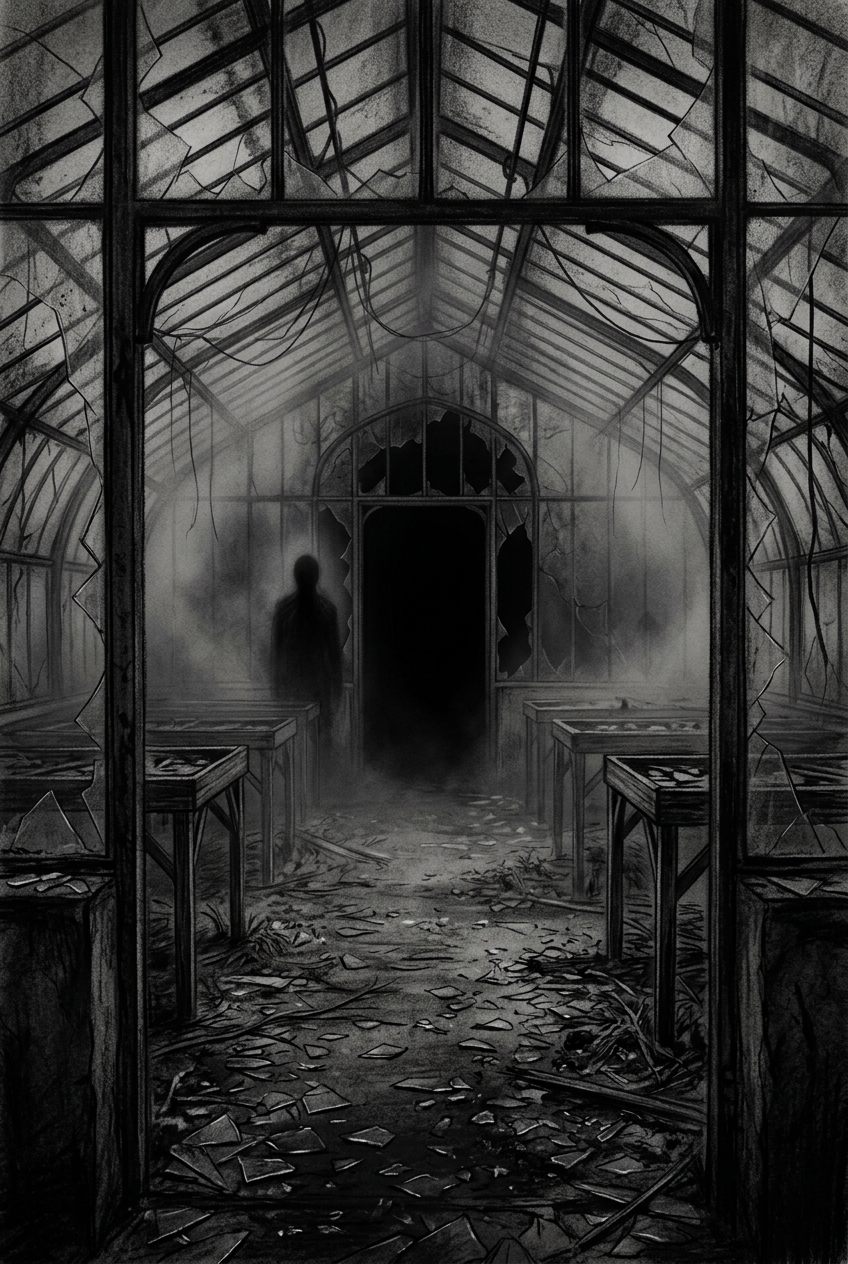
The beam went in. It lit up the immediate floor, the scattered grit, the pale ribs of metal. But the corners stayed wrong. The light didn’t spread like it should. It felt absorbed, like the air inside had weight.
“Do you see it,” he asked.
“At the doorway,” I said, and I hated how quickly the words came out.
There was a shape standing in the threshold. Not a person. Not even a silhouette with shoulders and legs. More like a density, a piece of the dark that had stepped forward and decided to stay. It was darker than the surrounding darkness, which sounds impossible until you’re looking at it and your eyes keep trying to adjust and failing.
My friend laughed once, a short burst that didn’t match his face. “Okay. So that’s real.”
I didn’t answer, because my brain had started doing that ugly arithmetic it does in fear. If it’s real, then it’s not a story. If it’s not a story, then it can happen.
I took a step closer before I meant to. The air changed. It wasn’t cold exactly. It was empty, like the warmth had been siphoned away. My ears popped slightly, like altitude, like pressure. My flashlight beam trembled on the floor, and the shadow didn’t react. It didn’t flinch. It didn’t grow. It just waited, patient as a locked gate.
Then, from somewhere deeper in the greenhouse, I heard the faintest scrape, like a shoe on concrete.
My friend’s head snapped toward the sound. “No,” he said, softly, as if correcting a child.
“What,” I whispered.
He didn’t take his eyes off the darkness inside. “It’s not supposed to be inside.”
We should’ve run then. That’s the sensible version. But the sensible version of you is always late to the party.
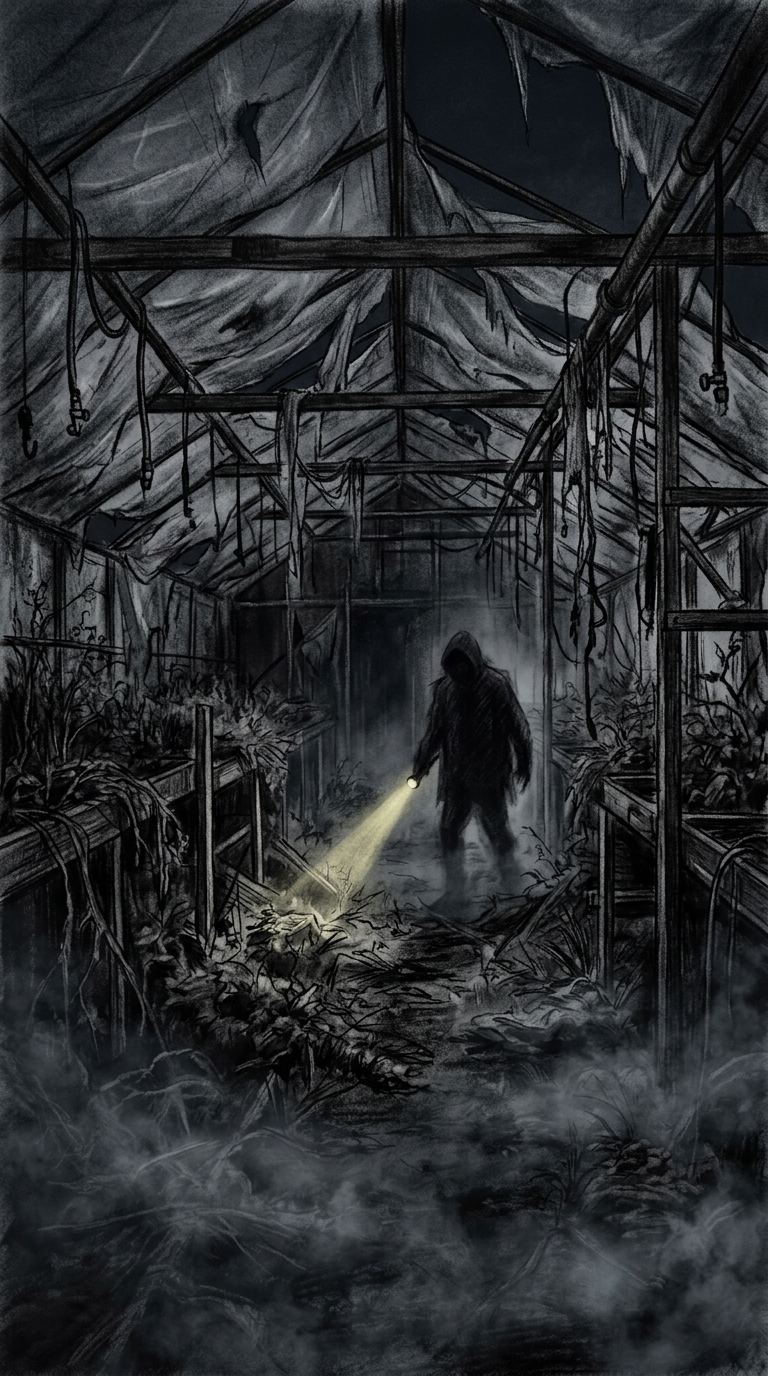
The scrape came again, closer. Not a footstep. Not a drag. More like something being pulled, gently, along the ground. The kind of sound you make when you move a chair, only smaller, as if whatever made it didn’t have much mass.
My friend lowered his phone light, aimed it down the aisle. “Hello,” he called, which was an insane thing to do, but people get polite when they’re terrified. It’s a reflex. If you act normal, maybe the abnormal will feel obliged to act normal back.
Nothing answered. The greenhouse held its breath.
I looked back at the doorway, because the rule in the stories is to watch the threshold. That’s where it is. That’s where it stays.
It wasn’t there anymore.
Not gone. Not vanished. It had moved, and my eyes understood that before my mind did. The dark in the doorway was now just darkness, ordinary and indifferent. The shadow had stepped away from the frame.
I felt it behind me, not as a hand or a breath, but as an arrangement of space. Like the air had been reorganized into a shape that didn’t need light to be seen.
My friend whispered my name, the way you whisper when you don’t want to confirm something out loud.
I turned my head a fraction. Not enough to give it a full look. Just enough to betray myself.
The aisle beside us was full of fog, thicker than it had any right to be. In it stood a taller column of black, not quite human, not quite not. And where its head would’ve been, there was a suggestion of angle, like a figure leaning forward to see if you were going to do something stupid.
I did something stupid. I looked down at the floor.
There were wet footprints on the concrete, appearing one after another, as if someone was walking across a damp patch. They were not coming from the doorway. They were coming from deeper inside the greenhouse, heading toward us, and the prints were wrong. Too long. Too narrow. Like the foot of a bird that had decided to pretend.
My friend grabbed my sleeve and yanked. We ran. We didn’t pick a direction so much as explode toward the exit, bodies suddenly remembering what they were built for. The broken glass crunched under our shoes. Something clinked as we knocked into a metal table. The sound rang out, too loud, like a bell.
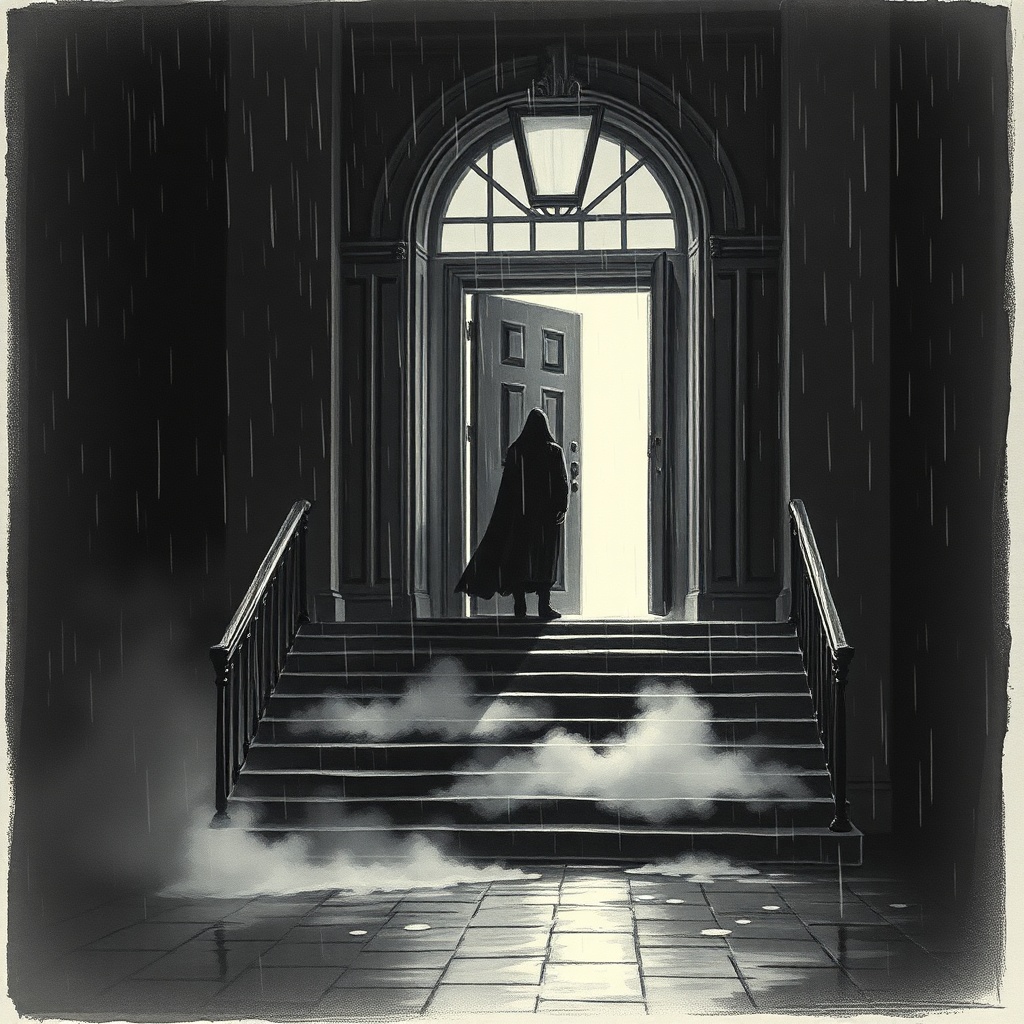
At the doorway, I felt that pressure again. Not resisting. Measuring. The threshold was no longer an opening. It was a decision.
We crossed it anyway. Cold air hit my face like a slap, and for a second I thought we’d made it, that the legend was just a theatrical little knot of fear you could untie by sprinting.
Then my friend stumbled, hard, as if someone had hooked his ankle. He caught himself on the frame, breathing like he’d been punched.
“Go,” he gasped.
I turned back, because I’m loyal or foolish, and I saw the shadow standing exactly where it had started. In the doorway. Perfect. Still. As if it had never moved at all.
My friend was staring at his own shoes.
“What,” I said.
He lifted one foot. There was a wet mark on the sole, a smear like mud, but darker. The kind of dark that doesn’t reflect.
“That’s not from here,” he said, and his voice had gone flat, almost annoyed, like someone discovering a stain on a clean shirt.
We didn’t talk much on the drive back. The car felt too small. Every reflective surface seemed busy. The windshield showed our faces faintly, and behind them the suggestion of other shapes in the glass, which is probably just how glass works, but try telling your nervous system that.
When I got home, I did what everyone does after they’ve been frightened in a place with no address. I checked my locks. I turned on lights. I told myself a story about how adrenaline plays tricks.
Then I noticed the hallway felt colder than the rest of the house. The air there had that emptied quality, like warmth had been removed with a careful hand.
My bedroom door was half open. I don’t leave it half open. I’m not a monster.
From the kitchen, my phone buzzed with a message from my friend.
Don’t look at your doorway. Just shut it.
I stared at that sentence long enough for the screen to dim. Behind me, in the hall, something made the tiniest sound, like a heel settling into place.
I stood very still, because some ancient part of me understood the rule that nobody ever says out loud. The shadow doesn’t chase you down roads. It doesn’t climb through windows. It waits for a threshold. Any threshold. It’s not about the greenhouse. It’s about the moment you decide to enter, and the moment you decide to leave, and the thin line in between where you belong to neither side.
I reached out, slow, and pushed my bedroom door until it clicked shut. The sound was soft. Final.
In the darkness of my hallway, something shifted, as if disappointed. And then, from the other side of my bedroom door, I heard a gentle scrape across the floor. Not a footstep. Not a drag.
Like something being pulled, patiently, toward the place where I sleep.
Loved this story? Pulse it.
Pulses bubble up to the channel — they help us see which stories deserve sequels.