
Pizza Delivery No-Go List: Why Restaurants Refuse Orders
If you’ve ever wondered why a pizza place will happily deliver to your neighbor but suddenly “can’t find” your address, there’s a good chance you’ve met the quiet little concept known as the no-go list. It sounds like something out of a spy movie, but it’s usually way more mundane. Also way more awkward. And sometimes, yes, genuinely shocking.
Every delivery shop has some version of institutional memory. Sometimes it’s formal, like an actual note in the ordering system. Sometimes it’s just a manager saying, “Don’t send anyone there after dark.” Either way, it’s a set of rules built from one messy truth: delivery drivers are the ones doing the risky part. They’re walking up strange driveways at night, carrying cash or food, dealing with drunk customers, loose dogs, icy steps, and the occasional person who thinks “prank” means “make a stranger fear for their life.” The no-go list is what happens when a business decides a few orders aren’t worth someone getting hurt.
The most common entries are boring. “Repeated non-payment.” “Fake orders.” “Always claims food never arrived.” But the stories people trade, the ones that end up on AskReddit threads and in break-room lore, tend to fall into a handful of categories that make you understand the policy in about three seconds.
One category is the “bait order.” Someone calls in, pays cash, gives a real address, and when the driver arrives, the goal isn’t pizza. It’s to rob them. Cash used to be a bigger thing, so this was more common years ago, but it still happens. A driver is predictable: they show up alone, they’re focused on finding the door, and they’re usually carrying something worth taking. Even if the money in the pouch is small, the phone and car are not. Once a spot gets connected to anything like that, it’s basically immediate exile. Managers can’t exactly say, “We’ll try again and hope the knife guy is in a better mood.”
Then there’s the “unsafe property” list, which is sometimes the most infuriating because it’s not always the customer’s fault. Think: apartment complexes with broken exterior lights, stairwells that smell like bad decisions, buildings where the unit numbers are missing, and the only entrance is around the back by the dumpsters. Or houses with steps that turn into an ice rink in winter. Or a yard full of holes. You’d be amazed how quickly one nasty fall becomes policy. Businesses are not sentimental about liability. One worker’s comp claim can wipe out a month of profit, and the driver can wipe out their wrist.
The third category is “aggressive animals,” and this one is so common it’s practically a genre. A loose dog is the classic. The driver cracks the gate, dog bolts, everybody screams, pepper spray comes out, and suddenly you’ve got a neighborhood Facebook post titled “Monster delivery guy attacked my baby” and another post titled “Please control your dog.” Some shops will still deliver if you meet outside and leash your pets. Some just mark the address. Drivers talk to each other. If one person gets bitten, nobody wants to be the second bite.
Now for the stories that make the no-go list feel like a cursed object.
There’s the “repeated harassment” customer. Not just rude. The person who answers the door half-dressed every time and makes it weird on purpose. The one who tries to invite the driver in. The one who “accidentally” brushes someone’s hand when taking the change. Delivery work has this strange forced intimacy: you’re literally showing up at someone’s home, sometimes late at night, and they can treat you like a prop in their private little theater. A lot of shops are finally getting better at taking that seriously. But it still often depends on whether a manager believes their driver, which is its own depressing subplot.
Another recurring theme is “weirdness escalation.” It starts small. A customer complains every time. Or always claims something is missing. Or calls the shop repeatedly to ask personal questions about the driver. A friend of mine worked delivery years ago and said there was one house where the person would order, then refuse to open the door until the driver “confirmed the password.” There was no password. The customer would just keep them standing there, arguing, like it was some sad little power game. After enough of that, the shop just quietly stopped taking the orders. Not out of fear, exactly. Out of exhaustion.
And then you’ve got the prank calls that go too far. Kids think it’s hilarious to send a driver to an empty lot, or to a house that didn’t order anything, or to a random address where someone answers furious and confused. That last one is the part people don’t think about. If you send a stranger to another stranger’s door late at night, you’re basically manufacturing conflict. In some places, that’s not just rude. It’s dangerous. One or two of those and a shop will block the phone number, block the address, and sometimes tell neighboring shops to do the same. Delivery places are like little gossip networks with mozzarella.
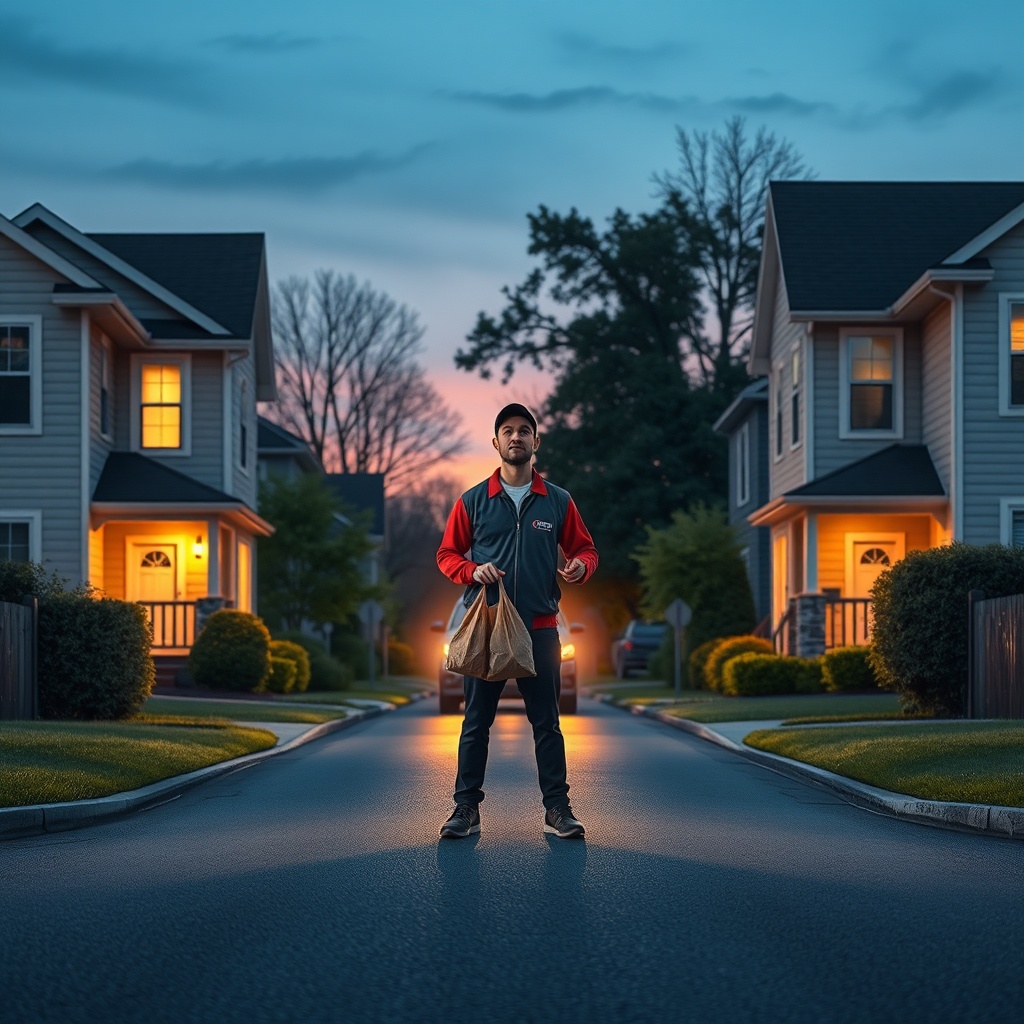
So how do no-go lists actually work? In the simplest version, the system flags an address with a note: “Cash only,” “Meet outside,” “No after 10 pm,” “Call on arrival,” “Do not deliver.” The middle version is a manager’s handwritten sheet near the phone, which is as chaotic as it sounds. The advanced version is geofencing: a delivery radius that quietly avoids certain pockets, sometimes for safety, sometimes for sheer economics. If it takes 25 minutes to reach an area and the tips are consistently awful, the shop will pretend it’s “out of range.” Not moral. Just math.
And yes, sometimes it’s not even about danger. Sometimes it’s about the customer who keeps ordering ten minutes before close and then “is in the shower” when the driver arrives. Or the one who insists on counting every slice at the doorstep like they’re auditing the Pentagon. Or the one who demands the driver come inside to set the food on the counter, which sounds polite until you remember drivers are trained to avoid entering homes for safety reasons. The no-go list isn’t always about monsters. Sometimes it’s about boundaries.
What’s interesting is how these lists shape a neighborhood in tiny invisible ways. A person can get blacklisted from one shop and think, “Whatever, I’ll order somewhere else.” But if the reason is serious, word spreads. Drivers jump between restaurants. Managers talk. The ecosystem remembers. And on the flip side, the list can punish people who didn’t do anything. A new tenant moves into an apartment that used to be a problem address, and now they can’t get a pizza delivered without promising they’re not “that guy.” Imagine having to swear you’re not the local legend of unpaid breadsticks.
So what should you do if you suspect you’re on one? First, don’t go full courtroom drama on the phone. Ask calmly if there’s a note on your address and what you can do to fix it. Offer to prepay. Offer to meet at the lobby or curb. Confirm your phone number. If it’s a safety issue like lighting or a broken gate, fix what you can and tell them. If it’s a past tenant, say that plainly and be consistent. Delivery places are wary, but they love a boring customer. Boring is the dream.
The real twist is that the no-go list is less about punishment and more like a scar. It’s a record of all the times a simple job turned into something it was never supposed to be. Pizza delivery is marketed as cozy, warm box, happy dinner. But the infrastructure behind it is a bunch of people making judgment calls at 11:30 pm in the rain, trying to get home safe.
And once you see it that way, the “no-go list” stops sounding shocking and starts sounding like the most reasonable thing in the world. The shocking part is that we ever expected strangers to knock on any door, anywhere, at any hour, just because we felt like extra garlic sauce.
Loved this story? Pulse it.
Pulses bubble up to the channel — they help us see which stories deserve sequels.
You might also like
Vault
Discover the Clitoris: Fun Facts You Didn't Know

Super El Niño: Unraveling Its Surprising Impact on U.S. Weather

Historical Torture Methods and Devices Explained