The Shadow in the Finnish Sauna
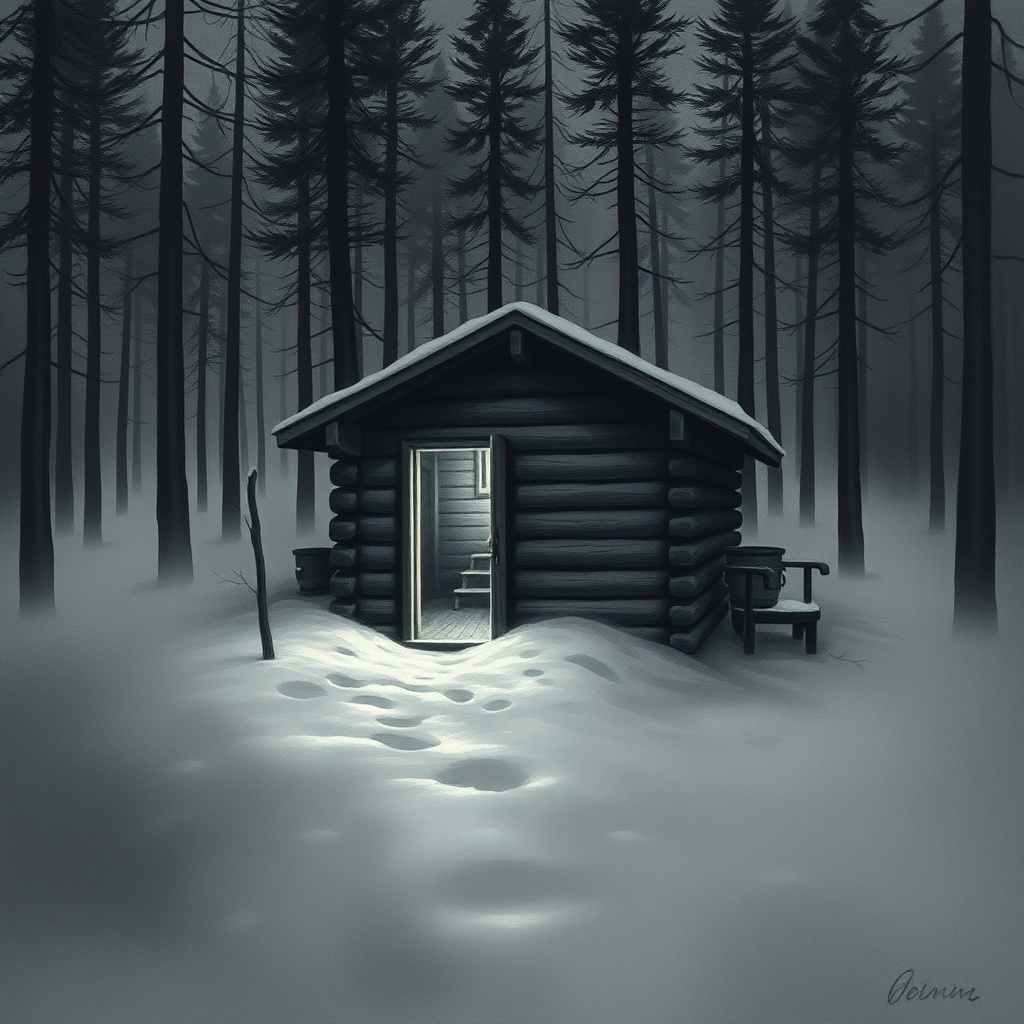
People love to say the sauna is the safest room in Finland, but if that were true, nobody would warn you about what happens when you heat it alone.
The “Shadow in the Sauna” is one of those modern folk-horrors that isn’t pinned to a single village the way older Finnish spirits are. It spread the way steam spreads, quiet and fast. You hear it first as a joke after midnight, from someone with a towel around their neck and a beer in their hand, acting casual. Then you notice everyone’s laughing a little too hard. By the early 2000s it was being traded in forums and night-shift break rooms, and lately it’s become a staple story told to tourists right before they’re left alone to “enjoy the authentic experience.” Funny how authenticity always includes a locked door.
The legend borrows a lot from older Finnish beliefs without admitting it. In traditional folklore, the sauna isn’t just a washroom. It’s a border place. People used to give birth there. They washed bodies there. They healed there. It had rules, taboos, and a presence of its own. The old name you sometimes hear, saunatonttu, is the sauna’s household spirit. Treat the sauna well and it protects the place. Disrespect it, and you get punished. The Shadow story feels like the ugly, late-night cousin of that: not a helpful guardian, but an extra “someone” that appears when the room is at its hottest and your head is light and your ears are full of blood.
Ask ten Finns what they’ve heard and you’ll get eleven versions, but they circle the same core details. You go in alone. Usually it’s a lakeside sauna, sometimes an apartment building sauna booked for your private slot, the kind with a reservation sheet and a rule about not pouring too much water on the stones. You sit. You throw löyly, steam, because you’re trying to do it properly. The air thickens and the wood creaks and the thermometer climbs. Then you realize something is different about the shadows.
They don’t match what the lantern or the bulb should be doing. A patch of dark collects in the corner, dense as felt. Some people say it’s shaped like a man, but no clear face, no details you can swear to. Others say it’s only a wrongness, like the absence of light where light should reach. You blink hard and it’s still there. And the part that makes the story stick, the part people don’t like repeating, is what happens when you acknowledge it.
If you speak first, it stays. If you look too long, it moves closer without moving. If you throw water, the hiss sounds like a breath that isn’t yours. The old-timers’ ending is moral, like all good folklore endings: you were arrogant, you sauna’d wrong, you disrespected a sacred room, and the sauna teaches you manners. The modern ending is meaner. The door won’t open. Your phone won’t wake. The air gets too thick to shout through. You stumble out eventually, or you don’t, but either way you never again sit in a sauna without counting the shadows. The story usually ends with a simple instruction, delivered like a superstition but treated like advice: never be the last one inside, and never look into the darkest corner when the steam is at its fullest.
The first time I heard it, I laughed. I laughed because I was warm and clean and full of cheap confidence, and because there’s something ridiculous about being afraid of a room made of pine boards.
A friend of mine from Helsinki told it at a kitchen table, cutting rye bread with the kind of seriousness usually reserved for funerals and hangovers.
“Don’t sauna alone at the summer cottage,” he said.
“Why. Because I’ll pass out and become an embarrassing cautionary tale,” I said.
He didn’t smile. “Because you’ll invite it.”
I wanted to ask what “it” was, but the way he said the word made it feel like a name. He finally shrugged like he regretted bringing it up at all.
“Shadow. Presence. Whatever. It’s not supposed to be empty when it’s that hot,” he said. “Someone always comes to check.”
That last line. That was the one that followed me north.
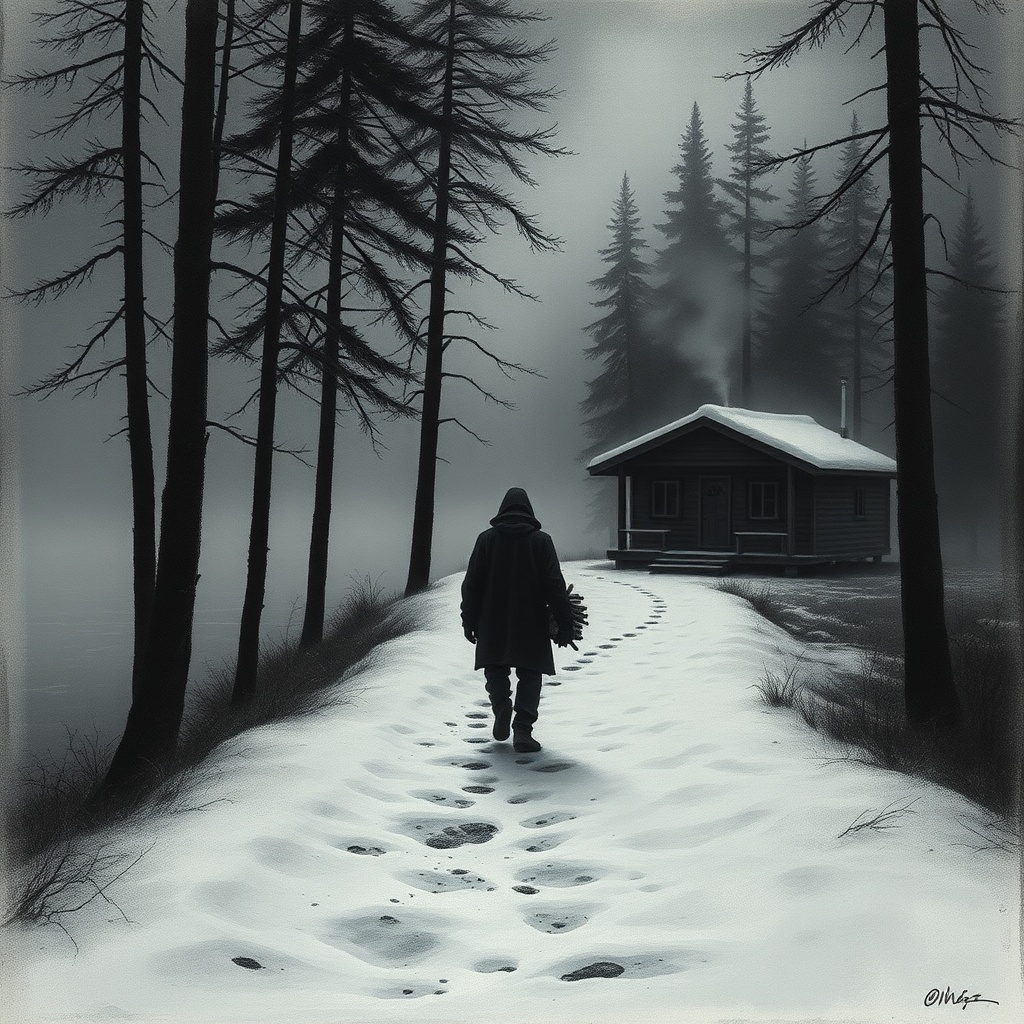
I went to a rented lakeside cottage in late autumn, the season when Finland starts pretending it isn’t going to be winter yet. The lake was black glass with a skin of mist. The trees stood tight and patient. The sauna sat a little apart from the main cabin, as they should, a small wooden box with a tin chimney and a path worn into the frost.
I told myself the legend was just a legend, a modern update to keep tourists from doing something stupid. Which is fair. Human beings are excellent at dying quietly in warm rooms.
Still, when evening came and the sky turned to bruised ink, I found myself laying kindling like I was performing a ritual I didn’t fully understand.
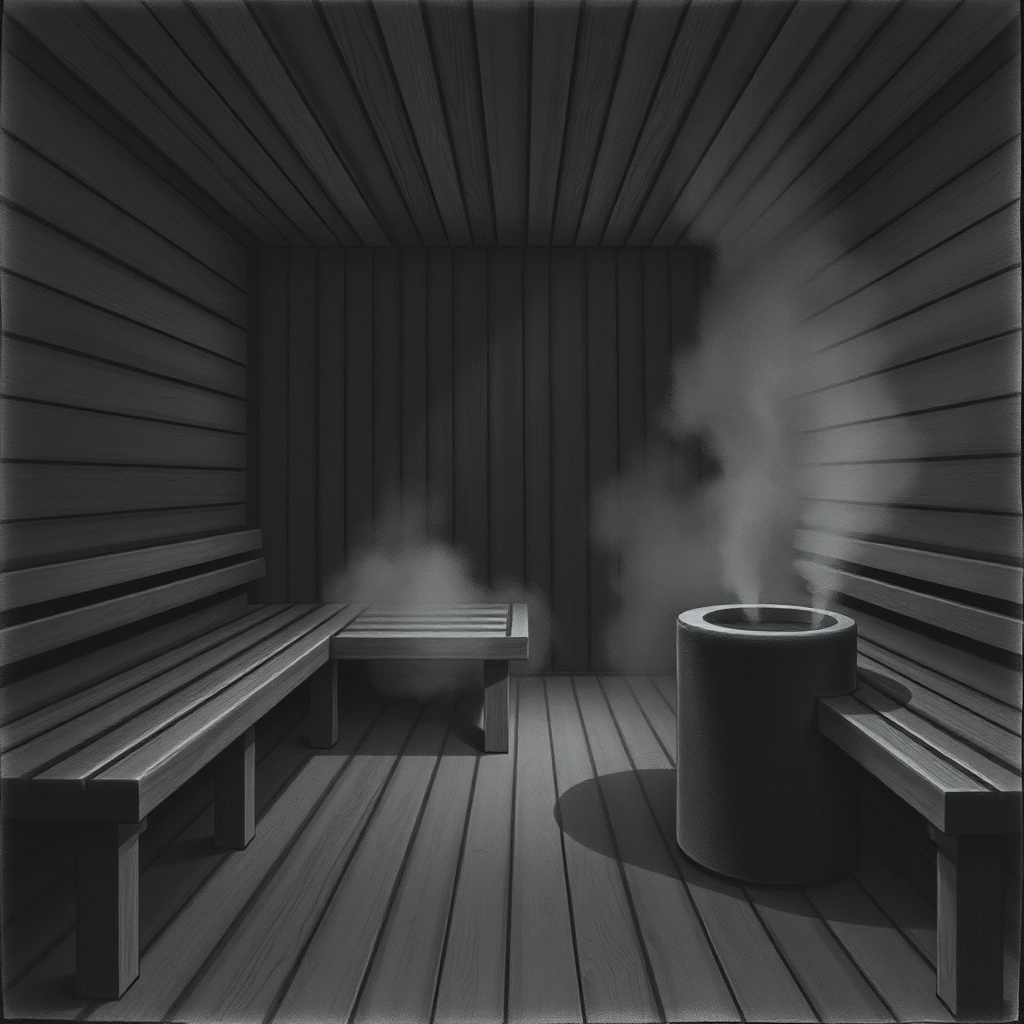
The stove took time. The stones clicked as they warmed, tiny internal pops like knuckles cracking. The smell of resin and old smoke rose from the walls. I sat on the lower bench first, pretending I was easing in for health reasons and not because the upper bench suddenly seemed like a stage.
There was a small bulb outside the sauna room, in the changing area, and it threw a thin stripe of light under the sauna door. Inside, the only illumination was the faintest leak from a high window, moonlight filtered through steam-stained glass. Everything was brown and honest and close.
The heat climbed. I listened to the building settle. A sauna isn’t silent if you pay attention. The wood complains. The stove answers. The air shifts like a living thing.
I tossed my first ladle of water onto the stones. The löyly rose up with a hard hiss, fast and eager. The steam wrapped my shoulders. My skin tingled. For a moment, I understood why people swear the sauna is holy. It strips you down to breath and heartbeat, nothing else.
Then I became aware of the corner opposite the stove.
It wasn’t that it was darker than the rest. Corners are darker. It was that it was dark in a way that looked intentional. Like something had decided to stand there and not reflect light.
I leaned forward. Steam slid across my eyes and made everything wobble.
“There you are,” I muttered, because my brain is an idiot and sarcasm is my shield.
The corner did not appreciate my comedy.
The shadow thickened. Not swelling like smoke, not creeping like a person. It simply became more present, as if the room had decided to allocate more of itself to that darkness. The hairs on my arms rose, not from heat but from the sudden certainty of being watched.
I tried the sensible explanation first. Light. Angles. Steam. A knot in the wood messing with perspective. I blinked until my eyes hurt. The shadow remained.
I stood up, my feet sliding a little on the warm boards, and moved toward the door because I didn’t want to be dramatic. I just wanted to step out, cool down, laugh at myself, and maybe quietly never mention this again.
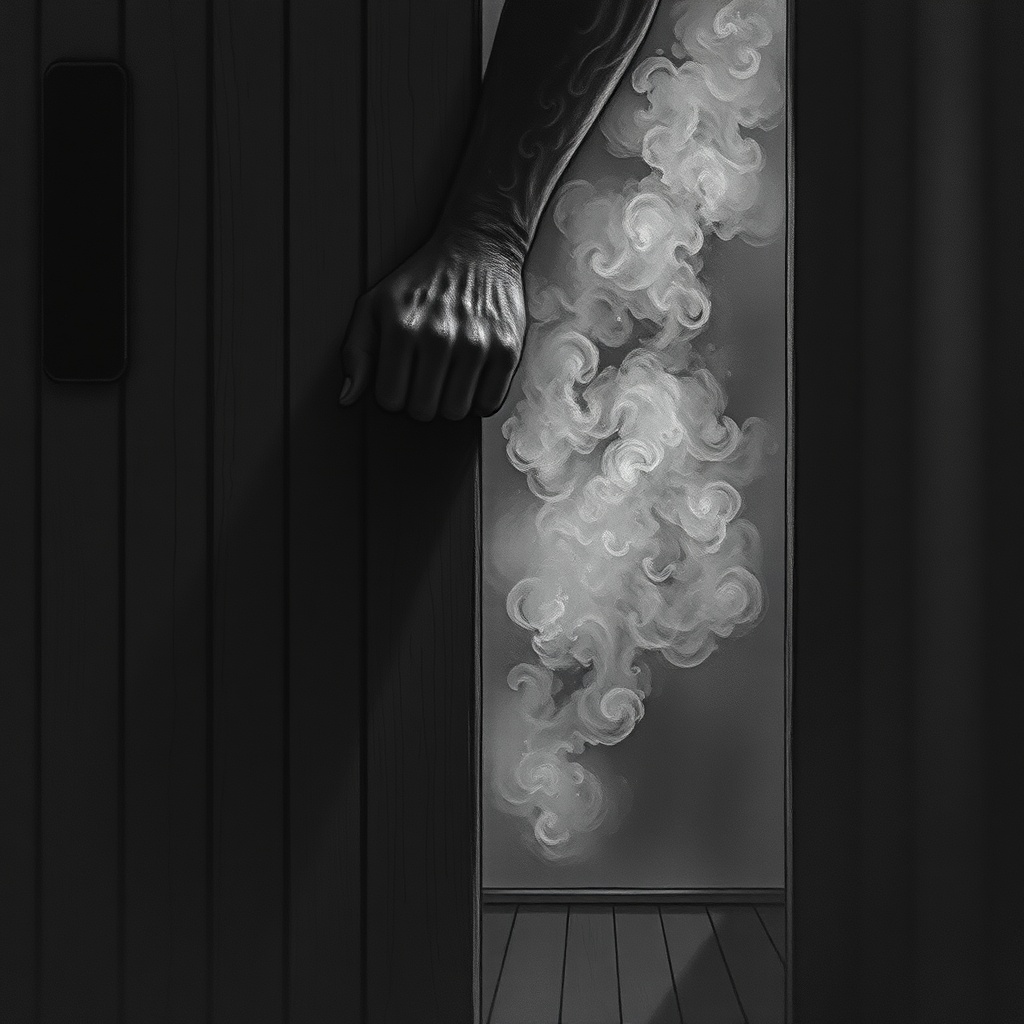
My hand found the latch. I pulled.
The door didn’t budge.
It wasn’t locked. I would have heard the click. It just held, as if the wood had swollen in an instant, as if the frame had tightened its grip.
I pulled harder. The handle bit into my palm. The door gave a millimeter, maybe. Then stopped, stubborn as a jaw.
Behind me, the stove hissed, though I hadn’t thrown water.
I forced myself to breathe slow through my nose. Panic in a sauna is not a complicated equation. Panic equals fast breathing. Fast breathing equals dizziness. Dizziness equals you waking up somewhere you’d rather not, or not waking up at all.
I turned my head, carefully, the way you might turn toward a sound in a dark hallway without wanting whatever made it to know you heard.
The shadow was no longer contained in the corner. It had reached the floorboards in a long smear, like spilled ink that refused to reflect heat. It didn’t move, exactly. It advanced by being there.
My mouth went dry in the wettest room imaginable.
There are rules people tell you for the Shadow legend. Don’t speak first. Don’t stare. Don’t throw water when you feel it watching. And above all, don’t show fear, because fear is an invitation.
I had already broken at least two, and I could feel the third one itching in my hand, because the ladle sat on its hook beside the stove and my body wanted to do something familiar, something ordinary, something that proved I was still in charge.
I grabbed the ladle anyway, because I am also stubborn.
I poured water onto the stones.
The hiss was wrong.
It started like normal, then stretched too long, drawn out like a whisper someone is trying not to make. The steam came up thick, thick, thick, blinding. The room disappeared. The heat slapped my face and pushed itself down my throat. And through that white, boiling fog, I heard a sound close to my ear that wasn’t steam.
A quiet exhale.
Not mine.
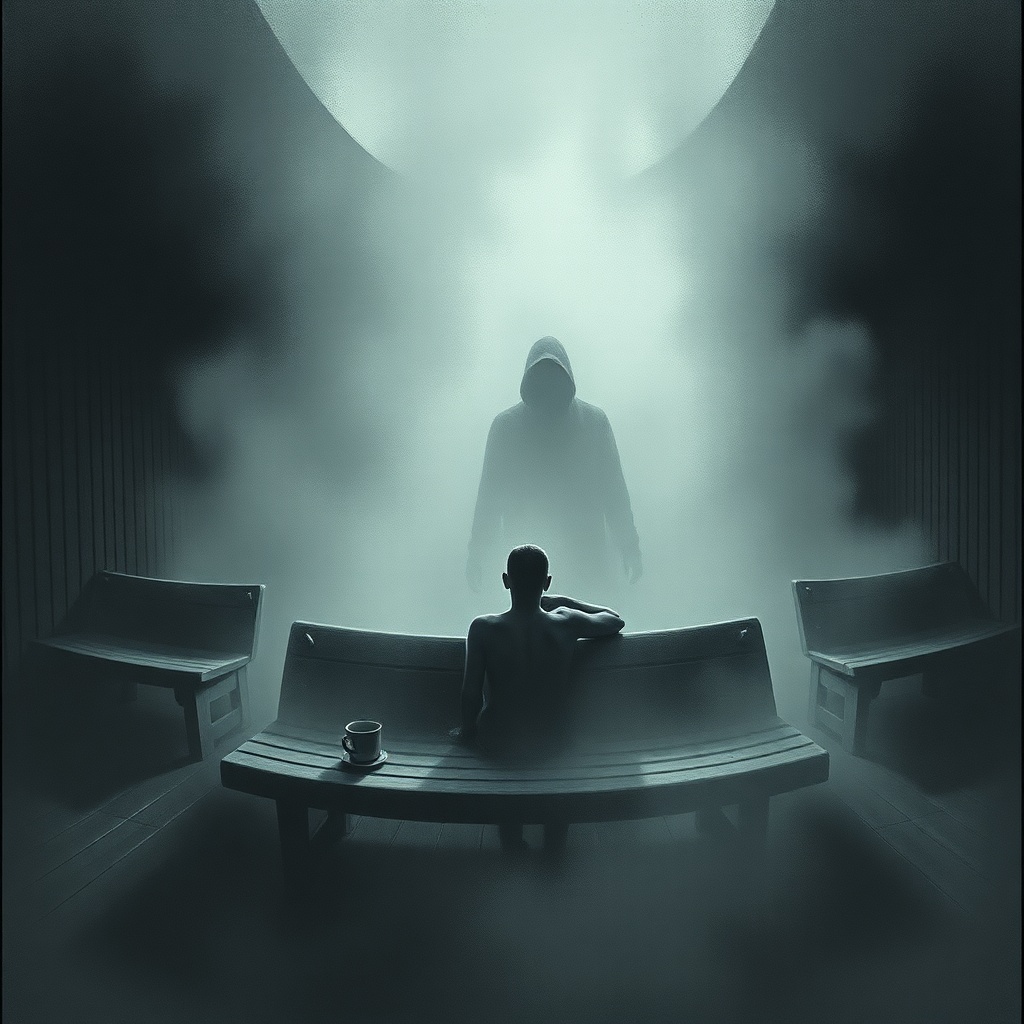
I dropped the ladle. It clattered once, then fell silent as if the floor had swallowed the sound.
Something shifted on the upper bench. A weight settling. Wood creaking under pressure. The bench above me was empty. I had checked. I would have sworn on it.
Now it creaked again, closer.
And then, like an idiot compelled by story logic, my eyes went up.
In the steam, just for a second, I saw the outline of shoulders. A head. Not detailed, not human enough to identify, but unmistakably seated, leaned forward slightly like someone waiting their turn to speak. The silhouette didn’t belong to any light. It belonged to the room. It was made of the absence of everything else.
The voice came from that shape, not loud, not theatrical. It sounded like someone talking through a closed door, calm and annoyed.
“Too much,” it said.
I didn’t answer. My tongue felt like wool. My chest was tight.
The silhouette tilted, as if listening for my reply.
The sauna door behind me gave a faint creak. Not opening. Just adjusting. Like it was settling into a more comfortable position.
My mind flashed through every old thing I’d ever heard about sauna manners. Don’t swear. Don’t argue. Don’t bring conflict into the steam. Respect the space. Respect whoever else is in it, seen or unseen.
“I’m sorry,” I whispered, because apologies are the only currency I had left.
The steam thinned for a breath. The silhouette seemed sharper. And I realized what the legend’s ending actually is, the part people gloss over because it sounds silly until it’s happening to you. The Shadow doesn’t always kill you. Sometimes it corrects you.
Sometimes it keeps you until you learn the rule.
The heat rose again, as if someone had fed the fire without touching it. My skin prickled, then burned. I tried the latch once more, gently now, politely, like you might try a door in someone else’s house.
It opened. Just like that. No struggle. No swollen frame. The outside air hit me like a slap from a cold hand.
I stumbled into the changing room, gasping. I didn’t stop until I was outside, barefoot on the frosted path, lungs dragging in air that felt too sharp to be real.
Behind me, the sauna door eased shut with a soft, satisfied click.
I stood there shaking, staring at the small dark window. The stove inside continued to burn. The chimney breathed smoke into the night. Everything looked normal, cottage brochure normal, except for one detail that made my stomach drop.
Through the high, fogged glass, a shape crossed slowly from one side of the sauna room to the other. Not a person. Not quite. A shadow walking where no one should be walking.
Then, very gently, as if someone had leaned close to the window from inside, the glass clouded with a new patch of condensation. A handprint, almost, but wrong in proportion, too long in the fingers, too patient in the way it rested there.
It stayed for a minute. Maybe two. Long enough for me to understand the message without any more words.
Someone always comes to check.
And now that it knew I existed, it would know, too, when I was foolish enough to think I was alone again.
Loved this story? Pulse it.
Pulses bubble up to the channel — they help us see which stories deserve sequels.