Silent Presence – Finland's Forest Path
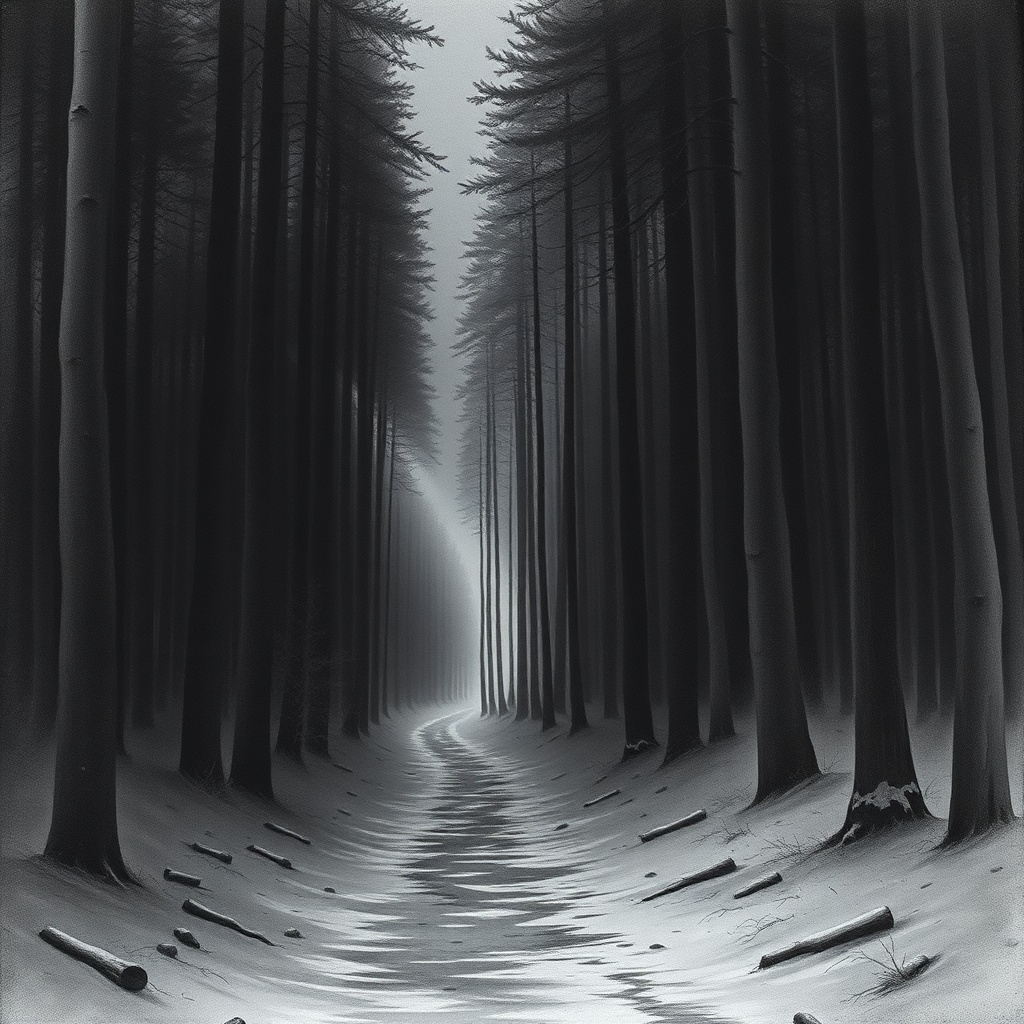
Have you ever noticed how a forest can feel crowded even when you’re the only person in it?
Finland has a name for that sensation. Not an official one, not something you’ll find on a tourist board plaque, but a whispered label that’s traveled cabin to cabin and forum thread to forum thread. People call it the Silent Presence, and the story attaches itself to certain forest paths the way lichen attaches to stone. Not every trail. Not every grove. Specific stretches where the trees grow tight, the underbrush goes oddly clean, and the air gets that held-breath quality, as if the world is waiting for you to make a mistake.
The legend’s modern form started surfacing in the late 1990s and early 2000s, when hikers and night fishermen began swapping the same little detail in different parts of the country. Someone would write about walking a familiar trail and realizing, with a cold slap of certainty, that they were being followed. Not by footsteps. Not by an animal. By attention. The kind you can feel on the back of your neck when you’re alone in an apartment and a neighbor’s TV suddenly goes quiet.
Older Finns will shrug and tell you it’s just metsänpeitto. Forest cover. The old folklore idea that the woods can “take” you, turn you around, make you walk in circles until you’re too tired to remember which way home is. Metsänpeitto stories are full of practical warnings dressed up as myth. Don’t go arrogant into the trees. Don’t whistle at night. Don’t wander off the path, because the forest is older than your confidence and it doesn’t care if you have a phone.
But the Silent Presence is a newer skin on that older bone. It shows up in the era of trail cams, GPS watches, and people who swear their compass spun like a toy top. The “presence” isn’t usually seen. That’s the point. Witnesses describe a bend in the path where the sound thins out. Wind stops touching the needles. Birds go silent. Your own breathing gets too loud, like you’re trespassing inside your skull. Some say the presence stays behind you, never overtaking. Some insist it’s beside you, just off the trail where the moss looks too smooth to step on.
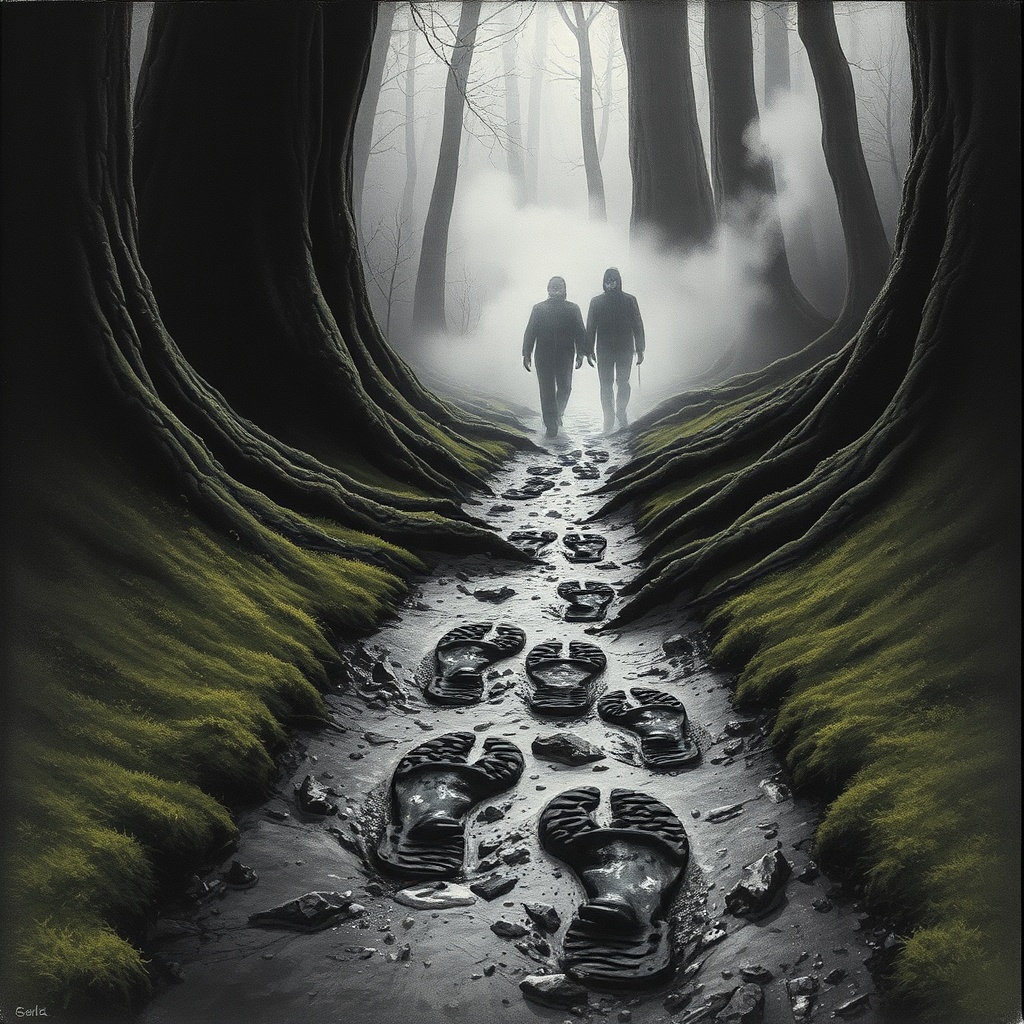
What people believe about it depends on who you ask, which is always a good sign you’re dealing with something that won’t sit still. One version says the Silent Presence is the forest itself noticing you. Another says it’s what’s left of someone who vanished, a kind of echo that learned how to hunt companionship. A grimmer interpretation turns up in certain local retellings, usually after a few drinks at a kitchen table. It’s a warning spirit that keeps you on the path. Step off, and it stops being a warning.
The way the story usually ends is almost disappointingly consistent. The person feels watched. They speed up. They promise themselves they’re being stupid. Then they reach a familiar marker, a big stone, a split pine, a boardwalk over a wet patch. And that marker is wrong. Moved. Rotated. Like a stage set rebuilt by someone who only half-remembered the play. That’s when the path stops feeling like a path and starts feeling like a suggestion. If the person stays on it, they make it out, shaken but intact. If they stray to “check something,” to prove to themselves it’s nothing, the legend does what legends do. It takes their certainty first. Then their sense of direction. And sometimes, if you believe the colder tellings, it takes their voice.
The Silent Presence got its traction because it fits Finland’s landscape and temperament like a glove. This is a country where a short drive can drop you into miles of trees, where darkness in winter isn’t a mood but a schedule. The forest is both comfort and threat. People here are practical. They’ll tell you a ghost story and then remind you to pack dry socks, because both can kill you, one of them just takes longer.
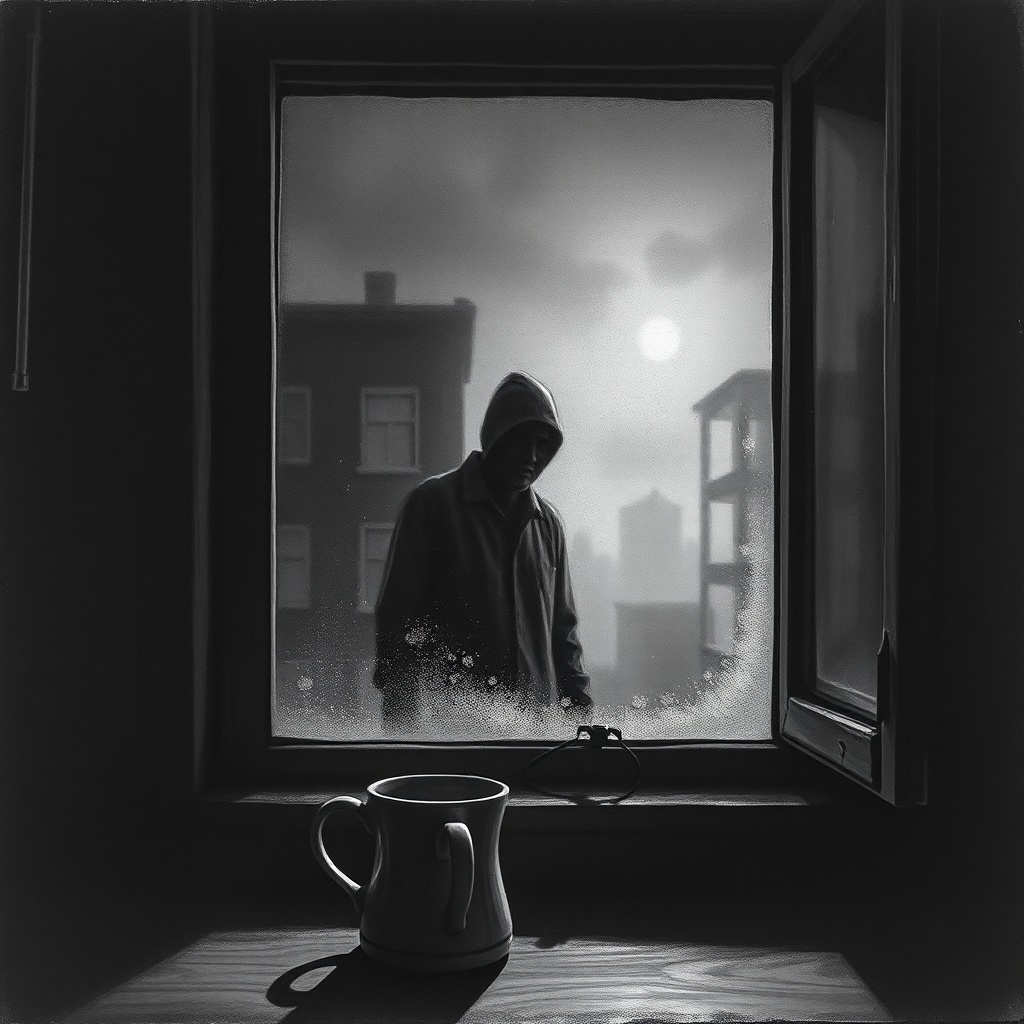
I didn’t grow up with this legend. I heard it the way most outsiders do, secondhand, late at night, from someone who said, very casually, that there were paths you didn’t take alone after sundown. A friend of mine, Finnish, told me over coffee that the Silent Presence wasn’t really a “thing” you could point to on a map. Then he paused, stirring sugar into his cup as if he needed something to do with his hands.
“It’s not everywhere,” he said. “But you know it when you’re in it.”
I laughed, because laughing is what you do when someone says something like that in a bright kitchen. He didn’t.
A week later, I found myself on a forest path outside a small town whose name I’m not going to write here. Not because I think the forest reads. More because I don’t want anyone treating this like a challenge. The trail was ordinary in daylight, a thin ribbon of packed dirt cutting through pines and birch, the kind of place where you expect to see a dog walker or a cyclist. At dusk, it looked like the world’s longest hallway.
I told myself I was being dramatic. I even made a small joke to no one. Something about how if I died out here, at least my search party would get fresh air. The sound of my own voice fell dead between the trees. It didn’t echo. It didn’t carry. It just stopped, like it hit a wall made of wool.
The first sign wasn’t fear. It was a lack of normal. No distant road noise. No bird chatter settling into night. My footsteps sounded wrong, too crisp, too isolated. The trail narrowed and the trees leaned inward, not in a fanciful way, but in a way that made the sky disappear. I checked my phone, because modern humans do that like rubbing a lucky coin. Full battery. Full signal. The screen brightness felt obscene.
Then I felt it. Not a hand, not breath. Just that clean, merciless awareness of being observed. Not from one direction. From the forest itself, from the dark spaces between trunks where the fog was beginning to collect.
I kept to the center of the path.
The legend says the presence doesn’t like you looking for it. Of course that’s the first thing you want to do. Your eyes start picking apart the shadows, trying to turn them into something understandable. A stump becomes a crouched animal. A drooping branch becomes a shoulder. Your brain, that anxious little projector, starts showing you films you didn’t pay for.
Somewhere behind me, a twig snapped.
I stopped. The forest stopped with me. Even the wind, which I hadn’t realized was moving at all, seemed to freeze in place. I turned slowly, phone held up like a useless talisman.
Nothing. Just the path stretching back into a gray throat of fog.
I started walking again, faster. Another snap. Closer.
I didn’t run. Running feels like permission, like you’re agreeing that something is chasing you. I stayed on the trail and forced my pace to be steady, the way you do when you suspect a stranger is behind you on a city sidewalk. I counted steps in my head. I watched for familiar markers.
There was supposed to be a boardwalk across a wet patch, three planks wide, with a handrail that wobbled. I’d crossed it earlier in the afternoon. I was waiting for it like you wait for a streetlight when you’ve been walking too long.
When it came, it was wrong.
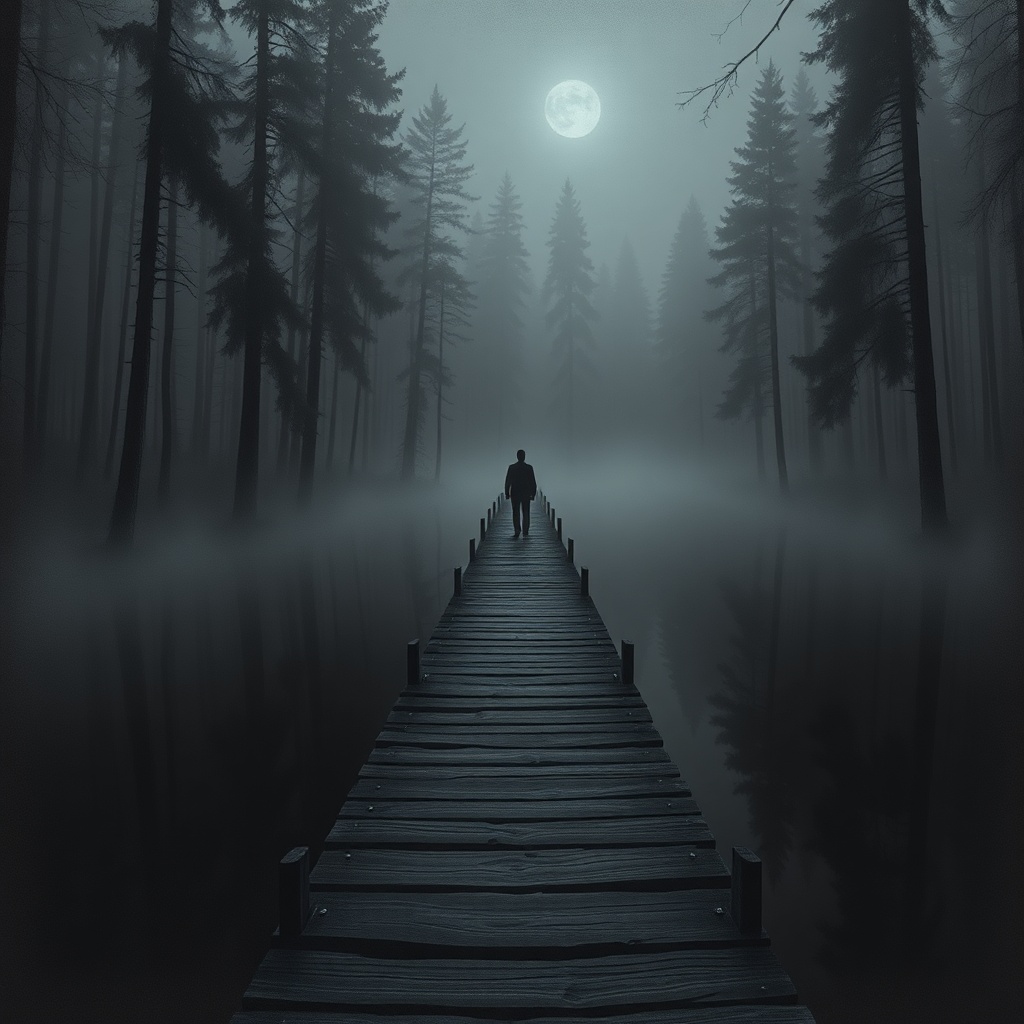
The planks were there, but the wood was darker, soaked-looking, as if it had been underwater for years. The handrail was missing. And the wet patch beneath it wasn’t a wet patch anymore. It was black water, still as oil, reflecting the trees with too much clarity.
My phone buzzed. A message notification. No sound, just the vibration against my palm like a trapped insect.
The screen lit up by itself. No new message. Just my map app, open, the blue dot of my location sitting in a blank gray square like an eye. The trail line was gone. The names were gone. The world reduced to nothing, and me in the middle of it.
I took one step onto the boardwalk. The wood didn’t creak. That scared me more than any howl would have. Old wood always complains. This was silent, obedient, as if it had been waiting.
Halfway across, I heard breathing.
Not mine. Not behind me. Beside me, down in the black water, as if something under the surface was inhaling through a mouth held just below the skin. Slow. Patient. Like it had all night.
I kept my eyes forward. I did not look down. I did not step off the planks. My body wanted to twist, to confirm, to make it real so it could be fought. But the legend’s rule sat in my mind like a thumb on my throat. Stay on the path. Don’t acknowledge it. Don’t invite it into the part of your brain that gives things names.
At the far end of the boardwalk, the path split around a boulder. I remembered that boulder. In daylight it had been lumpy and gray, flecked with quartz. Now it looked smoother, darker, like a tooth. And beside it, in the strip of moss between trail and tree line, there was a depression. A place where someone had stood for a long time. The moss was pressed flat in the shape of feet.
Facing the path.
Waiting.
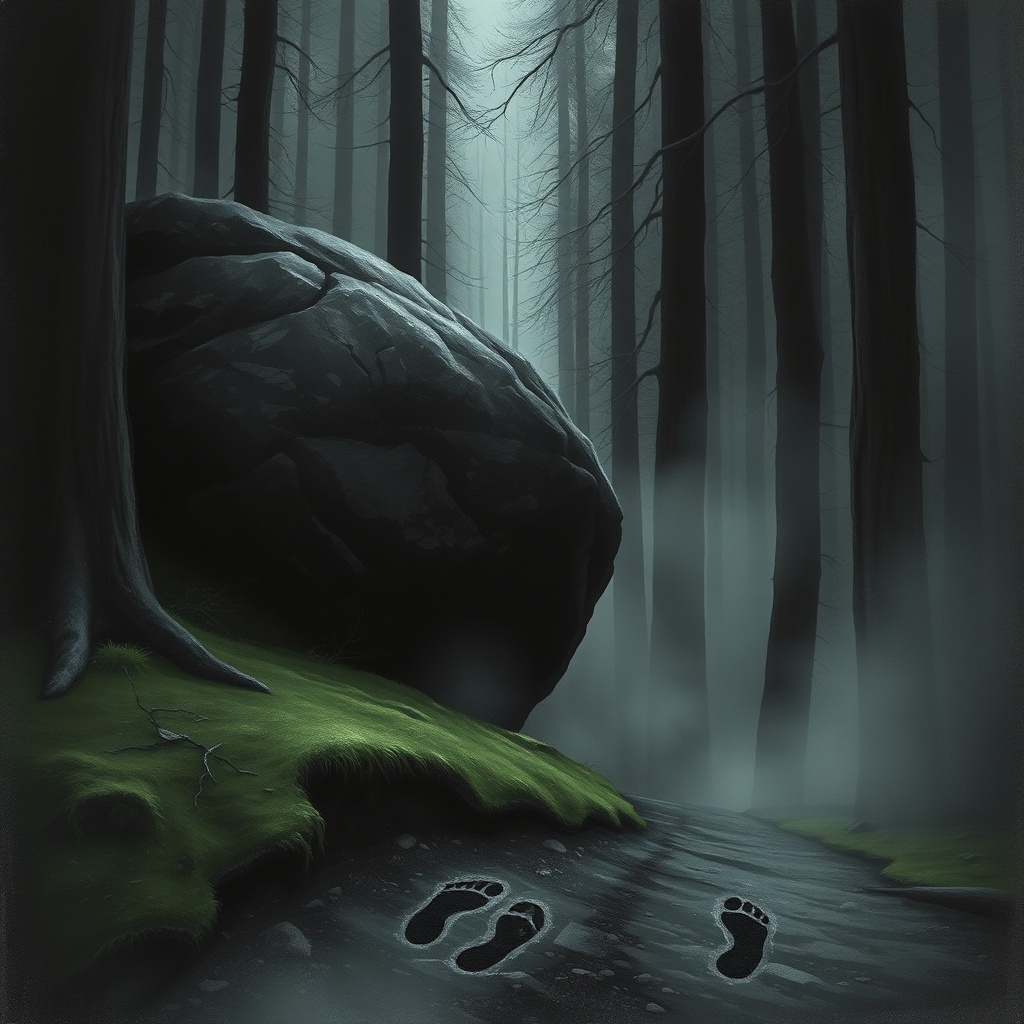
I passed it without turning my head. My skin prickled as if I’d brushed past nettles. The pressure of being watched sharpened into something almost physical, like a fingertip tracing the seam of my spine.
Then, softly, from just inside the trees, a voice tried to become my voice.
It wasn’t a perfect imitation. It was close enough to make my stomach roll. It said my name the way a friend would say it, casual, impatient, like I’d wandered ahead and they wanted me to wait up. The syllables came out damp, as if spoken through wet leaves.
I did what you do when your body is sure it’s about to die. I made a bargain with the air. I promised I would never come here again. I promised I would stop treating warnings like invitations. I promised, absurdly, that I would stop reading comment threads at 2 a.m. like an idiot looking for new ways to be afraid.
The path began to rise. Pines thinned. A smear of distant light showed through the trunks, the way town-glow stains the underside of clouds. I kept moving toward it, my legs working on pure stubbornness.
Behind me, the forest made one final sound. Not a snap, not a footstep. A long exhale, disappointed. Like something had leaned close to the back of my neck and decided, not tonight.
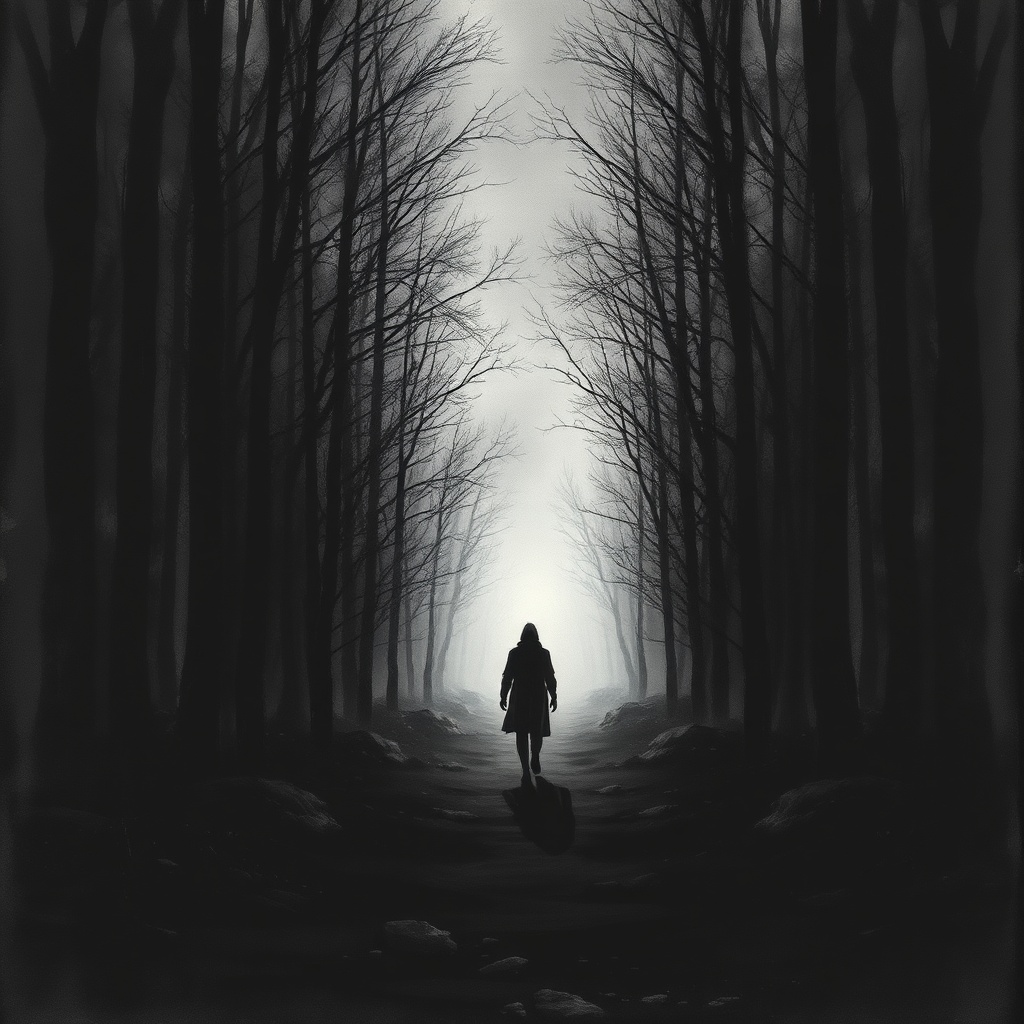
I stepped out onto a gravel road and the normal world rushed back in all at once. Faraway tires. A dog barking. The cheap miracle of electricity humming in the distance. I stood there, shaking, and waited for the feeling to fade.
It didn’t, not completely. It just loosened, like a hand unclenching.
Back at the cabin, I told myself I’d imagined it. I washed my face, drank water, did all the sane-person rituals. My phone had signal again. The map worked. The trail showed up as a neat dotted line like it had never disappeared.
Before bed I checked my shoes, because mud tells the truth even when your brain lies. The soles were packed with dark moss and something slick and black that smelled faintly of stagnant water. That part I could live with. Forests are messy.
What I couldn’t explain was the pattern pressed into the mud on the side of my boot. Two parallel ridges, like the grooves of a wet fingerprint, dragged from heel to toe.
As if something had walked beside me, close enough to touch, the whole way. And as if it had been trying, gently, patiently, to guide me off the path without ever needing to shove.
Loved this story? Pulse it.
Pulses bubble up to the channel — they help us see which stories deserve sequels.