The Window Watcher – Greenland
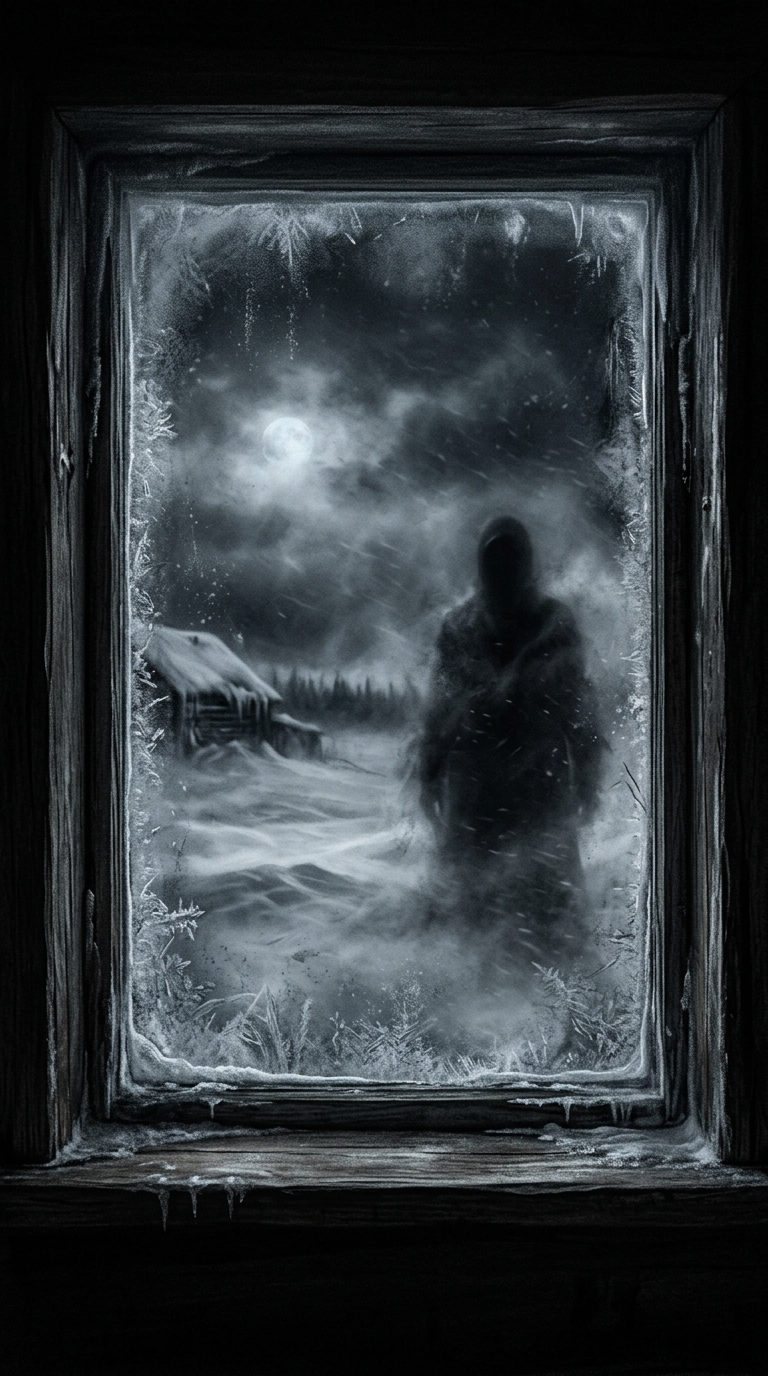
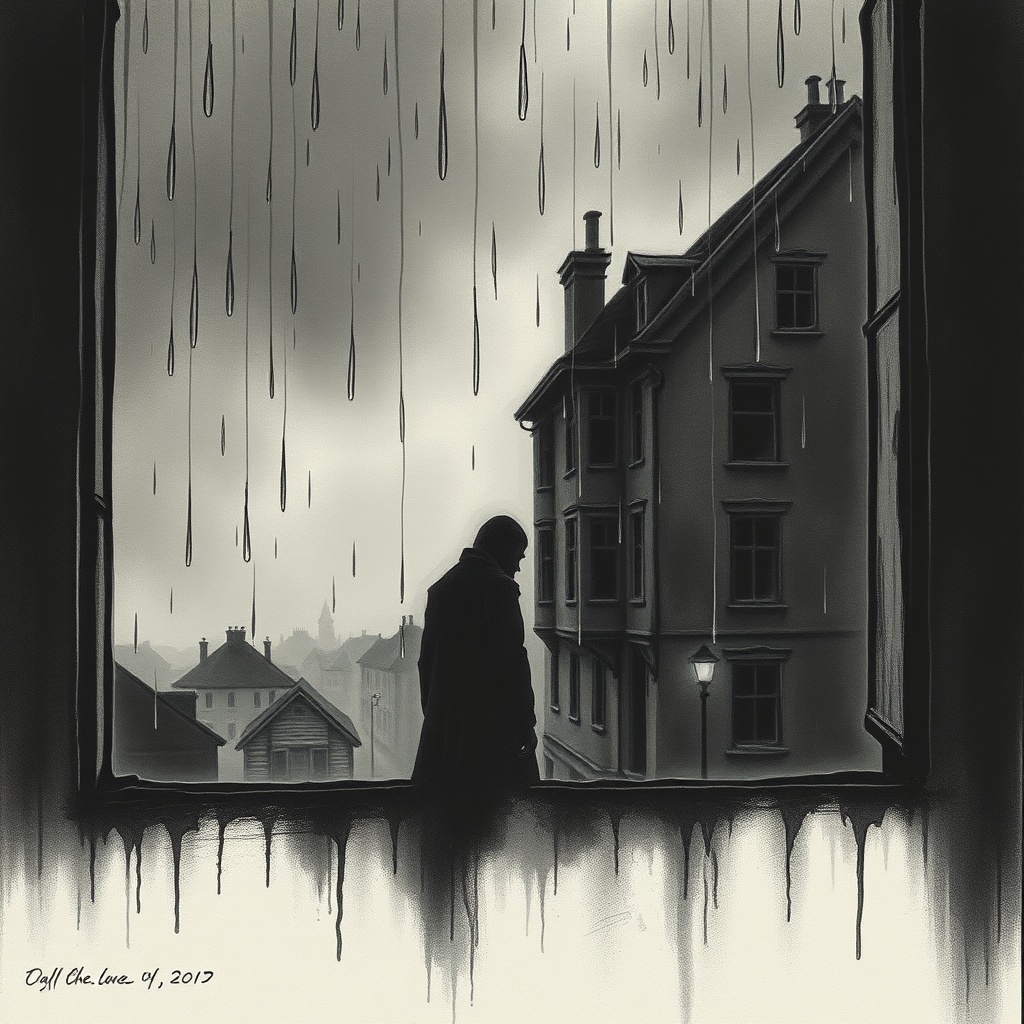
Have you ever noticed how a window stops being a window at night and turns into a dare?
In Greenland, where winter can press against a house for months like a hand over a mouth, there’s a small, persistent legend that people trade in lowered voices. It doesn’t have the neat paperwork of a folktale collected in the 1800s, and it doesn’t come with a single “official” village attached to it. It travels the way modern northern stories travel. In worker dorms near construction sites. In fishing settlements where everyone’s cousin knows everyone’s secrets. In late night posts and retellings that drift between Danish and Kalaallisut, losing a little detail each time and gaining something worse.
People usually call it The Window Watcher. Not a monster with a name you can bargain with, not a spirit you can appease with the right old words. Just a thing people see at the edge of the glass when the wind is busy and the sky is the color of bruised steel.
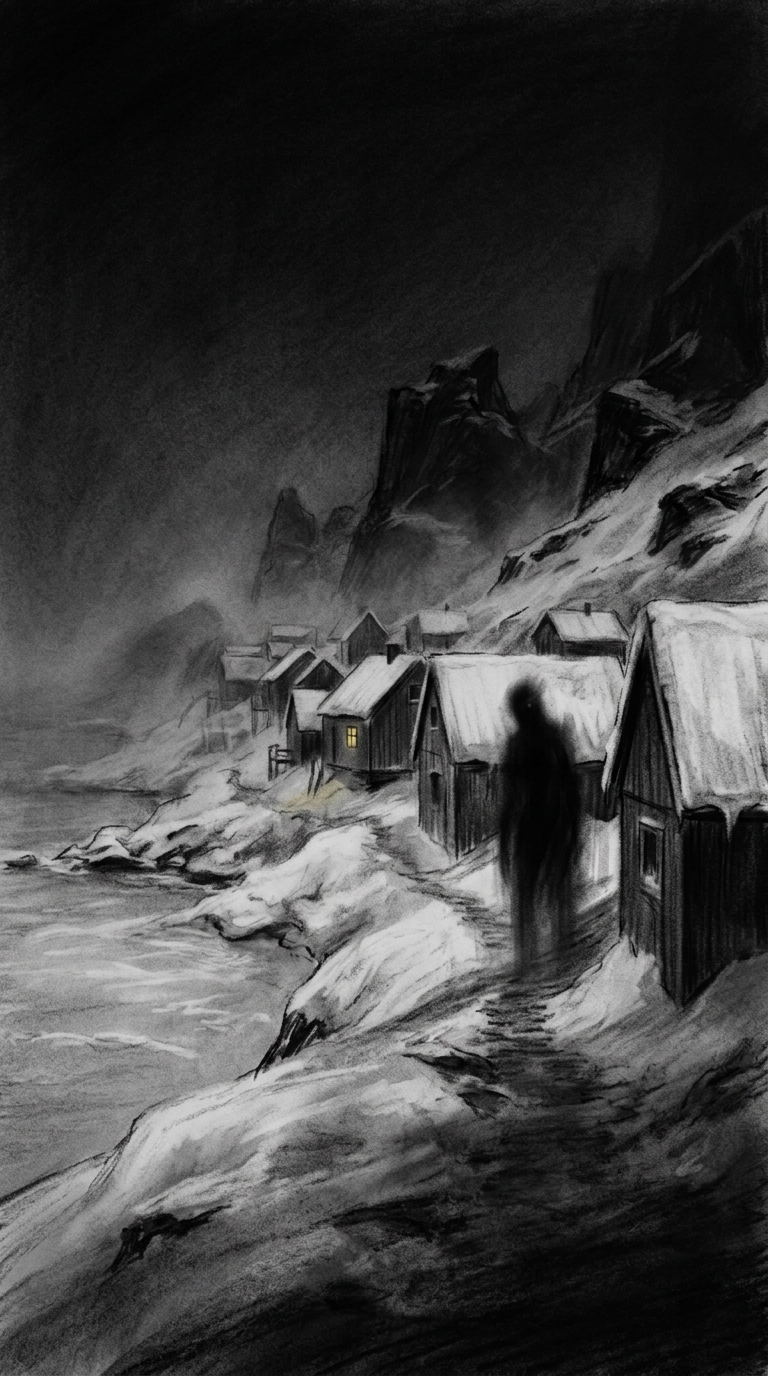
The earliest versions I heard weren’t “ancient, whispered since the first kayak,” the way tourists want everything to be. They sounded newer. Late 20th century newer. Something that spread with the arrival of more standardized housing, big rectangular windows, and the kind of electric light that makes you feel safe until it suddenly makes you feel displayed. The story got talked about more in the 2000s, when people started posting Greenland winter tales online and outsiders went hunting for Arctic creepiness like it was a souvenir. But among locals, it has a more practical tone. Less “behold the demon,” more “don’t be stupid.”
The belief is simple. In the deepest dark of winter, if you look out too long, something will look back. Not an animal. Not a man. It won’t knock. It won’t leave tracks that make sense. It just stands where it shouldn’t be able to stand, close enough that your breath fogs the glass and seems to mingle with something colder. Some say it appears only when you’re alone. Some say it comes when you’re homesick, or when your mind is already wandering in that dangerous way long nights encourage. The cynics call it cabin fever, the eye filling in shape where there’s only drift and darkness. The people who’ve seen it don’t enjoy being corrected.
The usual rules are always the same, repeated with the boredom of a safety briefing. Don’t open the window. Don’t tap the glass. Don’t wave a flashlight at it like you’re summoning a taxi. And for the love of whatever you pray to, don’t acknowledge it out loud. If someone in the room says, “Do you see that,” you say no. You lie. You let them lie. You let the lie carry you both through the night.
Because the ending, in the most common tellings, isn’t cinematic. It’s domestic. The Watcher doesn’t break in. It doesn’t drag you screaming into the snow like a movie. It waits until you do something human. Until you assume you can control a situation by facing it. Until you open the latch just a crack to prove to yourself that you’re not scared.
And then, in the versions that make the room go quiet, you discover there was never anything outside. The Watcher was on the wrong side of the glass from the beginning. The “window” was just where it liked to stand and practice being seen.
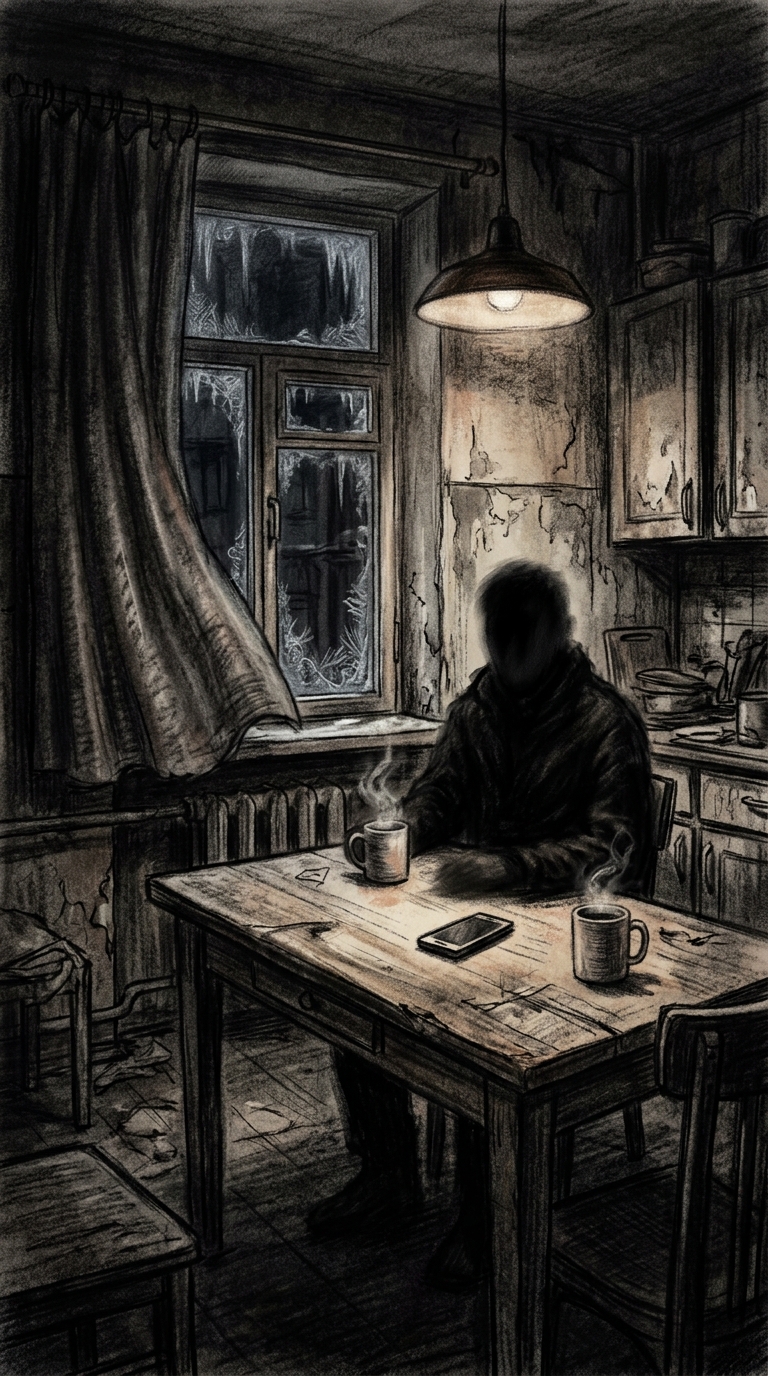
I first heard it from a friend of mine who did seasonal work up the coast, the kind of job where you stop counting days and start counting weather. He told it like a joke at a kitchen table, trying to make it sound stupid. That’s how people handle fear when they still want to be invited back next week.
“Don’t look out the window too long,” he said, stirring sugar into his coffee like he was trying to dissolve the whole concept. “Something’ll get curious.”
I laughed, because it was warmer to laugh. Outside, the wind made that throat noise it makes in the corner of a building, like it’s clearing itself before speaking.
“And what,” I asked, “does curiosity do?”
He shrugged. “It learns you.”
I should tell you right now. I don’t live in Greenland. I was there for a stretch, long enough to feel the calendar lose its grip. Long enough to realize darkness isn’t just the absence of light. It’s pressure. It’s a presence. In the daytime, the windows looked harmless. At night, they looked like black water held upright.
I rented a small place that had the practical, modern features everyone wants. Tight insulation. A reliable heater. Thick glass. Big windows. Because the view, people say. Because you’ll feel less trapped. Which is funny. It’s like buying a larger mirror so you feel less alone.
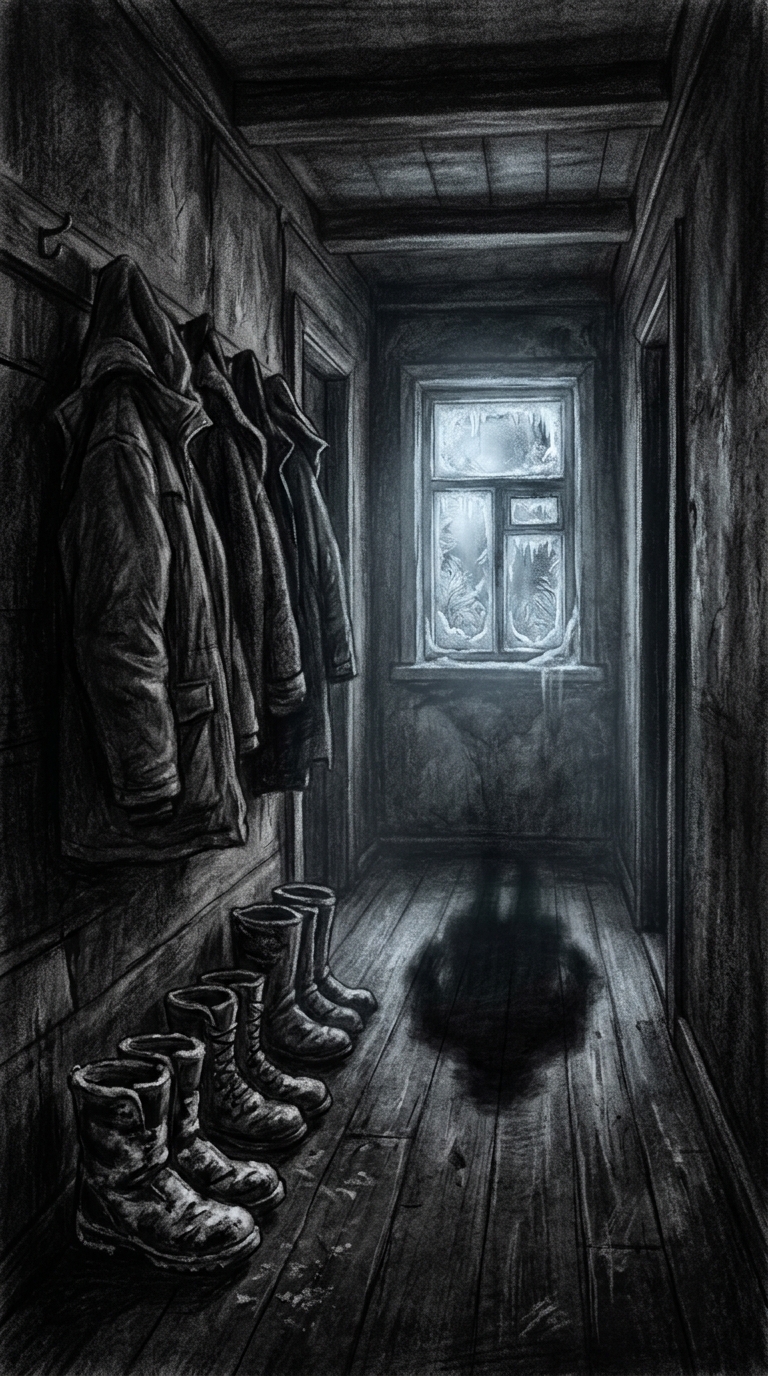
The first week, I behaved. I kept myself busy. I cooked. I watched shows with bright sets and fake daylight. I went to bed early like a virtuous little creature pretending to be seasonal. But there’s always a moment, usually around two in the morning, when your body wakes up and forgets the rules. You lie there listening to the house click with temperature changes, and you can’t shake the sense that something is standing very still, somewhere it doesn’t belong.
That’s when I started doing it. Getting up. Walking barefoot to the hallway. Pausing at the window like it was a shrine.
At first, it was nothing. Snow, moving. Darkness, holding its breath. The occasional distant light from another house, the kind that makes you think of other people trying not to think. I’d press my palm to the glass and feel the cold seeping through, even with the heater humming behind me.
On the fifth night, I saw a shape that wasn’t snow.
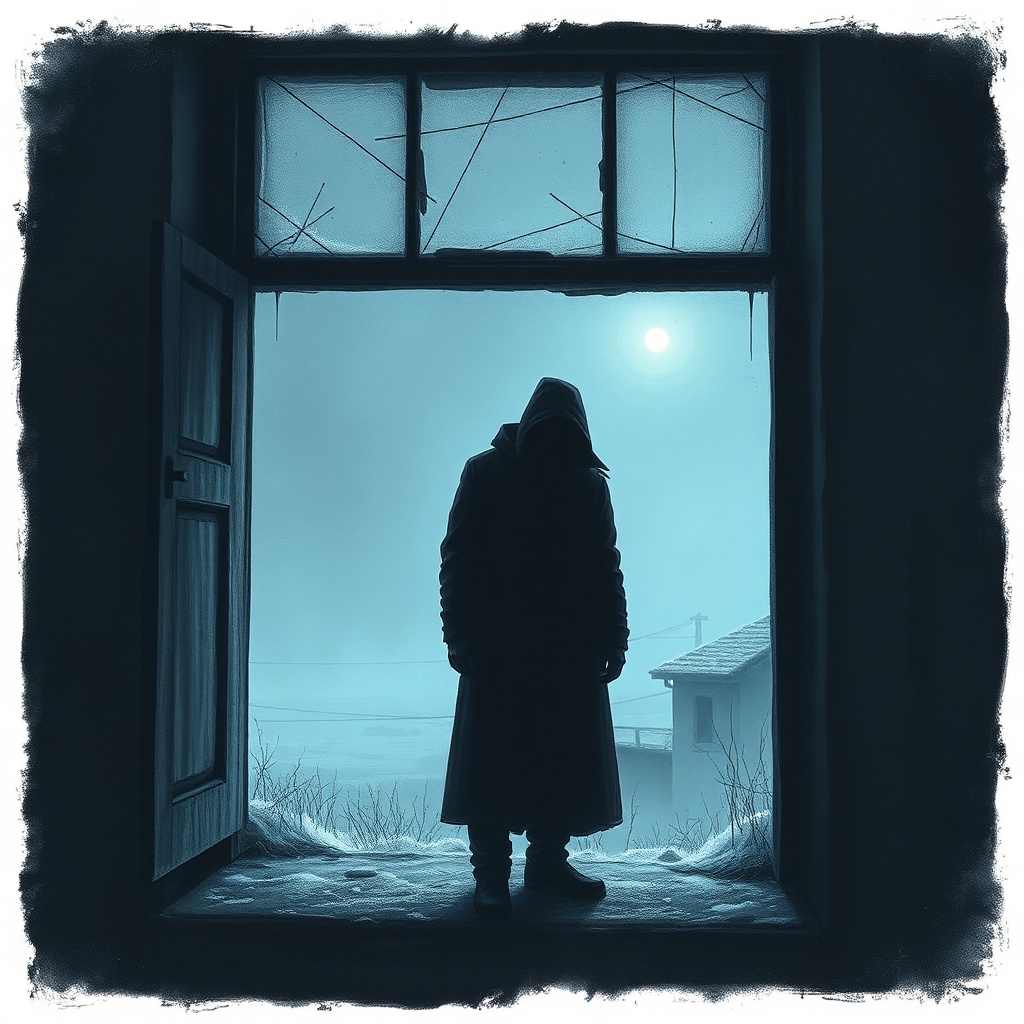
Not a clear figure. Don’t give me that. Not a crisp silhouette like a cutout man. It was a thickness in the dark, a place where the darkness looked layered. Like someone had held up a second sheet of night behind the first.
I told myself it was a trick of contrast. My own reflection. A drift piled oddly. Anything. My brain rummaging for a reasonable coat to throw over something unreasonable.
Then it moved.
Not a step. More like… attention. Like a person who realizes you’re staring and doesn’t want to be obvious about staring back. The shape leaned closer by a fraction, and the frost on the window seemed to brighten, as if my fear had a wattage.
I did exactly what you’re not supposed to do. I whispered, “Hello,” like an idiot trying to be polite to a phenomenon.
The heater clicked off. The house went too quiet. I swear I could hear my own eyes working.
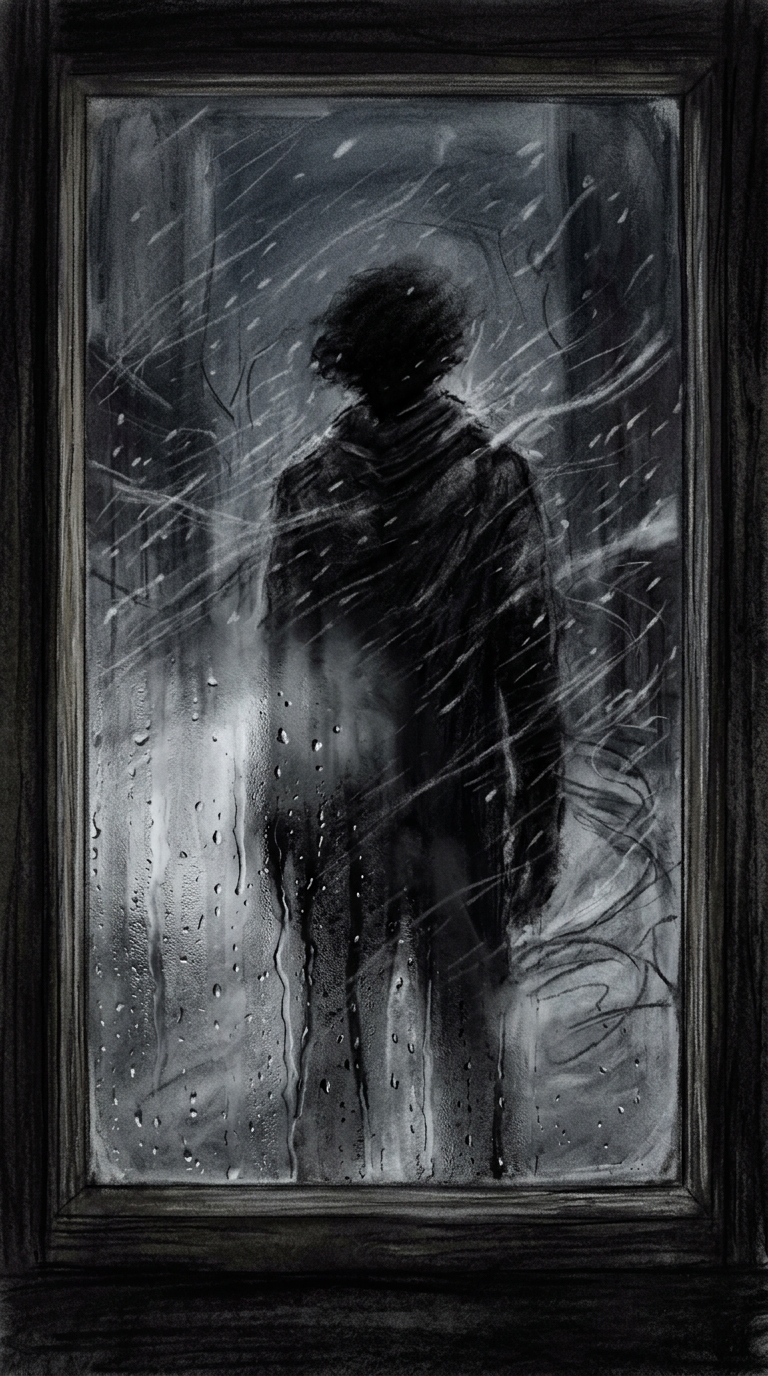
It stayed there for a long time. Minutes. Or one minute stretched into a whole rope of minutes. It didn’t raise a hand. It didn’t press its face to the glass. It just stood in the exact place where my gaze kept landing, as if it had trained itself to occupy that spot the way a spider knows the center of its web.
My phone buzzed behind me on the table. A message from my friend, the one who’d made the “curious” joke. The timing was so perfect I almost laughed. Almost. I didn’t turn away. I didn’t want to lose the shape. I didn’t want it to realize I’d stopped looking.
The message read, Did you ever see it.
I typed back without taking my eyes off the window. I think I do.
Three dots appeared. Then vanished. Then appeared again, like he was arguing with himself.
Don’t open anything, he wrote. Don’t talk. Don’t check if the door is locked. Just go back to bed.
A laugh escaped me, short and ugly. The door is always locked, I thought. This is Greenland. The wind will steal your last name if you leave it open.
That’s when the Watcher did the first thing that looked like a decision.
It lifted its arm, slow, like a diver rising through thick water. A hand, maybe. Or something that had learned the idea of a hand. It didn’t touch the glass. It touched the edge of the window frame, where wood met paint met the seal that was supposed to keep the world out.
The latch gave a tiny, polite click.
Inside my chest, my heart tried to climb out through my throat. I hadn’t moved. I hadn’t unlocked anything. My hands were flat against the glass, useless as prayer.
The latch clicked again, and the window shifted inward a hair, as if a pressure change had found a weakness. Cold slipped through the crack in a thin, tasting ribbon.
I finally stepped back, the way you step away from a dog you’re not sure is friendly. I kept my eyes on the dark shape. It didn’t come in. It didn’t need to. It had achieved something else. It had taught me the window was not a barrier. It was a mouth.
The phone buzzed again. Another message.
If it gets you to check the door, he wrote, it learns the house.
I stared at the crack in the window and thought of all the times I’d walked the hallway at night, a creature of habit. How I’d stood in the same spot. How the Watcher had stood in the same spot back. Two routines overlapping until one of them became hungry.
The shape outside leaned, just slightly, toward the crack, like it could smell me. Then it did something so small it almost broke me. It tilted its head, the way I had, the first night, trying to make sense of the dark.
In the glass, my reflection shifted with it.
Only my reflection didn’t match my movement. I was still. The head in the window tilted anyway, a delayed mimicry, like a bad video call. Like something inside the room was practicing being me.
I didn’t run to the door. I didn’t slam the window. I didn’t shout. I did what people in the North do when nature reminds them who’s in charge. I went very quiet. I backed away from the hallway. I walked to my bed and lay down fully clothed, shoes on, as if I might need to stand up fast.
In the darkness of the bedroom, I listened.
Soft footsteps, not outside in snow, but inside on wood. Slow. Testing boards. Learning where they squeak. A pause at the kitchen table. The faint buzz of my phone lifting, then settling again.
Then, right beside my bed, the whisper of breath that wasn’t warmed by lungs.
I kept my eyes closed, because I understood it then. The dare was never to look out the window. The dare was to believe the window was the only place it could be seen.
Loved this story? Pulse it.
Pulses bubble up to the channel — they help us see which stories deserve sequels.