The Crying Doorway – Romania
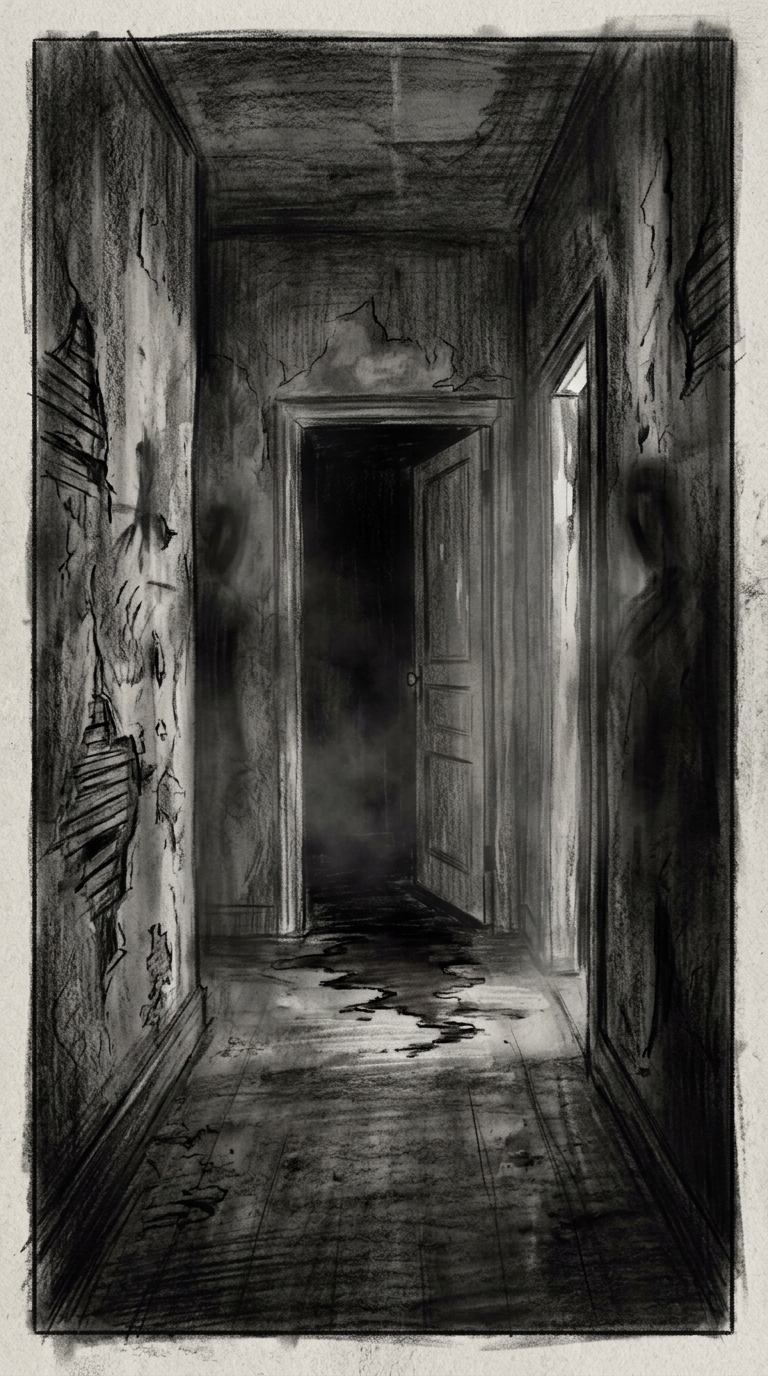
Have you ever heard a doorway cry. Not metaphorically, not the “old house settling” excuse people drag out when they want to sleep, but a sound like someone trying very hard not to be heard. The Romanian legend calls it the Crying Doorway, and the first time I ran into the phrase it was said the way you say “sinkhole” when you’re already standing on thin pavement.
It isn’t one of those tidy, export-ready myths with a single birthplace and an official date. It’s an urban legend in the real sense. It grows in cities. It travels through stairwells and late-night taxis and comment threads. You hear it in Bucharest blocks built in a hurry, in the damp pension houses of Brașov, in the outskirt villages where a “new” home can still sit on older, uglier ground. Most tellings pin it to the late communist years and the rough decade after, when people swapped apartments like poker chips, when whole buildings got reshuffled, when a neighbor could vanish and be replaced by a family that wouldn’t meet your eye. The Crying Doorway rides that unease. A threshold is a line. Romania has always respected lines.
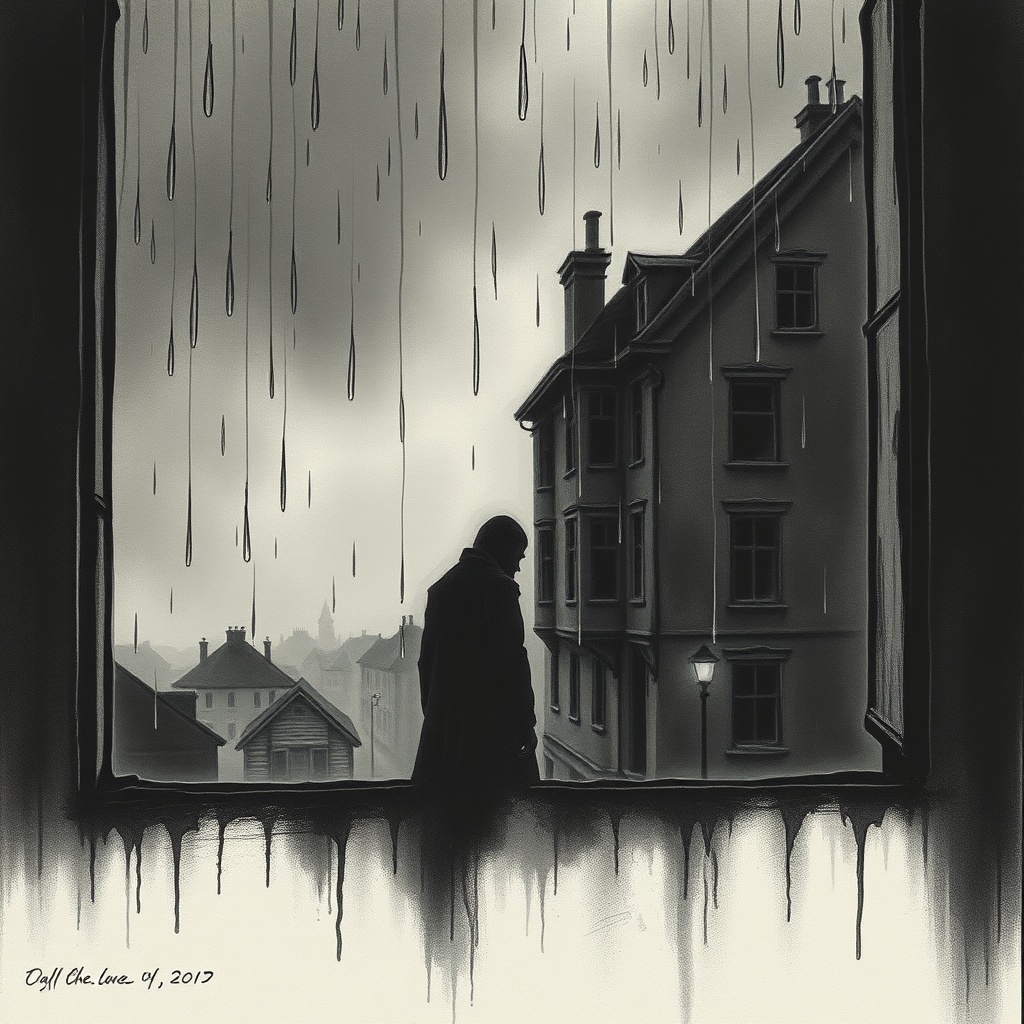
The core of the legend stays consistent even when the details change. Somewhere, in a room that should feel ordinary, there is a doorway that doesn’t act like a doorway. At night, it weeps. Sometimes you hear it. Sometimes you see it: moisture beading along the frame, drops gathering at the threshold as if the wood is sweating grief. People say it smells faintly metallic, or like wet plaster, or like a cellar that has held its breath too long. The worse part is the shadow.
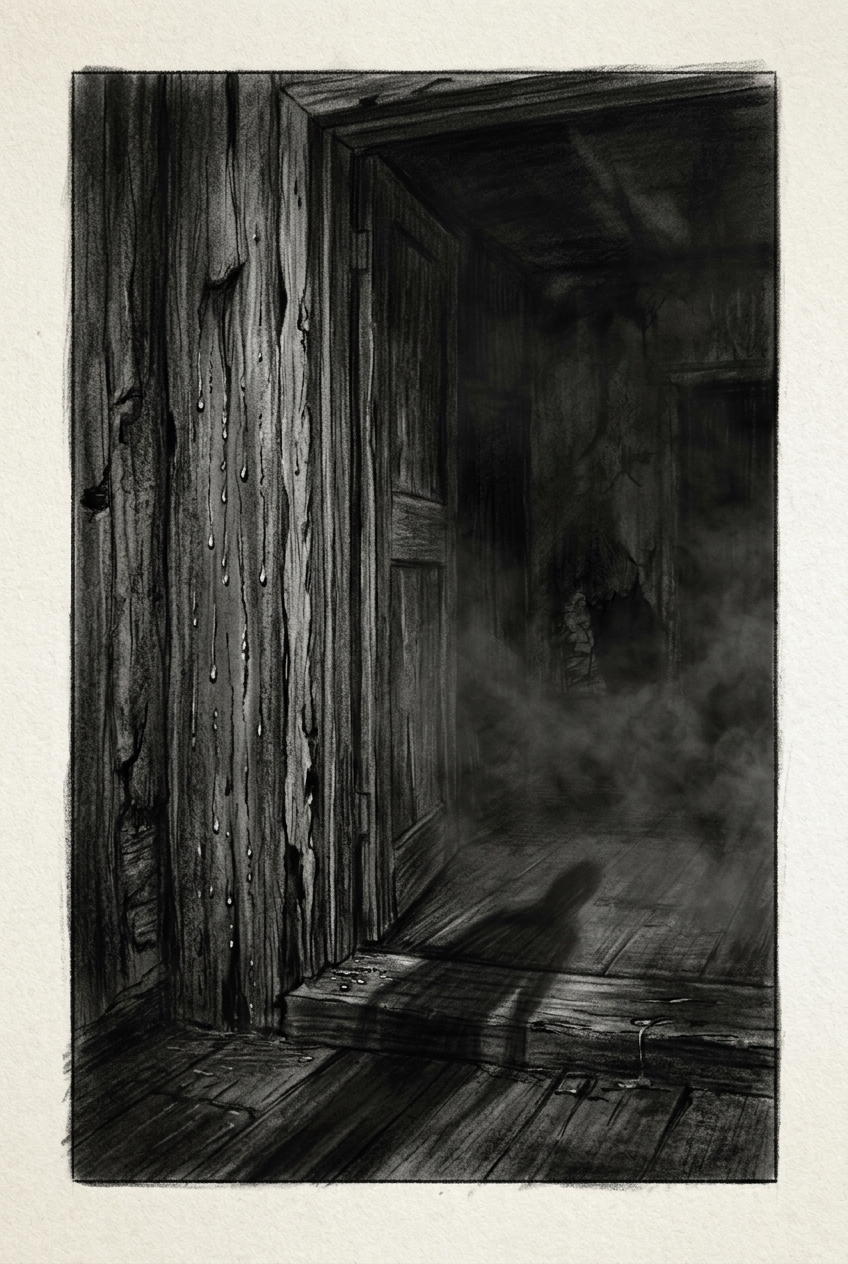
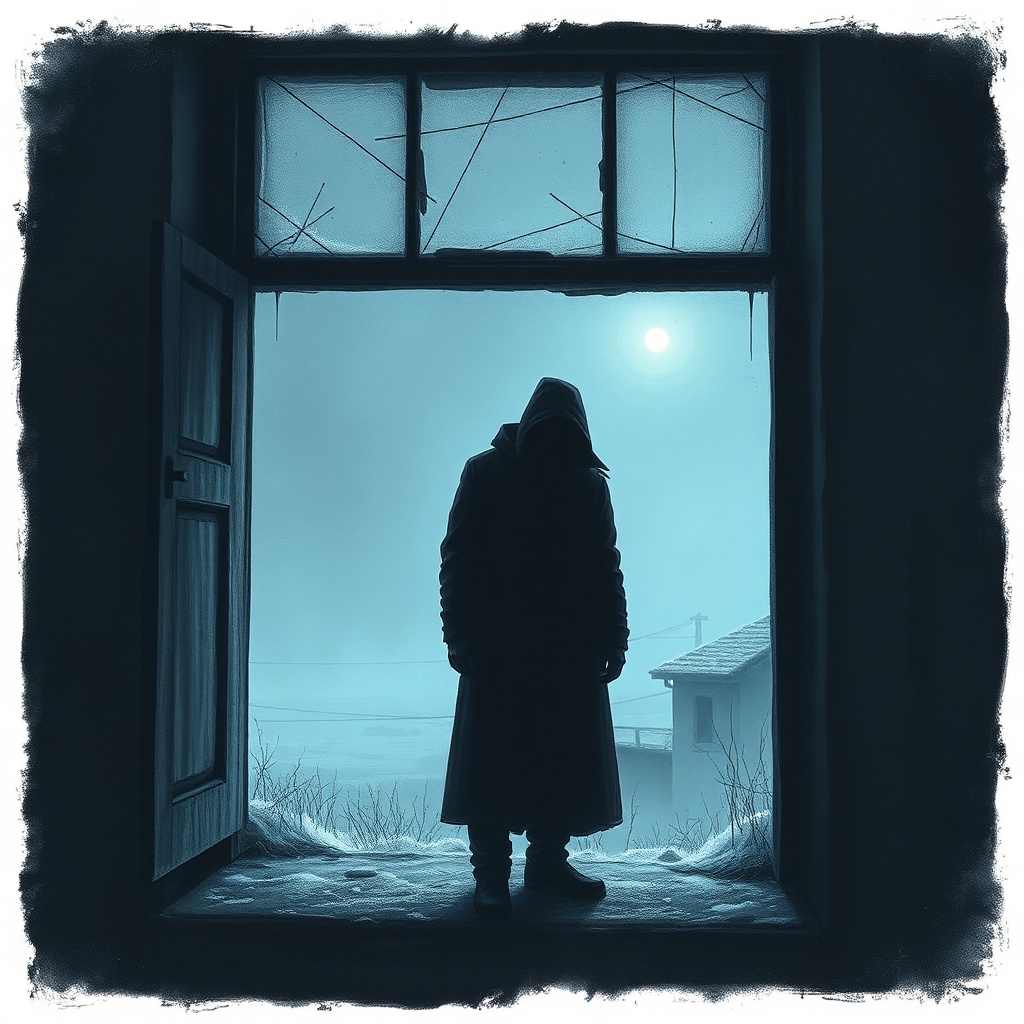
The shadow isn’t cast by anything you can find. It sits in the doorway like a person standing just out of view. It can be tall or child-sized or wrong in a way you can’t name. And according to the lore, the doorway only “cries” for one kind of attention. If you speak to it, if you ask who’s there, it listens. If you step through, it learns you.
Where did that part come from. People usually connect it, loosely, to older Romanian beliefs about thresholds. Folk tradition has long treated doors as vulnerable places, the seam where the household ends and everything else begins. You find old practices like turning a broom upside down behind the door, or placing iron near an entrance, or avoiding sweeping out after dark. There are also the whispers about strigoi and moroi, restless dead who circle the edges of domestic life, and the idea that grief can stain a home, especially if someone died unconfessed, unburied properly, or simply unloved. The Crying Doorway feels like a modern mutation of that. Apartment blocks instead of farmhouses. Hallway lights instead of oil lamps. Same dread.
When did it become “known”. If you ask around, people point to the 1990s. There are stories of students renting cheap rooms where the landlord “forgot” to mention the door at the end of the corridor that shouldn’t be opened. There are stories of night guards in half-renovated buildings hearing a sobbing where there was no one. You can even find the legend tucked into Romanian-language forums from the early 2000s, the kind with pixelated avatars and usernames like they were chosen by teenagers who are now forty. The posts always have the same tone. Not theatrical. Annoyed. Scared in a practical way. Like, I have work in the morning and this is happening anyway.
What people believe about it depends on who’s telling it. Some say it’s the echo of a death behind a sealed door, a suicide, a domestic violence call nobody answered, a child locked away. Some say it’s a hungry thing that found a human-shaped opening in the architecture, and it uses crying because it works. Some insist it’s a warning. The doorway cries so you won’t cross. The worst versions say the opposite. The doorway cries because it wants you to.
And the ending. The story usually ends with the same mistake.
Someone opens it.
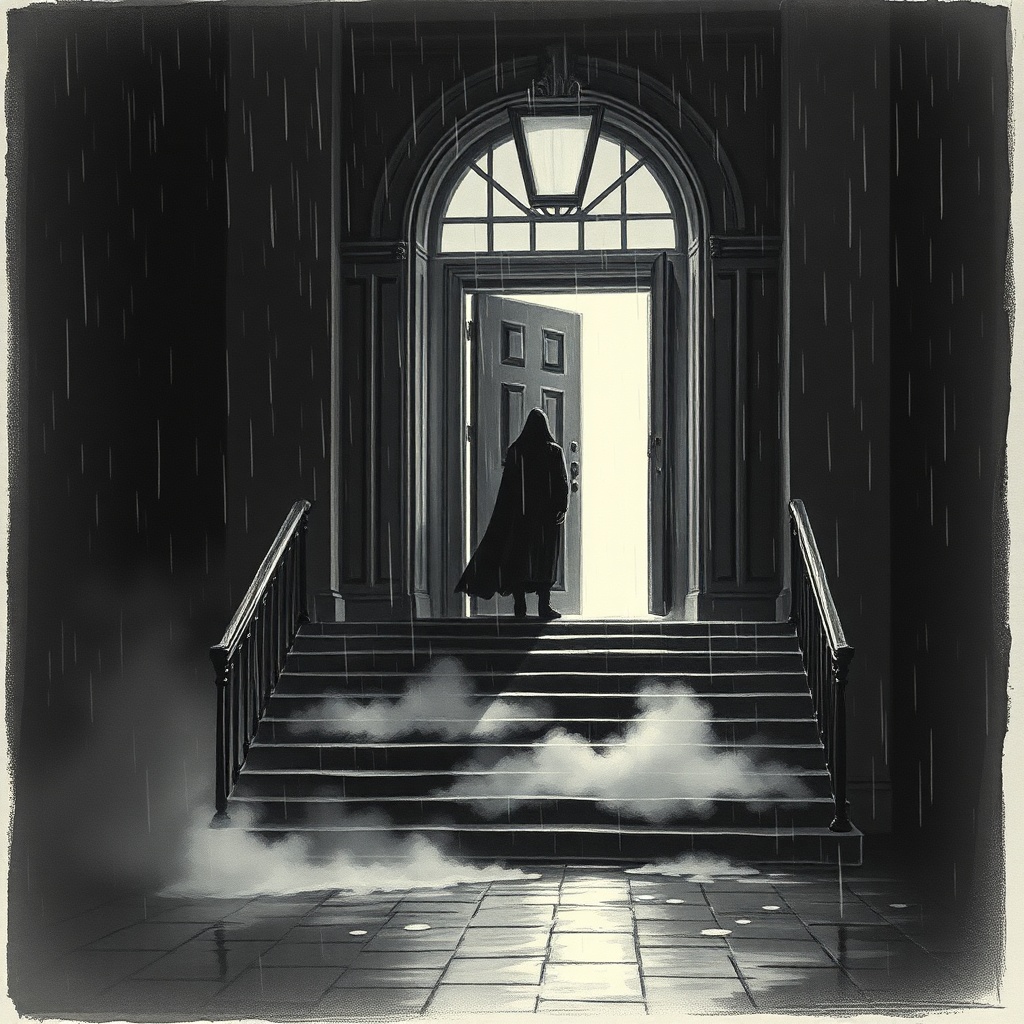
Usually it’s out of anger. Sleep deprivation makes you brave in stupid ways. A tenant storms down the hall, yanks the handle, and finds an empty room that smells freshly painted, or a bricked-up wall where a door should lead, or a space that is somehow too deep. The shadow is there even when the lights are on. It doesn’t move like a person. It shifts like a spill. If the person steps through, the crying stops.
Then, later, the person is different. Quiet. Prone to standing in doorways, blocking light. Or they vanish, and the next tenant hears crying from the same place, except now it sounds a little closer. Like it has learned the acoustics of a new throat.
I didn’t grow up with this legend. I came to it the way you come to most local horrors. Through someone else’s casual warning, delivered too late to be useful.
A friend of mine in Cluj, the kind of person who can talk to anyone from a bartender to a priest, knew an older woman who managed a small building near the center. He told me about her at my kitchen table, picking at sunflower seeds like he was trying to occupy his hands.
“She won’t rent the back room,” he said.
“Because it’s haunted,” I said, doing that thing where you say the word like it’s a joke so it can’t touch you.
He shrugged. “Because of the door. She calls it the plângătoare. The crying one.”
I laughed once, reflexively, then stopped. “That’s not a real thing.”
He looked at me the way you look at someone who’s never had to listen for footsteps on the other side of a wall. “Sure,” he said. “Don’t open it if you ever hear it.”
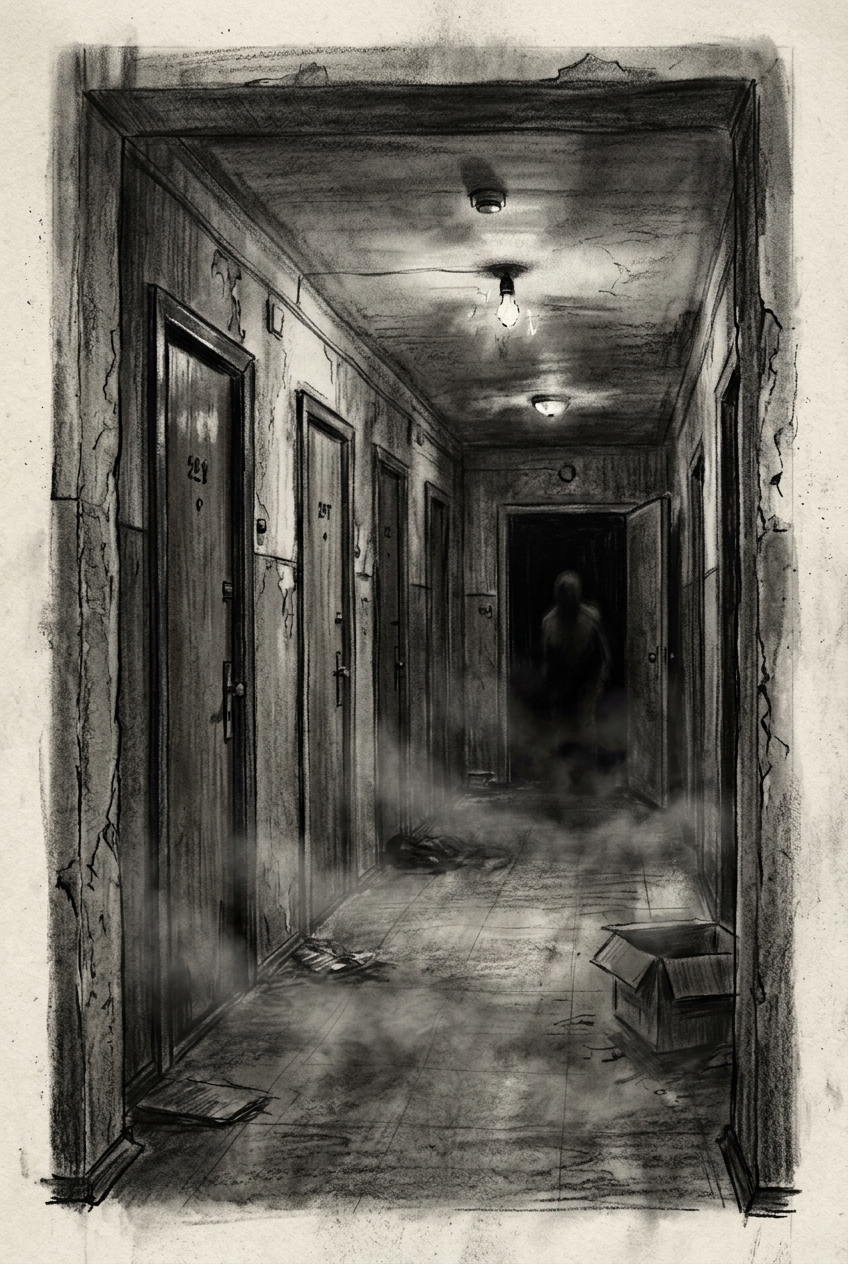
I didn’t plan on hearing it. I wasn’t chasing it. I was in Bucharest weeks later, alone, doing boring work that required me to stay near Gara de Nord, and the only place that didn’t feel like it would give me bedbugs was an older apartment in a block that had seen better decades. The hallway smelled of boiled cabbage and cold cigarettes. The elevator shuddered like it resented being asked.
Inside, the rental was clean enough. Narrow. Cheap furniture. A mirror in the entryway that made my face look longer, which felt personal. At the far end of the short corridor was a door that didn’t match the others. Darker wood. Older handle. The kind of door you notice without wanting to.
I told myself it was a closet. I told myself a lot of things, actually.
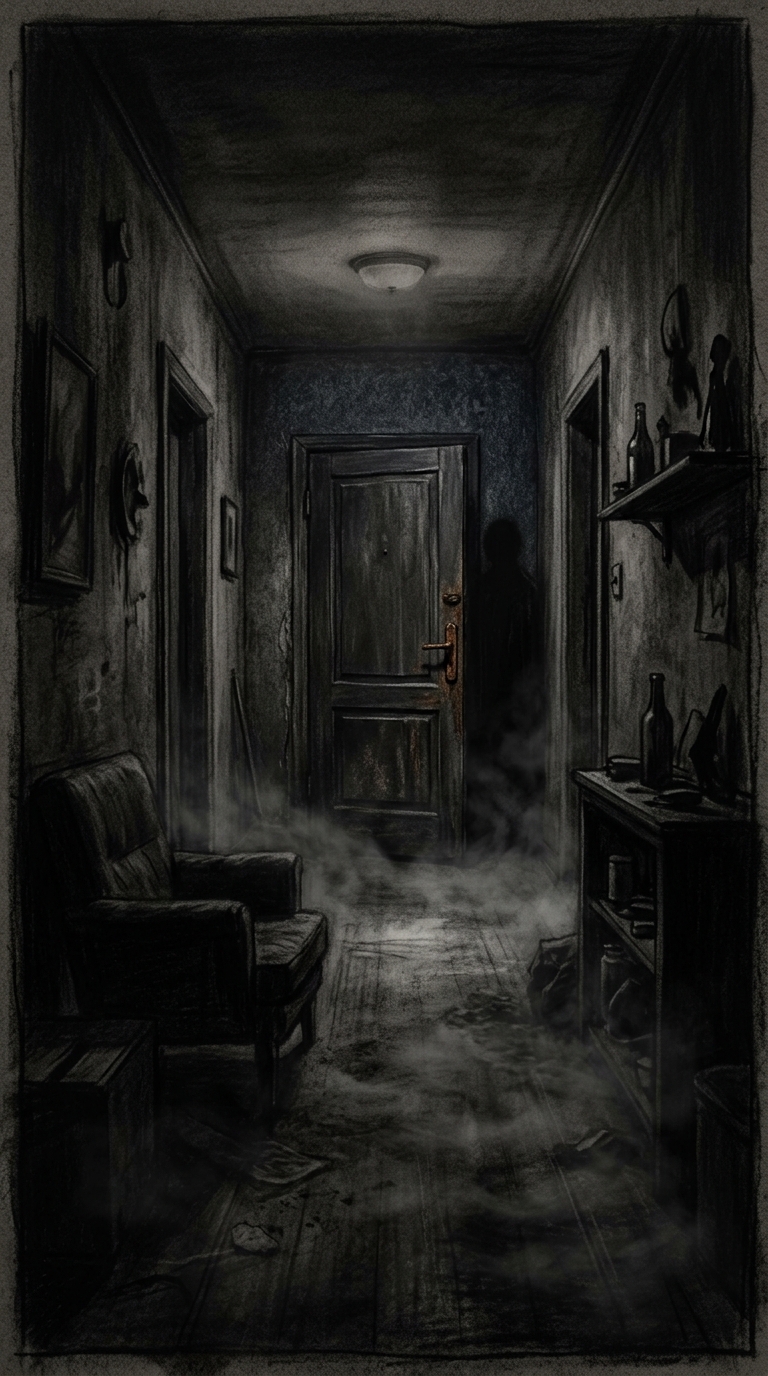
That first night, the city did what cities do. Sirens. Distant music. Someone laughing too loudly on the street like they were trying to prove they were alive. I fell asleep to it, and I woke up to something else.
Not a scream. Not a voice. A wet, careful sound, like breathing through a cloth. Then the smallest hitch. A sob being swallowed. The kind you make when you don’t want anyone to know you’re crying in the bathroom at a party.
It was coming from the corridor.
I lay still, listening hard, waiting for the sound to resolve into something ordinary. A neighbor. A pipe. The building settling. The elevator grinding. But it stayed human-shaped without being human. It had rhythm. It had patience. It was close enough that I could hear the air around it.
I got up, because of course I did. I told myself I was being rational. I was not. I walked barefoot down the corridor and stopped a few steps from the dark door. The sobbing wasn’t louder, which made no sense. It stayed the same volume, like the sound wasn’t traveling through air but through the idea of distance.
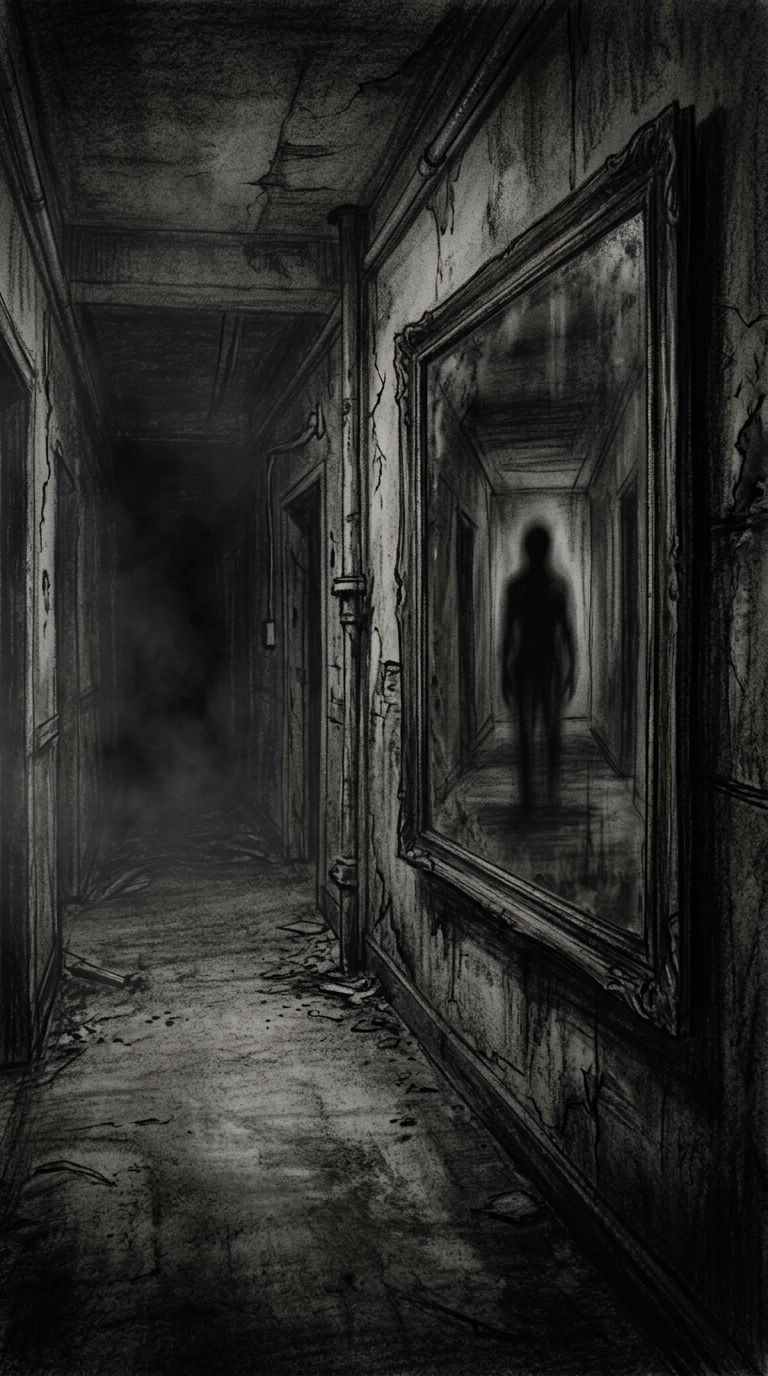
I leaned forward. The hallway light above me buzzed. I saw, very clearly, that the bottom of the door was wet. Not a puddle, not a leak, but beads gathering along the edge, slipping down the wood and darkening the threshold. Like tears. Like the door was crying into my apartment.
The handle looked slightly turned, as if someone on the other side was holding it, not opening, just testing.
My throat did the thing it does right before you speak when you shouldn’t. I remembered my friend’s tone. Don’t open it if you ever hear it.
“I can help,” I whispered, because I am an idiot with a conscience. The moment the words left my mouth, the crying stopped.
The silence was so complete it felt like pressure.
From the other side of the door, something shifted. Not footsteps. More like a body leaning close. I felt a temperature change, a coolness seeping under the frame. The mirror in the entryway behind me caught a sliver of the corridor, and in it I saw the shadow.
It wasn’t on my side of the door.
It was in the mirror, standing behind me in the hallway, where there was nothing.
I didn’t turn around. I know that sounds brave. It wasn’t. It was the frozen, animal part of me that refuses to complete a pattern that might get it killed.
The handle made a soft click. Not turning fully. Just acknowledging me.
Then the crying began again, but lower, satisfied. Like someone who has gotten what they wanted and is now taking their time.
I backed away, slowly, until my shoulder hit the wall. I went to the bedroom and shut the door, because shutting a door always makes you feel like you’ve done something, even when you haven’t. I sat on the bed with my phone in my hand, thumb hovering over contacts, and realized I didn’t know who to call and what to say.
Hello. My closet is crying and the mirror has a person in it.
The sound continued in the corridor, steady as dripping water. I didn’t sleep. Somewhere near dawn it faded, not like it stopped, but like it withdrew. Like it had simply stepped back to a distance where I couldn’t hear it.
Morning made me functional again, which is a fancy way of saying I started lying to myself with renewed energy. I opened the bedroom door. The corridor was dry. No stain. No beads on the frame. The dark door looked ordinary. I laughed, once, at nothing, because what else do you do when your brain is trying to stitch itself back together.
I worked all day. I came back at night with groceries and a stubborn determination to be normal. I cooked something that smelled like garlic and oil, because those are human smells, domestic smells, the kind you put between yourself and the dark. I even put on a show, volume turned up, like noise could be a charm.
At 2:13 a.m. my television muted itself.
Not turned off. Muted. The little icon appeared in the corner like a finger pressed to lips.
From the corridor, a soft sob. Then another. Then that careful breathing, closer than before.
I sat very still. The crying wasn’t coming from the dark door now. It was coming from my bedroom door.
The handle began to turn with the tenderness of someone trying not to wake a child. The door didn’t open. It just tested the latch, once, twice, learning.
On the other side, a shadow pooled at the bottom crack, thickening, flattening, as if it were trying to become narrow enough to fit.
And in the dark, inches from my face, my phone lit up with an incoming call.
The screen showed my own number.
I didn’t answer. I couldn’t. The phone kept ringing anyway, soundlessly, as if the apartment had decided noise was a privilege I no longer deserved. The sobbing hitched, amused, and the bedroom door clicked, not open, just not fully closed anymore.
In the black gap that appeared, I smelled wet plaster. Iron. Something old that had been shut away and was now being polite about coming in.
The last thing I heard before the crying finally stopped was a whisper, so close it felt like my own breath being fed back to me.
“Mulțumesc,” it said, softly. Thank you.
And then my hallway light, the one I hadn’t turned on, switched itself off.
Loved this story? Pulse it.
Pulses bubble up to the channel — they help us see which stories deserve sequels.