What if Puzzle Pieces Glowed Correctly
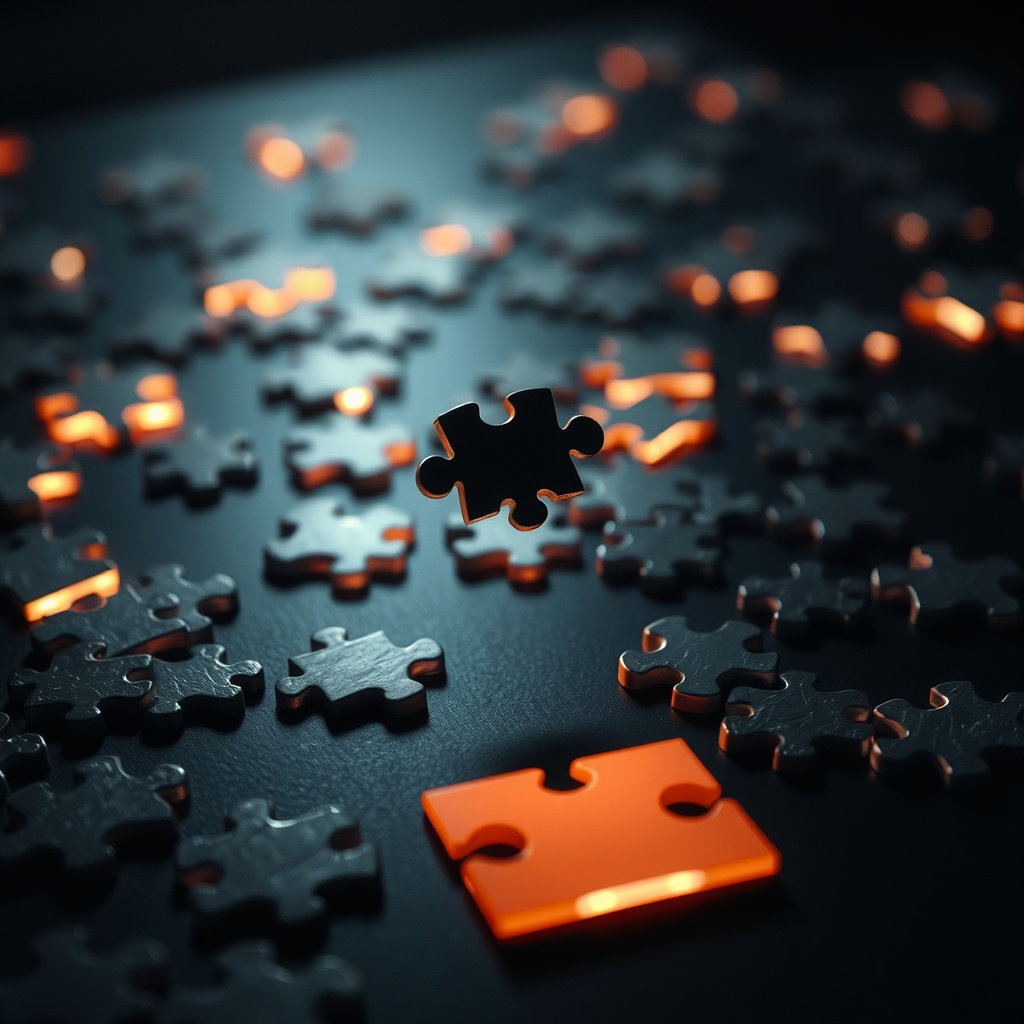
Imagine opening a puzzle box and the pieces already know where they belong. Not in a smug, “I’ve done this before” way, but physically: each piece gives off a faint glow when it’s held over its correct spot, like a tiny lighthouse beam saying, “Here. Right here.” The first visible change is immediate and weirdly emotional. The table stops being a battlefield of cardboard confetti and becomes something closer to a laboratory bench. You stop squinting at sky-blue gradients and start sweeping pieces over the board like a metal detector over a beach.
At the kitchen table, the behavior changes in minutes. People stop sorting by color. Edge pieces lose their celebrity status. The classic ritual of flipping everything face-up becomes optional, because the real information isn’t printed ink, it’s the glow. Kids who usually bounce off puzzles after ten minutes suddenly stick around because the feedback loop is instant. Adults who love the slow burn get a strange pang of loss, like someone added a GPS route to a hike you used to do by memory. You still have to move your hands, but the uncertainty drains away.

Now for the uncomfortable question: how could a piece “know” it’s in the right spot? A normal jigsaw fit is purely mechanical. But “glow when correct” implies the pieces are sensing location and orientation relative to the board’s intended final image. That requires information. Either the board is broadcasting a map and the pieces respond, or the pieces carry the whole solution and recognize their own coordinates.
The cleanest sci-fi-with-physics approach is short-range communication plus a tiny light source. Picture each piece containing a microscopic RFID-like chip and a paper-thin printed battery, the sort of flexible electronics researchers already build into packaging. The puzzle board contains a grid of passive resonators or coils under the surface. When a piece is brought near its assigned “home” cell, the electromagnetic coupling changes in a very specific way. The chip reads that signature like a lock reading a key, and an embedded organic LED lights up. No magic, just a fancier version of tap-to-pay, but with 1,000 tiny identities instead of one credit card.
Orientation is the clever part. A jigsaw piece can be rotated four ways, and it can be slightly off-center. To make the glow only happen when it’s truly correct, the board would need fine-grained position sensing, or the piece would need multiple contact points. That pushes us toward capacitive sensing: the board measures tiny changes in electric field caused by the piece’s conductive pattern. If the pattern is asymmetric, the board can tell not just “a piece is here” but “this exact piece, at this angle.” It’s the same physics that lets your phone detect a finger, scaled up and made pickier.
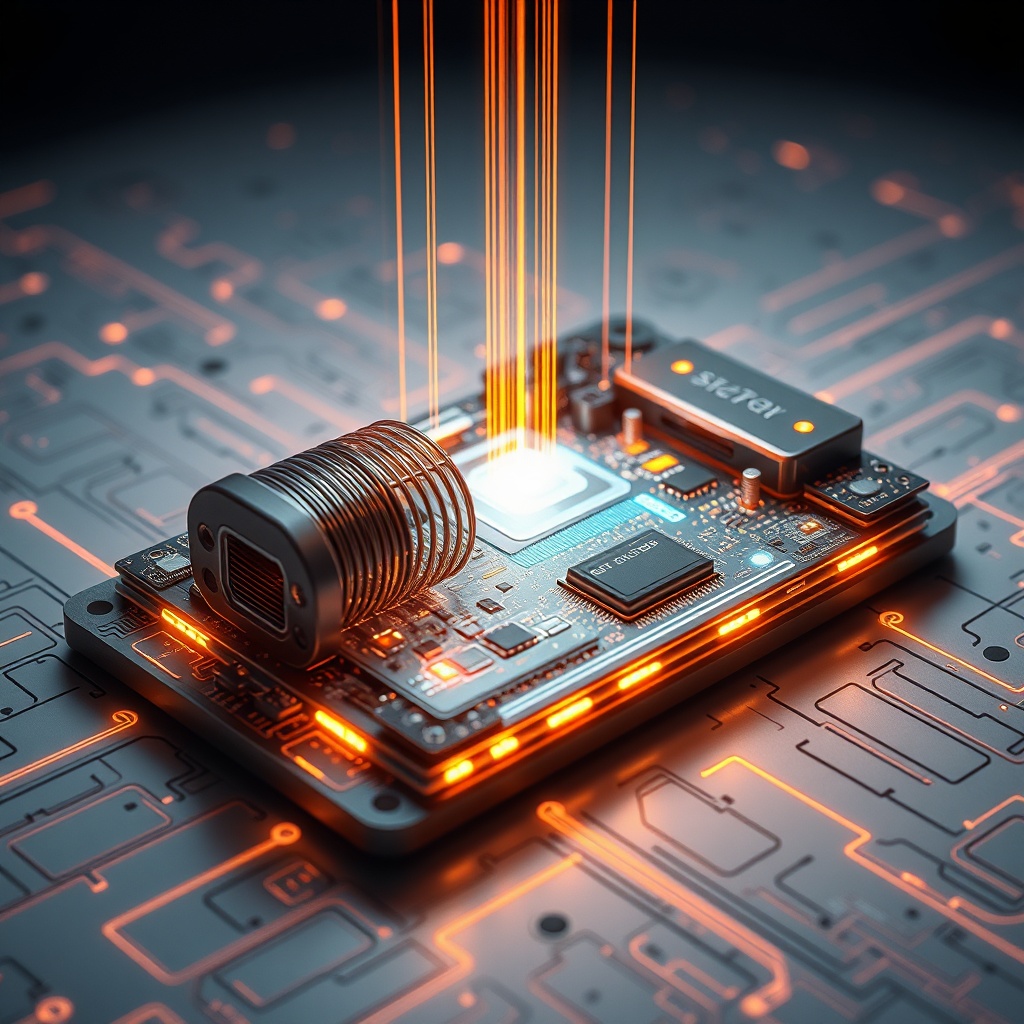
Once you accept that, the chain reaction begins. The first is energy. A single LED blink is nothing, but a 2,000-piece puzzle glowing frequently is a real power budget, especially if it’s bright enough to see in daylight. That means either thicker batteries, rechargeable boards, or light that only appears in dim conditions. Designers would optimize for minimal emissions, and suddenly you’ve reinvented the puzzle as a low-power sensor network.
That’s where it gets interesting. A sensor network doesn’t have to stop at “correct spot.” It can detect how long each piece is hovered, how many wrong attempts you make, and whether you tend to rotate pieces clockwise first. In other words, it becomes a cognitive measurement device masquerading as a cozy hobby. If you’ve ever had the uneasy feeling a smart TV knows too much about you, wait until your puzzle quietly learns your frustration thresholds.
And people will love it anyway. Because the glow is a dopamine dispenser. Our brains are prediction engines. We take pleasure in reducing uncertainty, in watching a vague guess snap into a confirmed outcome. The glowing puzzle turns every placement into a tiny slot-machine win, except the house always pays out. For some people, it will be addictive in the mild, “I’ll just do one more section” sense. For others, it will hollow out the challenge. The skill shifts from pattern recognition to search strategy: sweep, detect, place, repeat.
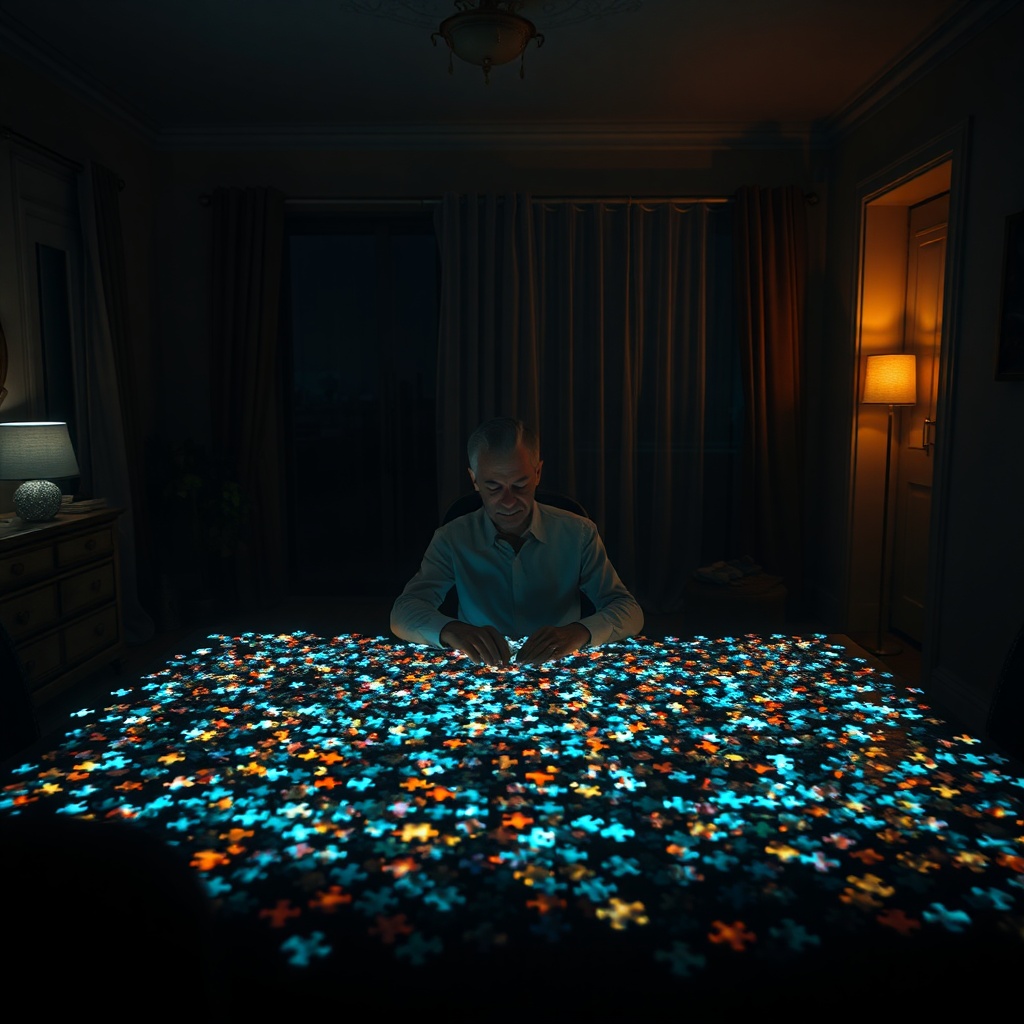
Socially, this splits puzzling into two cultures. The “purists” keep doing traditional puzzles, like vinyl listeners in a streaming world. The “solvers” embrace glow puzzles as speedrunning gear. Competitive puzzling becomes absurdly fast, then quickly stops being about humans at all. Once the board and pieces can identify correct positions, you can attach a small robot arm and let it do the placements. It’s basically a pick-and-place machine, the same kind used in electronics manufacturing, except instead of circuit boards it’s assembling a picture of a cottage by a lake. Somewhere an engineer will say, “Finally, a practical use for my robotics degree,” and mean it.
Education jumps on it next. Teachers use glow puzzles to help kids with spatial reasoning, because feedback is immediate and non-judgmental. Therapists use them for stroke rehabilitation: reaching, rotating, aligning, with built-in encouragement. Museums use giant wall-sized glow mosaics as interactive exhibits. And then the feature creeps from puzzles into other “assembly” tasks. Imagine furniture with parts that glow when aligned correctly. Wiring harnesses that light up when plugged into the right socket. Surgical tools that give a gentle optical confirmation when positioned perfectly. It’s the same idea: reduce error by turning “correctness” into a visible property of the world.
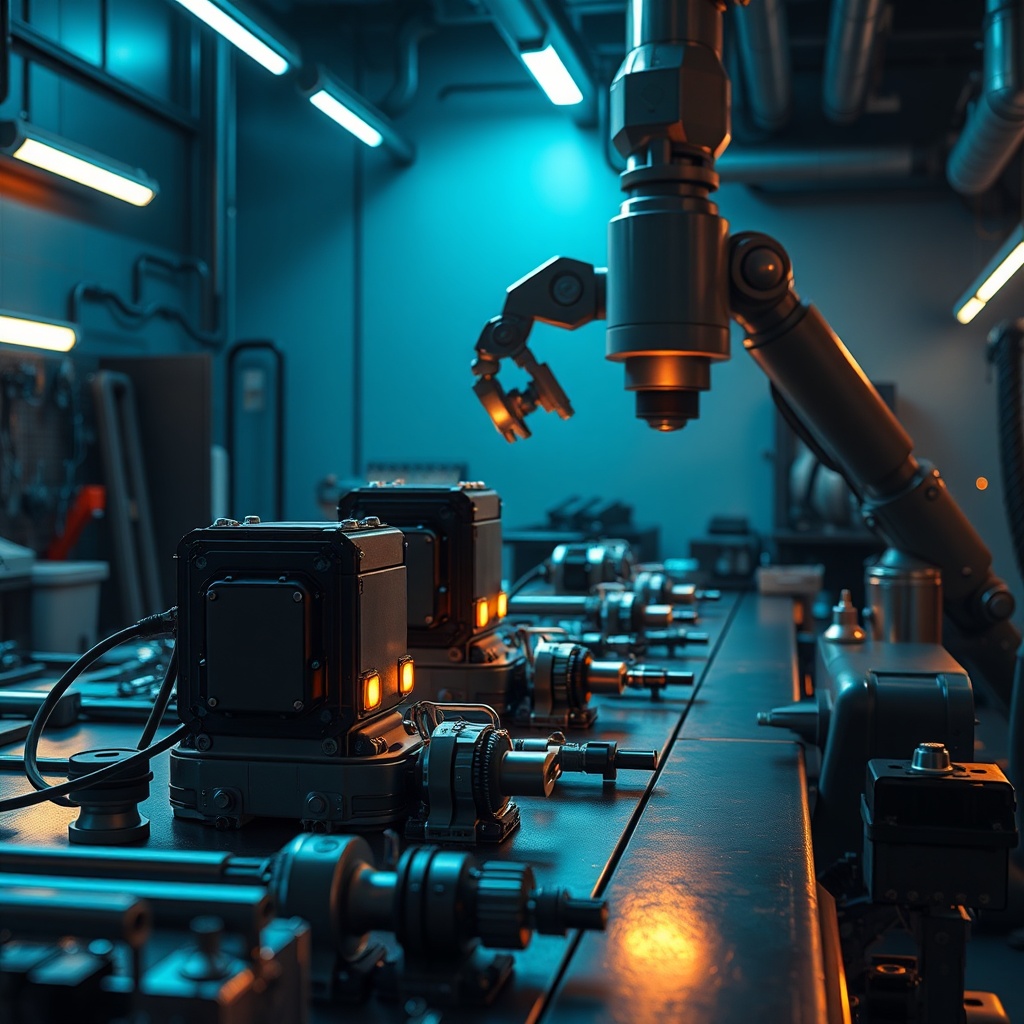
There’s also a materials angle. If you want pieces to glow without bulky electronics, you might try photoluminescent inks that respond to specific wavelengths. The board could emit patterned ultraviolet light, and only the correct piece-position combination produces visible emission due to matching filters. That’s more like an optical encryption trick than a sensor system. It would be elegant, battery-light, and annoyingly hard to counterfeit. But it still implies the board is an active device, and active devices have supply chains: rare earth phosphors, polymers, conductive inks. Multiply that by millions of puzzles and you’re no longer just selling cardboard. You’re selling consumer electronics with all the recycling headaches that brings. Suddenly the cozy puzzle aisle shares a problem with old smartphones: what do you do with a thousand tiny embedded circuits when you’re done?
Climate-wise, the direct impact is small, but the indirect impact is classic modern life. People buy more because the barrier to completion drops. More puzzles completed means more puzzles produced. If glow puzzles become disposable entertainment, we get a surge of e-waste in a category that used to be nearly compostable. Regulators eventually step in. Companies brag about “fully recyclable smart puzzles,” which is the kind of sentence that makes a materials scientist laugh into their coffee.

Now zoom out one more notch, because the technology behind “glow when correct” is basically object-to-location authentication. You’re proving that an object is in the right place, not just that it exists. That’s a huge deal in logistics, aviation maintenance, and even space. Satellites and spacecraft are assembled from components that must be installed in exact positions with exact orientations, and mistakes are brutally expensive. A system where each part “confirms” its correct seat with a visible signal is a safety dream. The humble puzzle becomes the toy version of a future assembly language for reality, where correct placement is as obvious as a traffic light.
And here’s the biggest unexpected consequence, the one that sneaks up on you while you’re enjoying the glow: it changes what you trust in yourself. Traditional puzzling is training in ambiguity. You learn patience. You learn to sit with “I don’t know yet.” You learn to build a picture from partial evidence, to hold multiple hypotheses, to be wrong and keep going. The glowing puzzle replaces that with an external oracle. When it doesn’t glow, you don’t ask, “Does this shape match? Does the color gradient make sense?” You ask, “Why didn’t it approve me?”
Scaled up to a world where more objects “glow correctly,” we start outsourcing internal judgment to external signals. It’s not that we become stupid. It’s that we become dependent on confirmation. The glow is comforting, but it teaches a subtle lesson: correctness is something the environment grants you, not something you reason your way into.
So yes, glowing puzzle pieces make puzzles easier. They make them faster, more accessible, and wildly useful as a gateway to error-proof assembly in medicine, manufacturing, and maybe even spacecraft. But the real twist is psychological. The brightest glow isn’t on the cardboard. It’s on the idea that certainty can be automated. And once you get used to the world lighting up to tell you you’re right, the dark parts of life, the parts without a sensor grid underneath, start to feel unfairly hard.
Loved this story? Pulse it.
Pulses bubble up to the channel — they help us see which stories deserve sequels.