What if Spoons Showed Calories Instantly?
The first time a spoon shows you calories in real time, it feels like the universe just turned on subtitles for your appetite. You lift a bite of mac and cheese, and the spoon’s bowl blooms with a clean, floating number that changes as the sauce slides, as if the food has opinions. Your brain does a tiny accounting spreadsheet in the background. Your mouth keeps moving anyway. That’s the immediate visible change: eating becomes measurable, moment by moment, and you can’t unsee it.
In the first week, kitchens get strangely quiet. People pause mid-air. Friends who used to talk with their hands now talk with their spoons, because the utensil is constantly interrupting with updates. A “bite” stops being a poetic idea and becomes a unit with a price tag. The biggest shock is that calories are not evenly distributed. Your spoon tells you the crunchy top is denser. It tells you the “just a little” drizzle of oil is basically a small mortgage. And it tells you, rudely, that the dessert you thought was “light” is not.
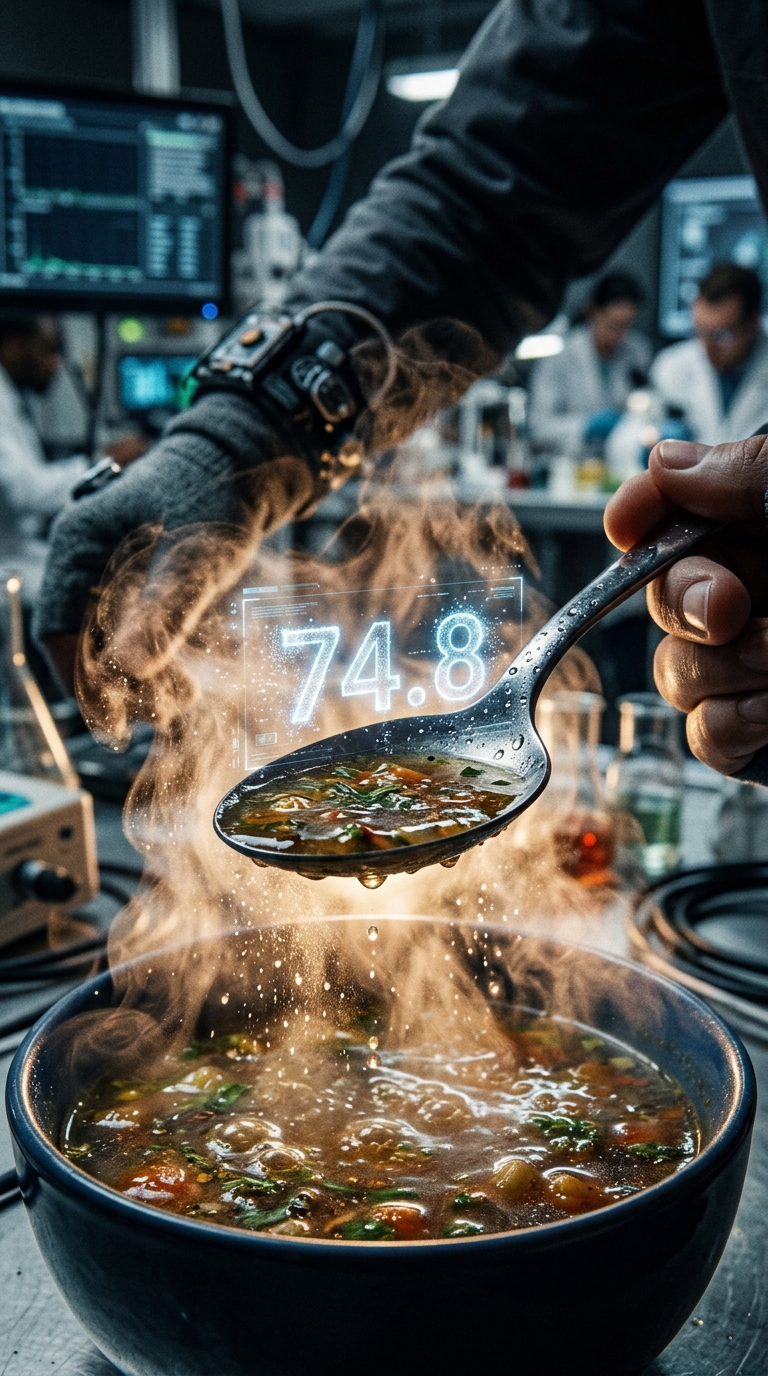
Then the question everyone asks, usually with their mouth full, is: how could the spoon possibly know?
If we’re doing this with real physics, the spoon isn’t reading “calories” the way a scale reads mass. Calories are biological energy, the heat your body can extract by oxidizing food. To estimate that instantly, the spoon would need to infer macronutrients, alcohol, and maybe some fiber effects. The plausible route is spectroscopy. Imagine the spoon has microscopic sensors that shine near-infrared light into the bite and read the reflection. Different chemical bonds absorb specific wavelengths. Fats, sugars, and proteins have recognizable spectral fingerprints. Combine that with electrical impedance (how the food resists a tiny current), temperature, and a volume estimate from 3D imaging of the bite, and you can get a pretty good guess of grams of fat, carbs, and protein. Multiply by the classic energy densities, and you’ve got a calorie estimate.
Not perfect, but close enough to ruin your bliss.
The spoon also needs to know what actually gets into your mouth. The easiest trick is timing. It measures what sits in the bowl, then subtracts what’s left after the bite. That means the spoon is a little lab that is constantly scanning, modeling, and updating. The biggest technological leap isn’t the sensors. It’s the calibration. Food is messy. Mixed dishes are chaotic soups of chemistry. So the spoon would rely on machine learning trained on absurdly large datasets of “spectral signature plus known nutrition.” Which means, in practice, that every bowl of curry becomes a new data point in the world’s largest edible census.
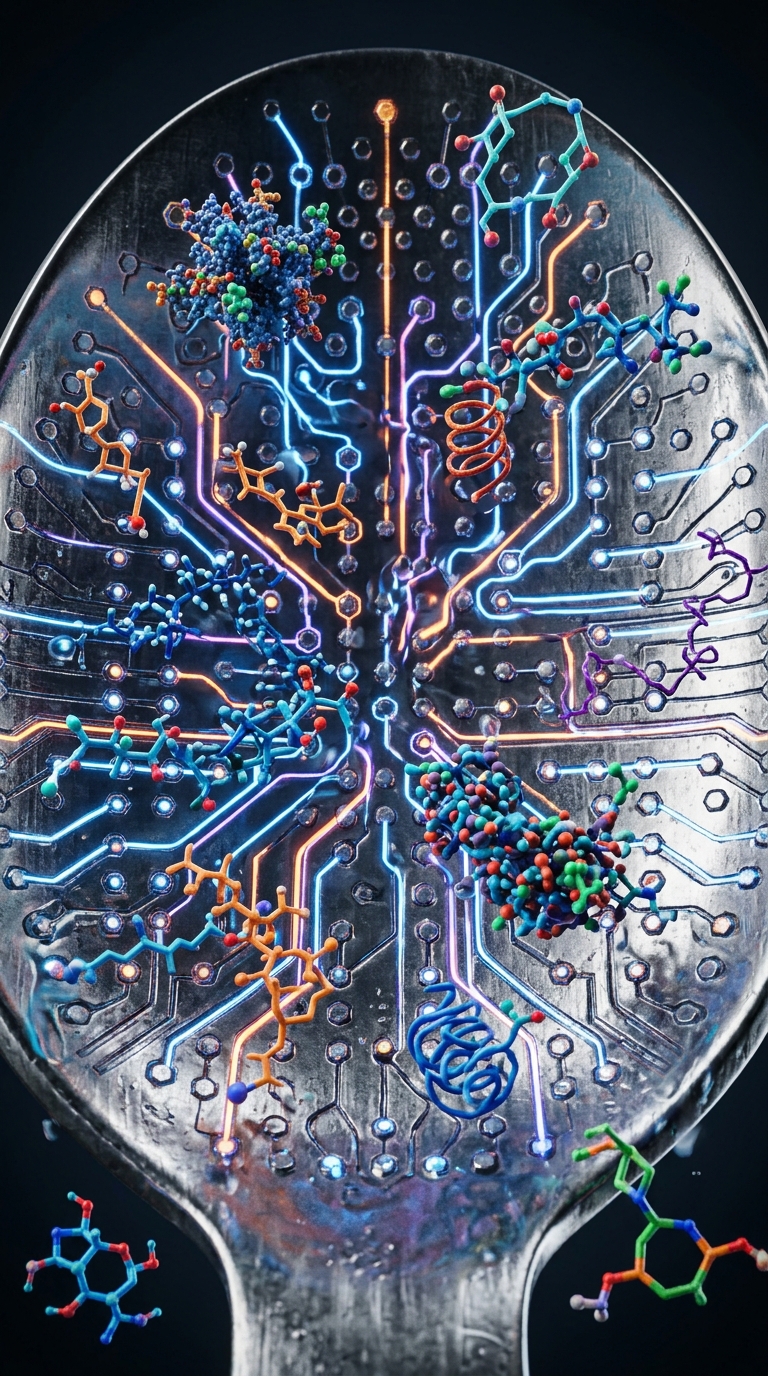
Now biology enters like an uninvited guest at dinner. Humans don’t eat calories. We eat expectations, memories, stress, salt, and the comforting lie that “I earned this.” The spoon doesn’t just display energy. It changes how your reward system learns.
When you eat, dopamine responds to prediction. The first bite is often the best because it’s the largest surprise. A calorie spoon adds a second prediction stream: the number. If the number is higher than expected, you get a jolt of guilt or thrill depending on your personality. If it’s lower, you get permission. Either way, the act of eating becomes a feedback loop with a scoreboard.
Some people immediately start “gaming” it. They take smaller bites, not because they’re full, but because the number per bite looks friendlier. Others do the opposite. If they’re going to “spend,” they spend big and get it over with. You’ll see new disorders, too. For the anxious, the spoon becomes a compulsive measurement device. For the defiant, it becomes a dare. There will be a whole subculture of people who post clips of the highest-calorie single bite they can engineer, like competitive eating got an accountant.
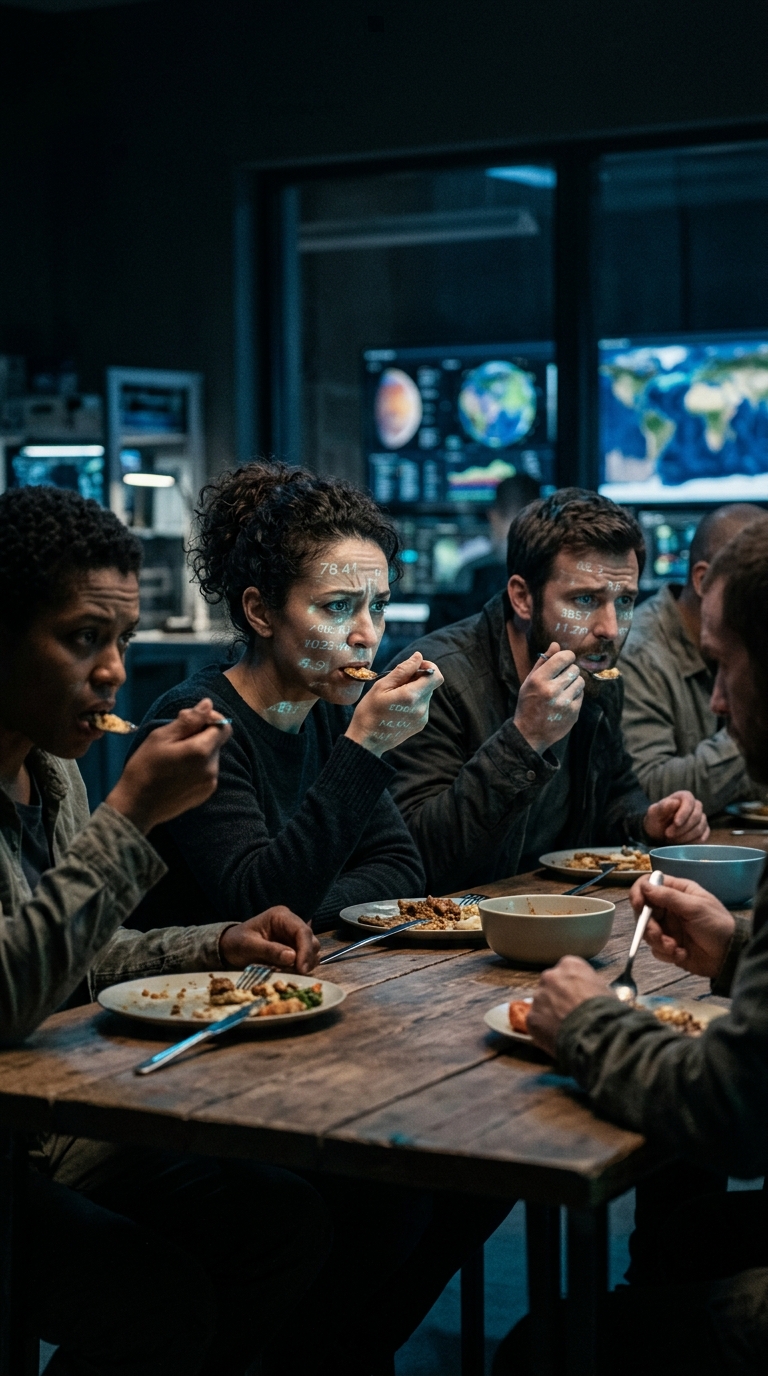
Society changes fastest where food is social. Restaurants hate the first generation of spoons, because diners suddenly notice things menus were allowed to be vague about. That creamy sauce. The “healthy” wrap. The innocent handful of nuts. It’s not that restaurants were always lying. It’s that most people prefer ambiguity with their lunch.
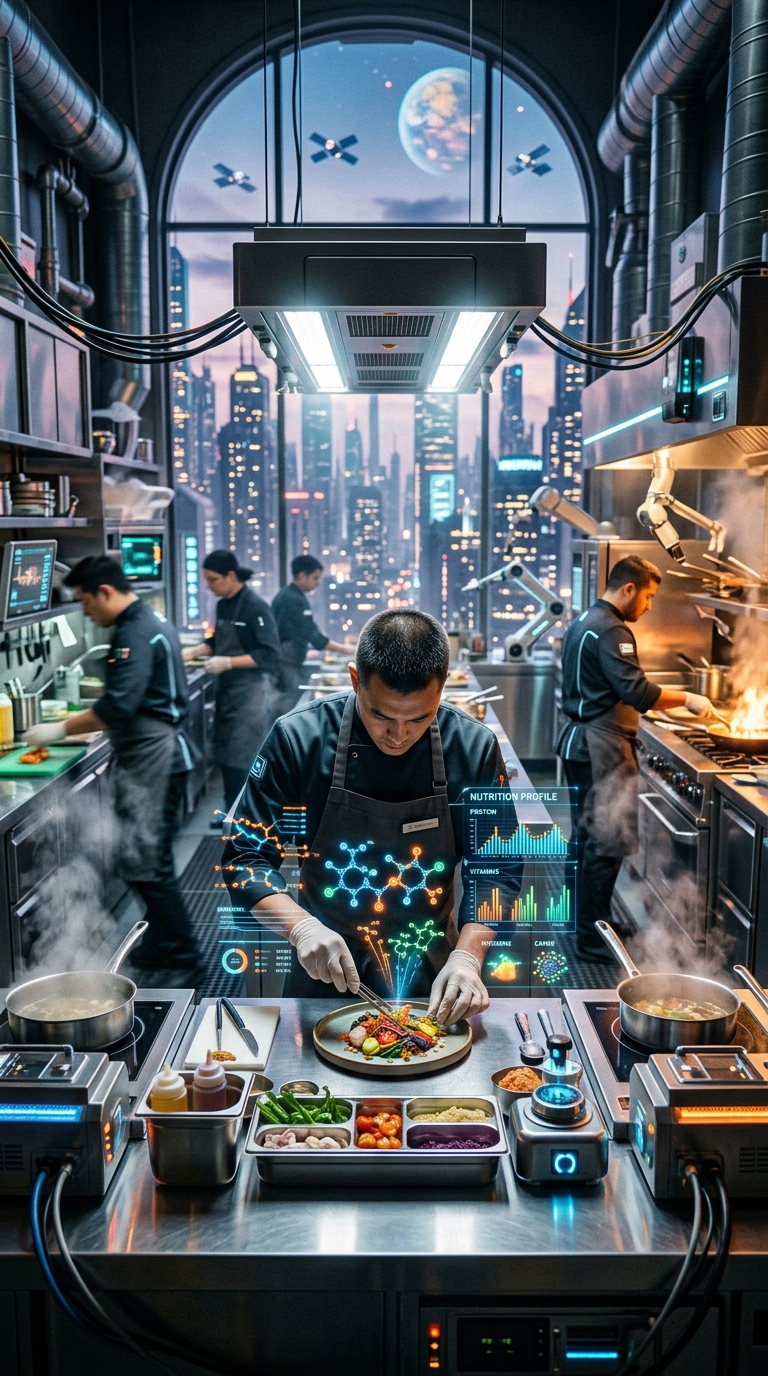
So menus evolve. Some places embrace it, offering “calorie-honest” dining where dishes are designed to look indulgent while scanning low. Culinary science goes wild. You get high-aeration desserts that feel huge and scan small. You get emulsions that deliver flavor with less fat. You get bitter compounds and aromatics that make the brain perceive richness without the energy. Chefs become part artist, part perceptual psychologist, part optical engineer for the spoon’s sensors. The black market emerges too, because of course it does. “Spoof sprays” that confuse spectroscopy. Plates lined with materials that reflect certain wavelengths to undercount fats. A whole cat-and-mouse game between utensil manufacturers and the people who want plausible deniability in edible form.
Public health agencies salivate at the idea. Obesity, type 2 diabetes, and heart disease are partly problems of hidden energy density. If every bite becomes transparent, average intake might drop. But it won’t be uniform. People with high food insecurity could react by optimizing for calories per dollar even harder, because now the spoon makes scarcity visible. If you’re struggling, a 600-calorie bite isn’t a sin. It’s efficiency. Meanwhile, affluent users might drift toward low-calorie aesthetics and treat numbers as moral purity. The spoon doesn’t just measure food. It measures social status in a new unit: visible restraint.
The data is the real gold. If these spoons sync, insurers will want it. Employers will want it. Governments will definitely want it. Someone will claim it’s “for your wellness,” which is always when I start checking the privacy settings. Calorie intake is not just health data. It’s mood data. It’s pregnancy data. It’s religion data. It’s grief data. Your spoon knows when you’re celebrating, when you’re spiraling, when you’re quietly skipping dinner. That’s intimate in a way step counts never were.
Zoom out far enough and the climate shows up at the table. Calories are energy, but the climate cares about a different currency: emissions per calorie. If calorie spoons make people eat fewer total calories, demand for food drops, and emissions drop with it. That seems straightforward, until you remember substitution. If people cut cheap carbs and instead “spend” their calories on richer animal products for the same satisfaction, emissions per calorie can rise. A bite of beef and a bite of lentils can show the same number on the spoon while carrying wildly different climate costs.
So the second generation of spoons appears, because humans can’t resist upgrading morality into a dashboard. They don’t just show calories. They show “carbon per bite,” “water per bite,” maybe “biodiversity impact per bite.” Now dinner becomes an ethics simulator. You can imagine the arguments. You can also imagine the improvements. Supply chains get pressured to verify footprints at high resolution. Food labeling stops being a suggestion and becomes a measurable, bite-level reality.
This matters in space, too, in a way that’s oddly poetic. In spacecraft and habitats, calories are survival and logistics. A spoon that can verify energy content in real time becomes a safety instrument. It catches degradation in stored food. It spots formulation errors in life-support agriculture. In a Mars habitat, you don’t want to discover your crop’s energy density dropped after you’ve already planned the month. A calorie spoon becomes as normal as a CO2 monitor, and about as comforting.
But the biggest twist isn’t technological, or nutritional, or even environmental. It’s psychological. The spoon makes a hidden variable visible, and that changes what people think food is for.
At first, you’d expect it to make us healthier by forcing honesty. It will, for some. For others it will make eating colder, more transactional. And then, slowly, a counter-movement will rise: people who deliberately eat with “blind spoons,” like vinyl enthusiasts rejecting streaming, craving the old mystery. Restaurants will offer “no-numbers nights.” Families will lock the smart utensils away for holidays like you hide the bathroom scale when guests come over.
Because once calories are always visible, the rarest luxury becomes not a decadent bite. It becomes a bite you’re allowed to experience without measurement. The biggest unexpected consequence is that the calorie spoon doesn’t just change diets. It changes what we think freedom tastes like.
Loved this story? Pulse it.
Pulses bubble up to the channel — they help us see which stories deserve sequels.