
What if Your Backpack Got Lighter?
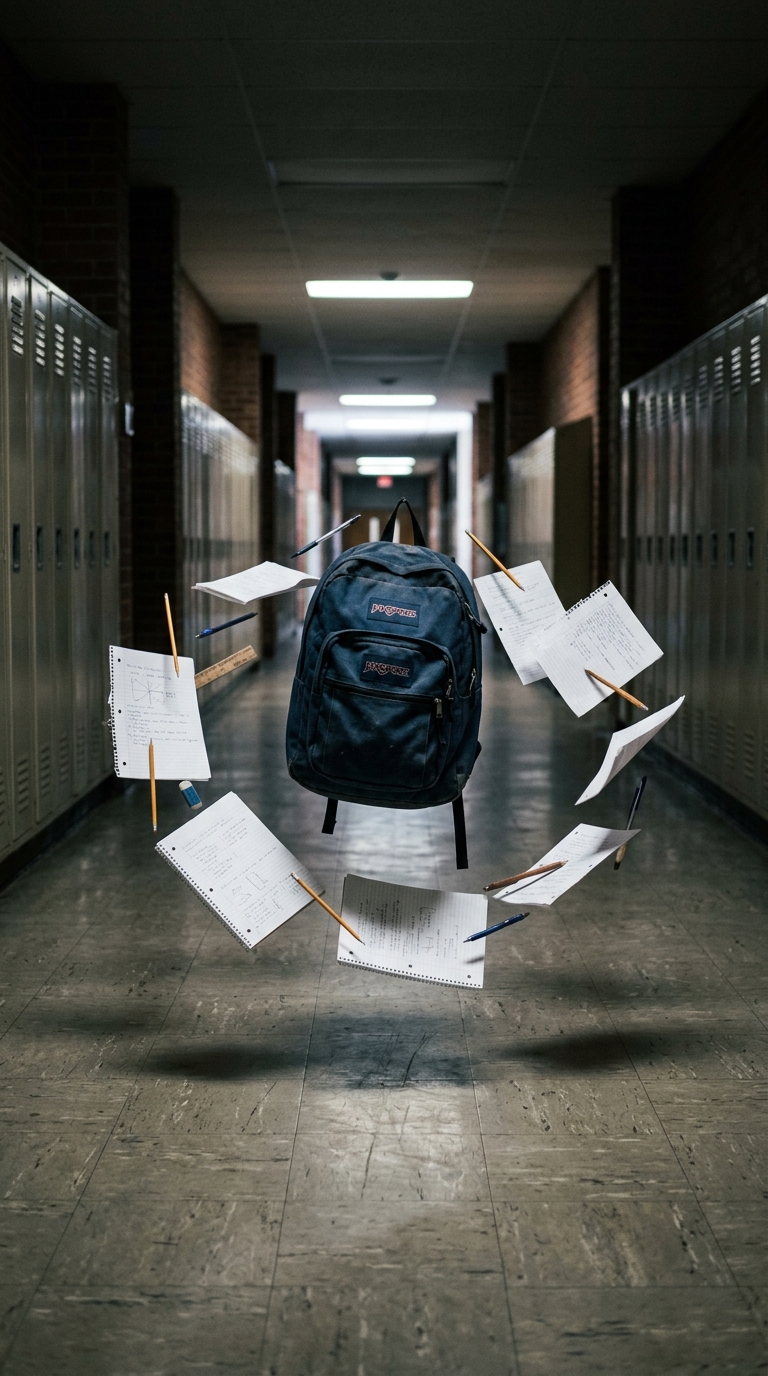
You unzip your backpack, toss in a textbook, and instead of the familiar shoulder-sag you feel. Relief. Actual, physical relief. The strap lifts. The bag seems to exhale, like it’s been holding its breath all semester. Then you do what every human does when reality glitches. You test it again. Add a notebook. Lighter. Add a laptop. Lighter. Somewhere in the background, the universe makes the tiniest cough and pretends it didn’t.
The rule, as it quickly becomes known, is brutally simple: every break makes your backpack lighter. “Break” here means damage, not time off. A torn seam. A snapped zipper tooth. A cracked buckle. A rip in the fabric. Each injury is rewarded with weight loss. Not the illusion of weight. Actual less weight, measured on a scale, observed in how it tugs on your spine, seen in how it stops compressing your hoodie when you hug it to your chest.
At first, the visible changes are almost cute. You stop hunching. You climb stairs faster. You swing the bag one-handed like it’s full of balloons. A friend might say, “What’s your secret?” and you’d shrug, trying to look casual while your bag, full of three binders and an unreasonable amount of snacks, weighs less than a single apple.

Then the temptation arrives. You notice the corner of the bag is wearing thin. You pinch it. You could rip it a little. Just a little. The moment you do, the bag gets lighter again, like it’s paying you in gravity coupons. Suddenly the backpack isn’t a container. It’s a slot machine that takes damage and pays out reduced mass.
Physics doesn’t like this. Mass is stubborn. It’s how much stuff you have, and it’s supposed to be conserved. If your backpack loses mass every time it breaks, the missing mass has to go somewhere. There are only a few options, and all of them are weird. Either the lost mass is converted into energy. Or it’s transferred somewhere else. Or it’s being shunted out of our universe like a magician palming a coin.
The energy option is the loudest. Einstein’s E = mc² is not a gentle formula. One gram of mass turned into energy is about the same as a small bomb. If each ripped thread shaved off even a gram, the hallway would become a short-lived sun and your school would be… briefly very well lit. Since you’re not instantly vaporized, the mass isn’t turning into heat and light locally. That suggests the mass is being moved, not destroyed.
Moved where? The creepiest consistent answer is. distributed. You rip the bag, it gets lighter, and somewhere else something gets heavier by exactly that amount. Not dramatically heavier at first. A gram is the weight of a paperclip. But if you and a few thousand students discover the trick and start “optimizing” your backpacks, those grams add up.
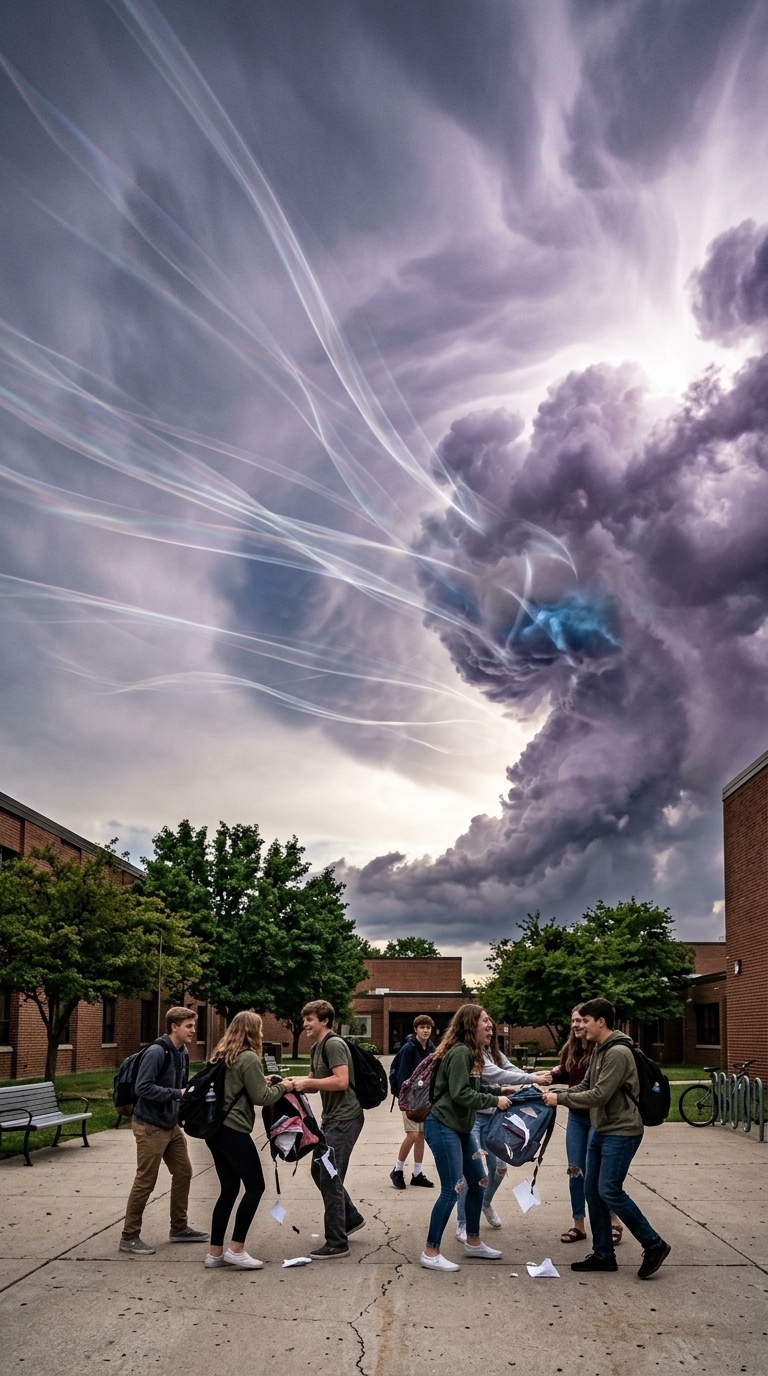
So the chain reaction begins in society before it fully shows itself in science. Students become amateur materials engineers. They want maximum breaking with minimum inconvenience. The black market shifts from vapes and test answers to stress points, pre-scored fabric, zippers that fail on command. Someone, somewhere, invents the “sacrificial seam,” a strip designed to tear repeatedly while keeping the bag usable. It’s like those perforated paper towels, except every pull makes gravity loosen its grip.
Teachers notice something odd. Backpacks look wrecked, but kids aren’t complaining about sore shoulders. Posture improves. Physical therapy referrals drop. A few parents are delighted until they realize their kid is deliberately destroying a perfectly good bag like it’s a sacred ritual. “It’s for my spine,” the kid says, and it’s hard to argue with a straighter spine.
Biology follows. Less load means fewer stress injuries, fewer compressed nerves, less joint wear. The human body responds quickly when you stop using it like a pack mule. But there’s a twist. Muscles are greedy for purpose. If daily carrying no longer provides resistance, some kids lose a little baseline strength. Others overcompensate at the gym. You get a weird split: the “floaters” who live in near-weightlessness of their own making, and the “lifters” who treat normal gravity like a personal insult.
Then the first real scientific team gets involved. Not a school science club. I’m talking about people with accelerometers, mass spectrometers, and the sort of calm facial expressions you only develop after you’ve seen data do something illegal. They weigh the backpack. They load it with calibrated masses. They induce micro-tears in a controlled chamber. Every break reduces the total mass. And the missing mass does not show up as heat. It doesn’t radiate. It doesn’t leave residue. It simply stops being here.
That’s when the backpack stops being a student-life curiosity and becomes a physics incident.
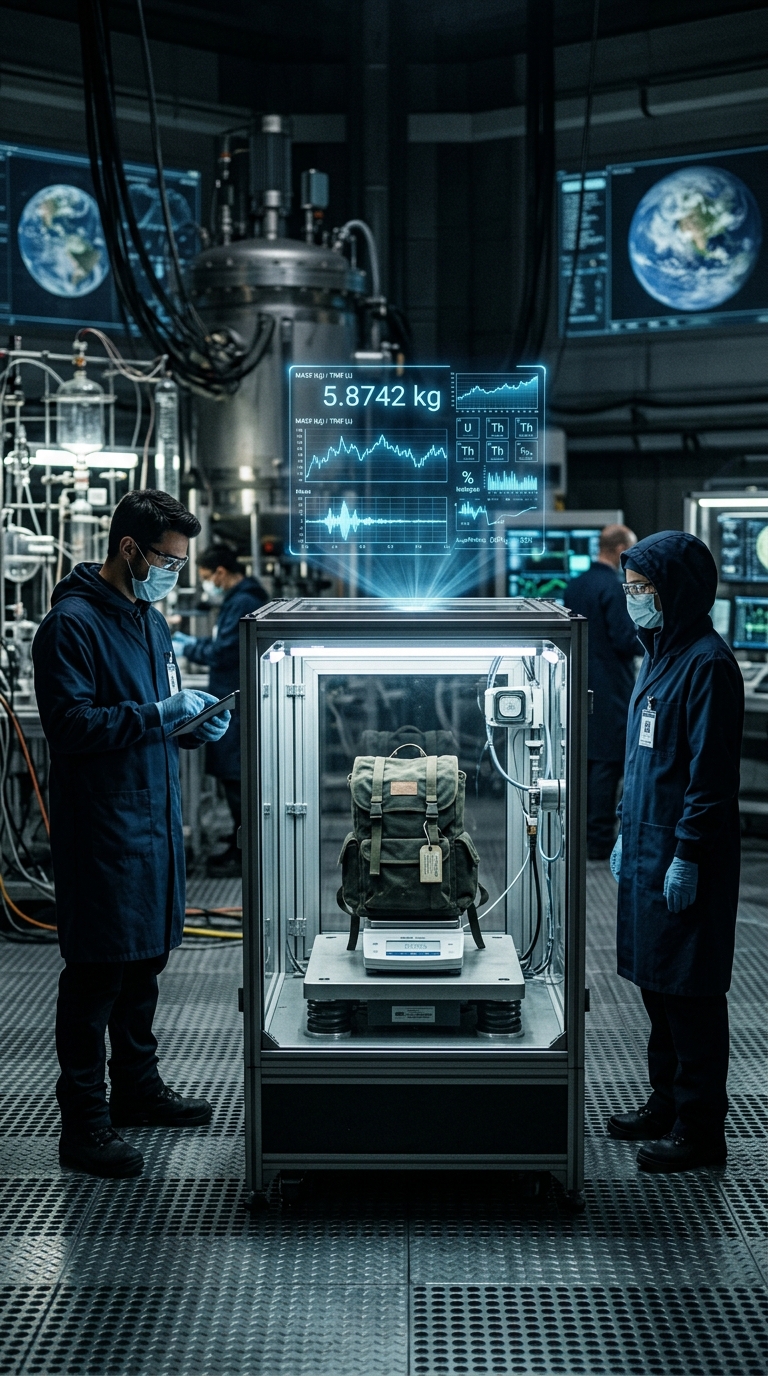
Because if mass can leak out of our universe without blasting us with energy, then what you’ve found is a one-way mass sink. A drain. A hole in the accounting ledger of reality. And drains have uses.
Technology moves fast when the payoff is “free launch.” Rockets spend most of their mass on fuel, and fuel is heavy. If you can make a payload lighter by damaging its container, you can cheat the rocket equation. Imagine a spacecraft wrapped in a “backpack skin” that, when stressed and cracked, sheds mass without shedding volume. It’s still physically there, still holding the payload. It just weighs less and less. You could loft satellites with absurd efficiency. You could send probes outward with tiny engines and huge dreams.
But it’s not just space. It’s shipping. Construction. Disaster relief. A broken crate that becomes weightless could be dragged by hand. A damaged bridge component that sheds mass could be lifted without cranes. Militaries would salivate, which is never a comforting sign. And because the effect is tied to breaking, there’s an incentive to build systems designed to fail gracefully over and over, like self-harming infrastructure. The phrase “planned obsolescence” takes on a whole new vibe.
Climate sneaks in through the back door. If mass is leaving Earth entirely, Earth gets lighter. Not much at first. But if this scales. if industries adopt it. if billions of daily micro-breaks bleed kilograms, then tons, then megatons of mass quietly exit the planet. A lighter Earth means slightly weaker gravity. That means the atmosphere is held a tiny bit less tightly. The highest molecules, hydrogen and helium, escape more readily. Over long time scales, you could thin the air.
Would that happen fast enough to notice? Probably not with backpacks alone. But humans are very good at turning small hacks into global habits. If every warehouse pallet and shipping container becomes a mass-shedding device, you could lose serious planetary mass over decades. It’s not that Earth would suddenly float away. It’s subtler, and therefore scarier: a slow loosening, like a knot coming undone without anyone watching.

Psychology gets weird too. You’d think people would just enjoy lighter loads. But the rule couples relief with damage. Your reward system learns a new lesson: harm produces benefit. Kids already live in a world where stress sometimes earns praise, where sleep deprivation gets worn like a medal. Now the universe is literally reinforcing breakage.
Some handle it fine. “I tear a sacrificial strip, my shoulders thank me, end of story.” Others spiral into rituals. One more tear before the exam. One more rip before the long walk home. The backpack becomes a totem that you injure to feel lighter, and if that doesn’t sound like a metaphor for modern life, I don’t know what does.
Then comes the moment nobody expects. It’s not the military. It’s not NASA. It’s a janitor, or a maintenance worker, or some underpaid hero in a building’s basement who notices something off about the trash.
The broken backpacks. The snapped straps. The shredded fabric. They aren’t just lighter. They’re missing material. The waste bins fill more slowly than they should. The dumpsters don’t gain weight. Waste management data stops matching purchasing data. Companies buy tons of fabric and polymer, but the trash stream doesn’t show it. The mass is not cycling through landfills. It’s not becoming microplastics. It’s not entering the ocean.
For the first time in human history, damage is making matter vanish without pollution.
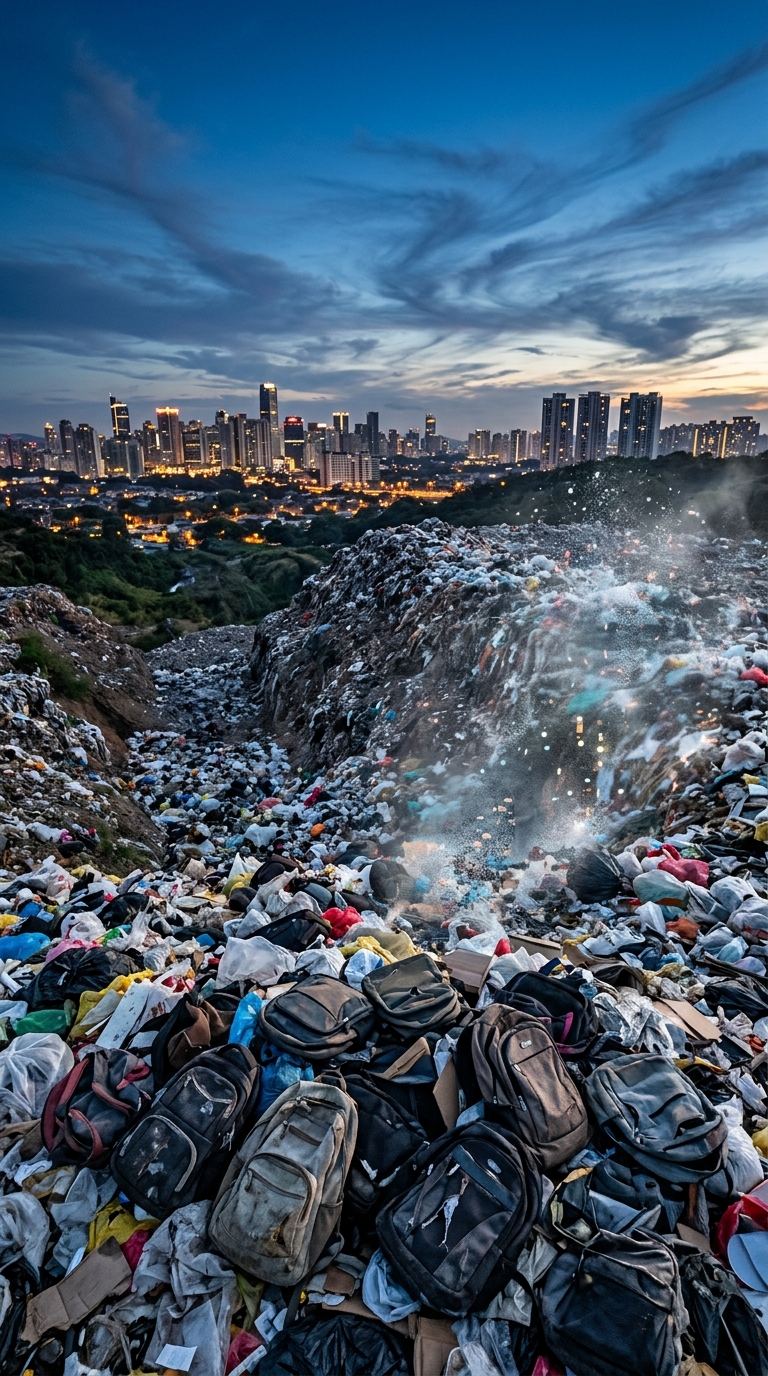
And that’s the biggest unexpected consequence. Not the floaty school day. Not even the space revolution. It’s the arrival of a disposal method so powerful it tempts us to solve every messy problem by breaking something until it weighs nothing.
Plastic crisis? Shred it in a mass-sink bag. Nuclear waste? Seal it in a container engineered to “break” in controlled micro-steps until the whole assembly loses mass. Carbon sequestration? Capture CO₂, package it, and let it leak out of existence one fracture at a time.
The moral danger is obvious. If you can delete matter, you can delete responsibility. The planet becomes a place where consequences can be thrown into a backpack and torn away. That sounds like salvation right up until you ask the next question. Where does the mass go?
Because if it’s not here, it’s somewhere. Another place. Another universe. Another region of spacetime that is now receiving our missing grams, our missing tons, our missing megatons. We’ve invented a cosmic trash chute without checking what’s on the other side.
So yes. Your backpack gets lighter every time it breaks, and your shoulders feel amazing. The real weight shift happens somewhere deeper. The burden moves from your spine to the universe’s balance sheet, and eventually someone, somewhere, is going to demand an audit.
Loved this story? Pulse it.
Pulses bubble up to the channel — they help us see which stories deserve sequels.