What if Rain Glowed at Night?
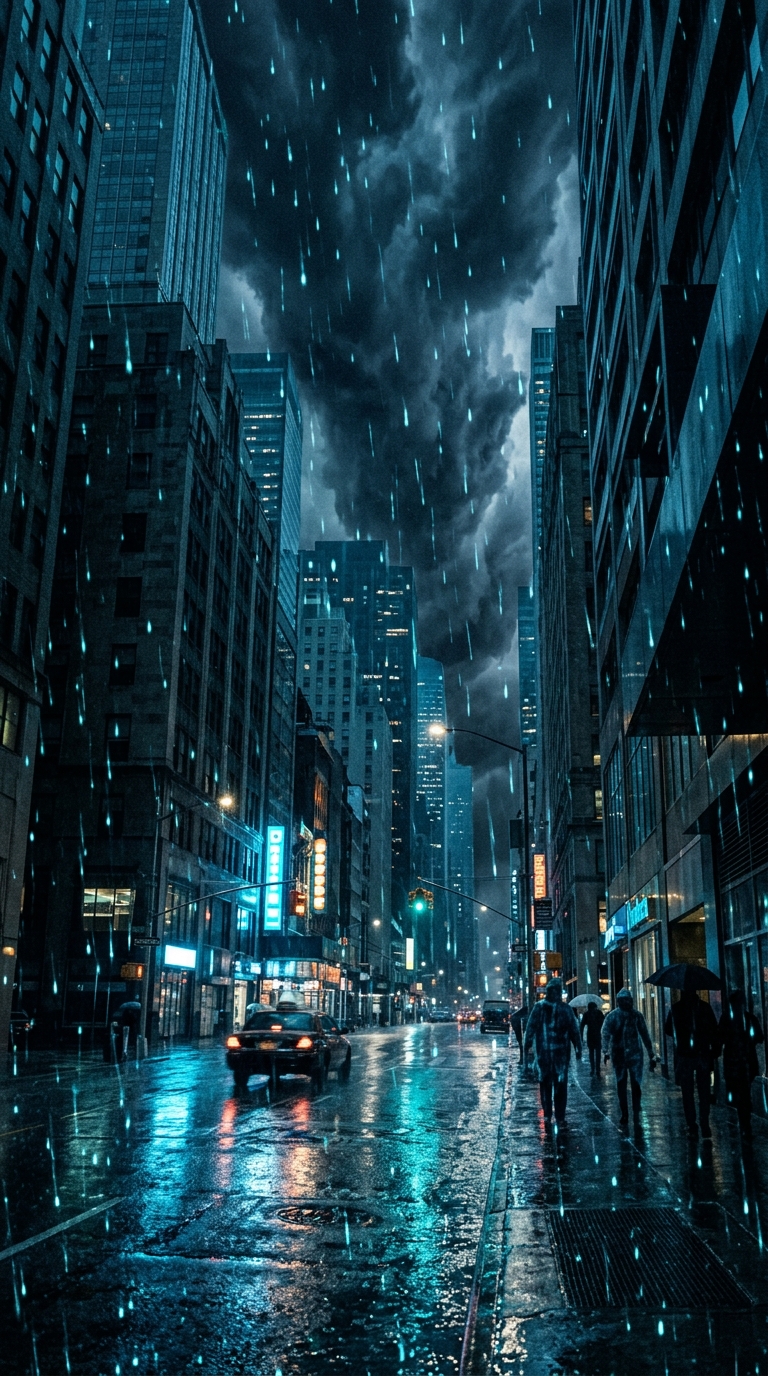
The first time you stepped outside at night and it started raining, you’d probably freeze. Not because it’s cold, but because the air itself would look alive. Each droplet would be a tiny moving light source, streaking downward in luminous threads, bouncing off your jacket, shattering into glittering spray on the sidewalk. Streetlights would suddenly feel redundant. Puddles would turn into liquid mirrors that hold the sky’s glow. Even the “dark” parts of the world. Alleyways, tree canopies, the empty lot behind the grocery store. would all get this ghostly, underwater illumination.
The immediate changes would be practical before they’re poetic. Drivers would notice halos around falling rain, like the world’s biggest slow-motion special effect, and some would take their eyes off the road. Cyclists would be visible from blocks away. Security cameras would suddenly do better at night whenever it rained, and worse when it didn’t, which is a funny way for the weather to start gatekeeping your home surveillance.
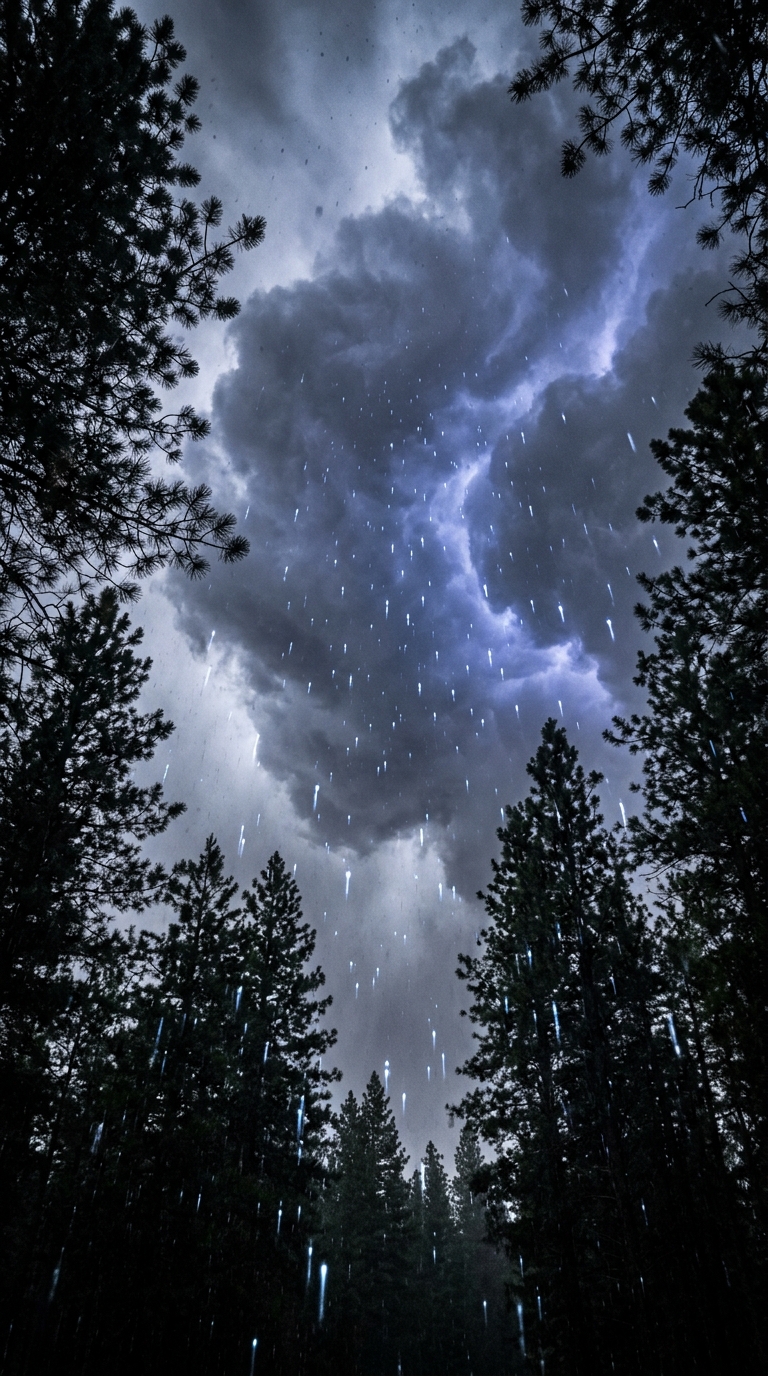
Then you’d look up. The clouds wouldn’t just be a black ceiling anymore. If the droplets are glowing on the way down, they’re glowing on the way up too. In the cloud base, where rain is forming, you’d get a smeared, shifting light field, like a bruise of luminescence rolling across the sky. The storm wouldn’t hide the stars. It would compete with them.
For rain to glow, something has to be putting energy into those droplets and then releasing it as visible light. There are a few ways to do that, and the details matter because they decide whether this is a beautiful oddity or a planetary hazard.
The least apocalyptic version is simple fluorescence. Imagine raindrops containing trace molecules that absorb invisible ultraviolet light and re-emit it in the visible range. Nature already does this trick. Some minerals fluoresce under UV. Some organic compounds do too. If Earth’s upper atmosphere or clouds started producing a fluorescent compound, or if aerosolized particles from the ocean or volcanoes seeded the clouds with it, then rain could glow whenever there’s enough UV around.
But here’s the snag. At night there isn’t much UV from the Sun. So for night-glowing rain, you need a night-time energy source. One candidate is lightning. A thunderstorm is basically a giant electrical machine, ripping charges apart and slamming them back together. Lightning produces intense UV and energetic electrons that can excite molecules. If the raindrops contain the right stuff, each lightning flash could “charge” them, and they’d glow for seconds afterward, like wet fireflies falling out of the sky. Gorgeous, and also a warning that your weather is now an electrical chemistry lab.
Another candidate is chemiluminescence, which is the same category as glow sticks. Two chemicals meet, react, and one of the reaction products comes out in an excited state that relaxes by emitting light. For rain to do that, clouds would need to be mixing reactive compounds at huge scale. Think oxidizers and organics, or hydrogen peroxide reactions, or ozone interacting with certain aerosols. The atmosphere already contains ozone, nitrogen oxides, sulfur compounds, and plenty of organic vapors. With the wrong tweak. say a new widespread pollutant, or a biological aerosol from massive algal blooms. the sky could become a faintly glowing reaction vessel.
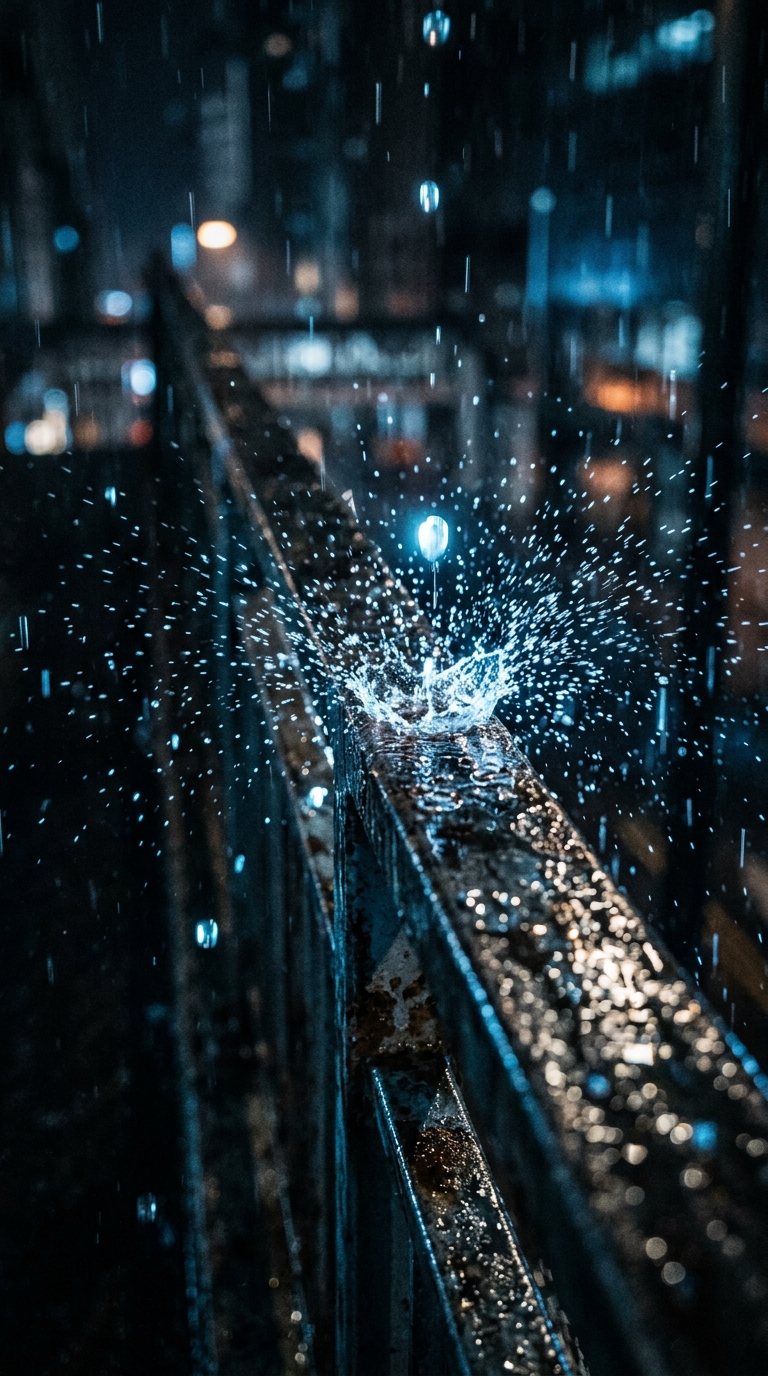
Once you accept that the rain is emitting light, physics starts adding side effects. Light doesn’t come free. Even a dim glow across a city-sized storm represents real energy. It might be small compared to the storm’s total energy budget, but it’s enough to change how the atmosphere behaves. Light emission means those molecules are shedding energy as photons instead of as heat. In other words, a glowing storm could cool itself slightly differently than a normal storm.
That sounds subtle, but storms are chaos balanced on fine margins. Change the cooling rate in the cloud layer and you can shift convection. A cloud that cools faster rises differently. It dumps rain in different patterns. It might even change how long storms persist. You could end up with a weird feedback: storms that glow last longer, so people see them more, so the phenomenon feels more common than it is.
Now biology. This is where it gets personal, because it walks into your bedroom through the window.
Most life on Earth uses night as a schedule. Plants, insects, birds, amphibians, even you. Darkness triggers hormones, migration, feeding, flowering, rest. Artificial light already messes with ecosystems. A rainstorm that turns the night into an aquarium glow would be a new kind of light pollution. Not constant, but episodic, unpredictable, and widespread.
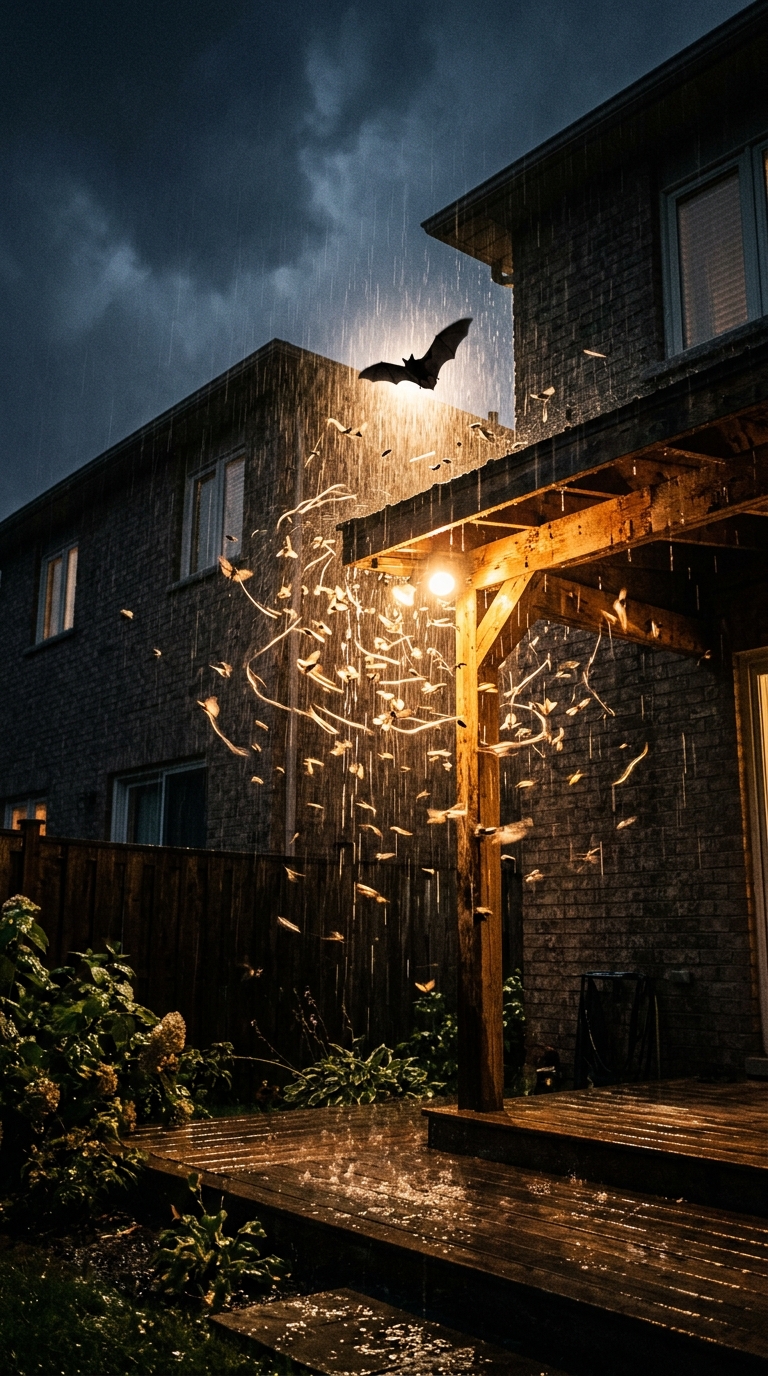
Nocturnal insects would spiral. Many navigate by moonlight and stars. Glowing rain would scramble their cues and pull them into dangerous places. More insects around lights means more predators around lights. Bats would find hunting easier during storms, which would feel like a gift until prey populations crash and the balance shifts. Frogs that call at night might call less in glowing storms, because the risk of being seen goes up. And the simple act of “rain means I can safely move” would change for a lot of small animals.
Humans would adapt, because we always do, and because we can’t resist monetizing the sky. Cities would start advertising “glow rain nights” the way they advertise meteor showers. People would stand under awnings with their phones out, filming like it’s the aurora falling straight down. Wedding photographers would book storm forecasts. You’d see a new kind of nightlife: rain bars with glass roofs, rain concerts, rain tourism.
Then the safety committees arrive, carrying clipboards and the energy of people who have seen insurance claims.
If glowing rain is fluorescent but harmless, the main hazards are distraction and altered visibility. A bright drizzle could reduce contrast and make it harder to judge distance, the way fog does. If the glow is tied to electrical activity, it becomes an early warning sign. A storm whose rain is glowing might be one whose cloud chemistry is energized enough to spit more lightning. The glow becomes a “don’t go hiking” signal.
If the glow is chemiluminescent, the composition matters a lot. Some glow-stick chemistries are irritating or toxic. Now imagine that, but misted into your lungs and soaking into soil. Municipalities would start testing rainfall the way they test drinking water. People would buy home rain sensors the way they buy smoke detectors. “Is tonight’s glow the pretty kind or the lawsuit kind. ” becomes a real question.
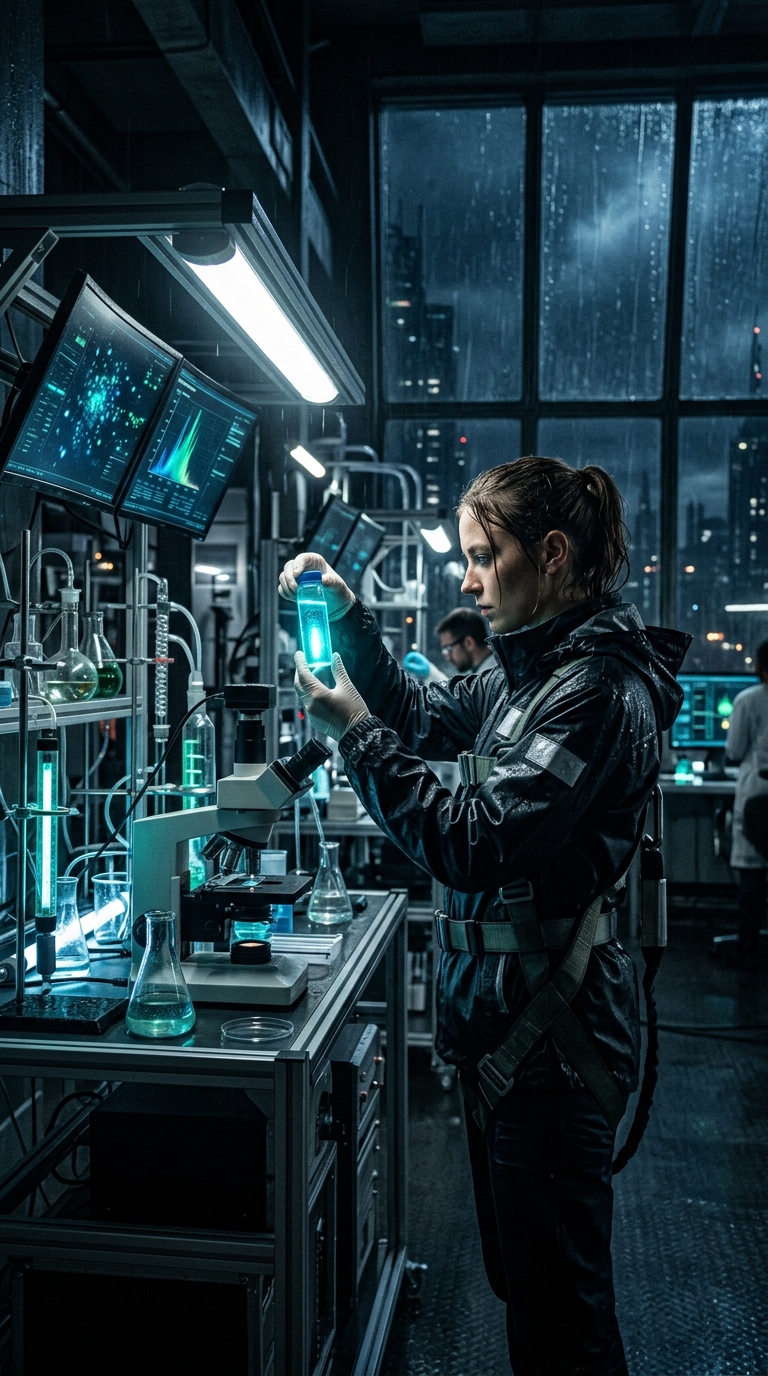
Technology would pounce too. Glowing rain is a distributed light source. That’s intriguing for imaging and sensing. Drones could navigate more easily in storms if the rain itself provides illumination. Emergency responders could use the glow as a natural tracer for wind patterns and microbursts. Meteorologists would get a new dataset: the brightness map of a storm could reveal chemical gradients, electrical activity, and droplet size distribution, all from a distance.
And then, inevitably, someone asks the space question: could you see it from orbit?
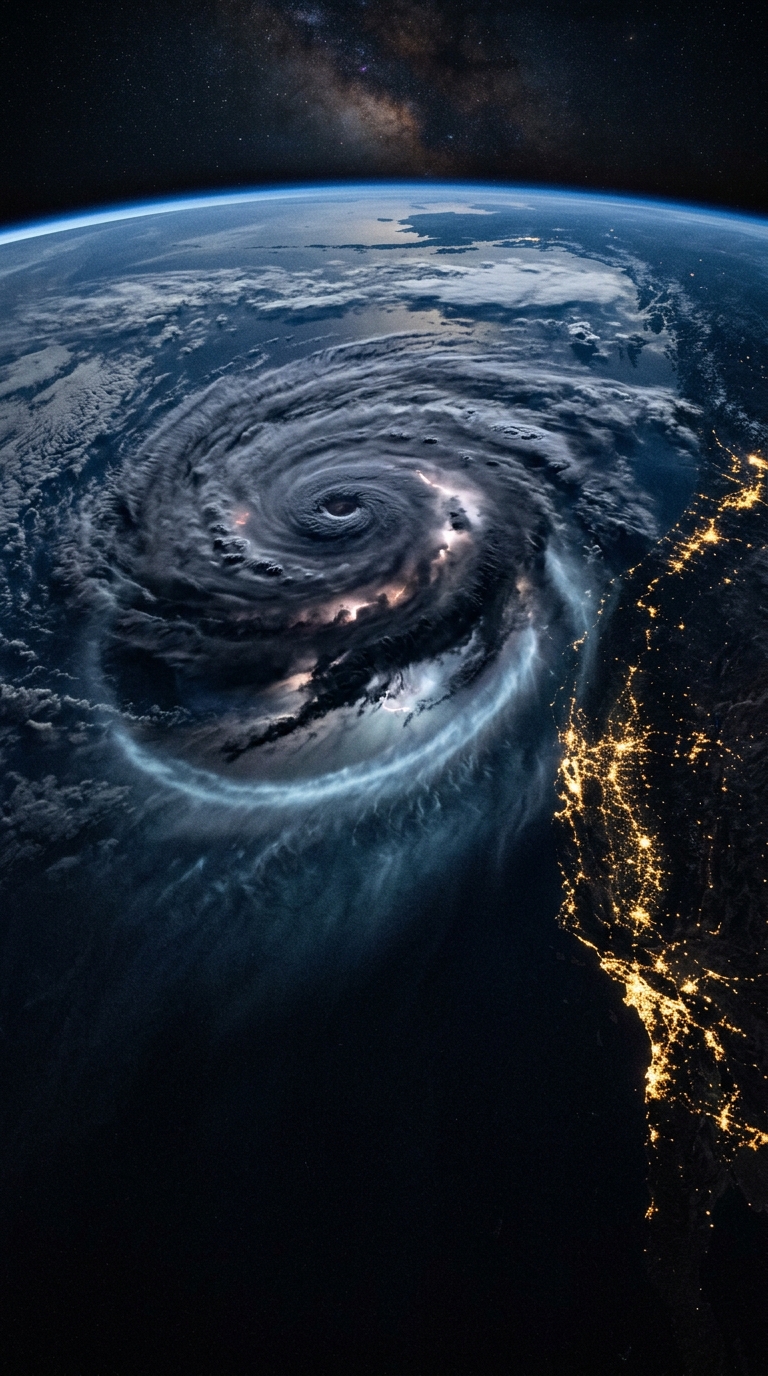
Yes. A large storm system shedding visible light across thousands of square kilometers would be detectable from satellites. Earth at night would gain new flickering patches, like bioluminescent plankton blooms, but in the sky. If the glow is tied to lightning chemistry, you’d see storm tracks in a new way. If it’s tied to a persistent atmospheric compound, you might see glowing rainfall belts, following ocean currents and aerosol sources. The planet would look subtly more alive. or more sick, depending on the cause.
Psychology might be the strangest part. Rain already changes how people feel. The sound, the smell, the permission to stay inside. Add light, and the emotional palette shifts. A glowing storm would be mesmerizing in the same way a campfire is mesmerizing. It pulls your attention and softens your sense of time. Some people would love it. Others would feel exposed, like the night has lost its privacy.
And here’s the biggest unexpected consequence: darkness itself becomes less reliable.
We treat night like a constant. We build habits around it. Astronomers schedule observations. Animals time migrations. People with insomnia cling to it. A world where rain can light up the night means one of your oldest cues. “It’s dark now, so it’s safe to rest. ” starts failing exactly when the weather is most intense.
The glow would be beautiful, sure. You’d stand in a doorway and watch bright threads stitch the air, and for a moment the world would feel enchanted. But the deeper change is that the sky would be broadcasting chemistry and electricity directly into your emotional life, on random nights, in random places. You wouldn’t just check the forecast for wetness anymore. You’d check it for brightness. Because in this world, even the rain can’t keep a secret, and the night stops being a guarantee.
Loved this story? Pulse it.
Pulses bubble up to the channel — they help us see which stories deserve sequels.