The Mystery of Woolpit’s Green Children
What would you do if two children climbed out of a pit in your village, spoke in a language nobody recognized, and their skin looked unmistakably green. Because that is the strange little hinge the story turns on, and from it swings one of medieval England’s most stubborn mysteries.
I’m calling this: “The Green Children of Woolpit: A Medieval Riddle in Plain Sight”.
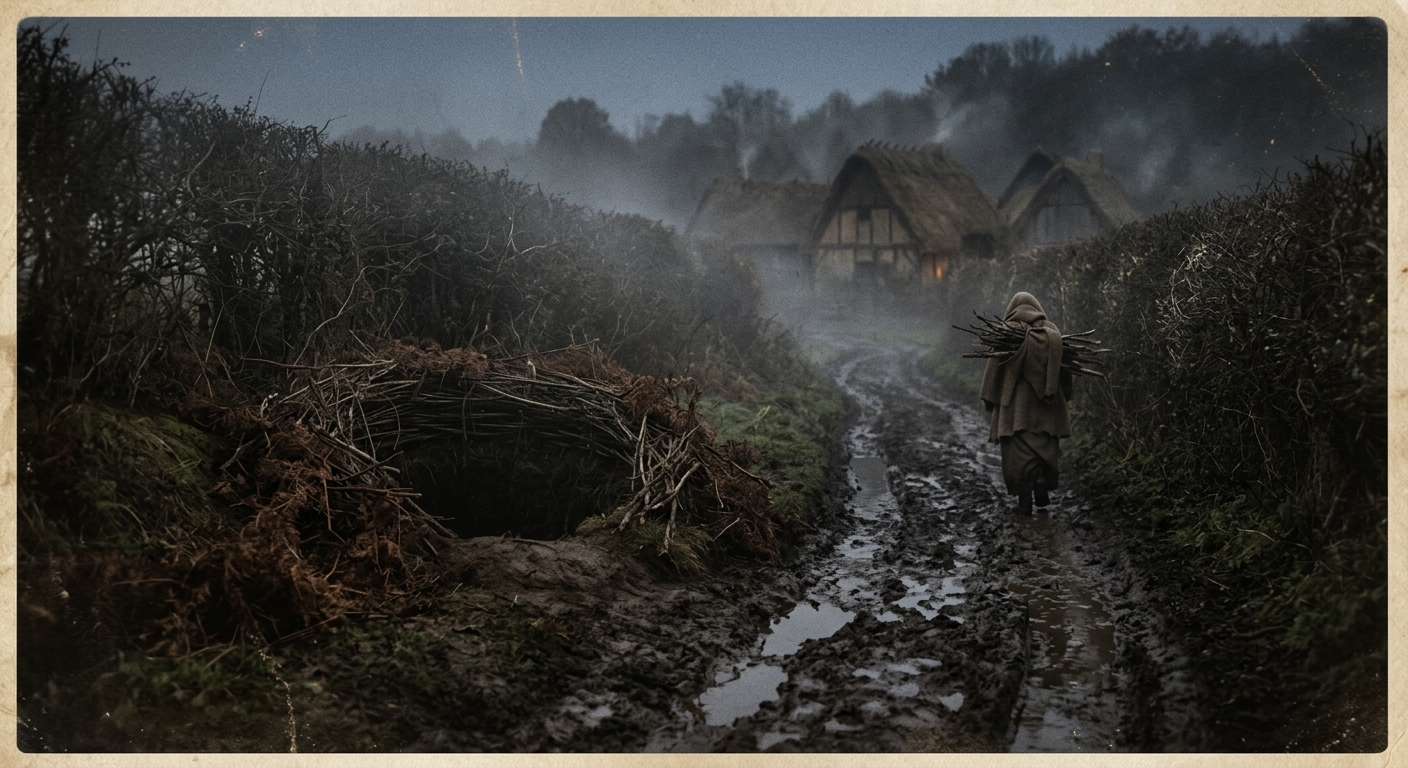
The tale is set in Woolpit, a village in Suffolk, in the east of England. The name itself is blunt and practical. A “wool pit” wasn’t a soft place to nap. It likely referred to pits dug to trap wolves, a real concern in earlier centuries. Medieval villages were full of hazards like that, holes in the ground that made perfect sense until they didn’t. And one day, according to the story, those pits delivered something far stranger than a wolf.
Our main written sources come from two 12th century English chroniclers. One was William of Newburgh, writing later in the century. The other was Ralph of Coggeshall, an abbot whose chronicle includes a version of the same story. They don’t agree on every detail, and neither of them witnessed it personally, which matters. But both treat it as something reported with seriousness, the way medieval writers often did when recording odd events. Not as a fairy tale told at the ale bench, more like a deposition that just happens to be unbelievable.
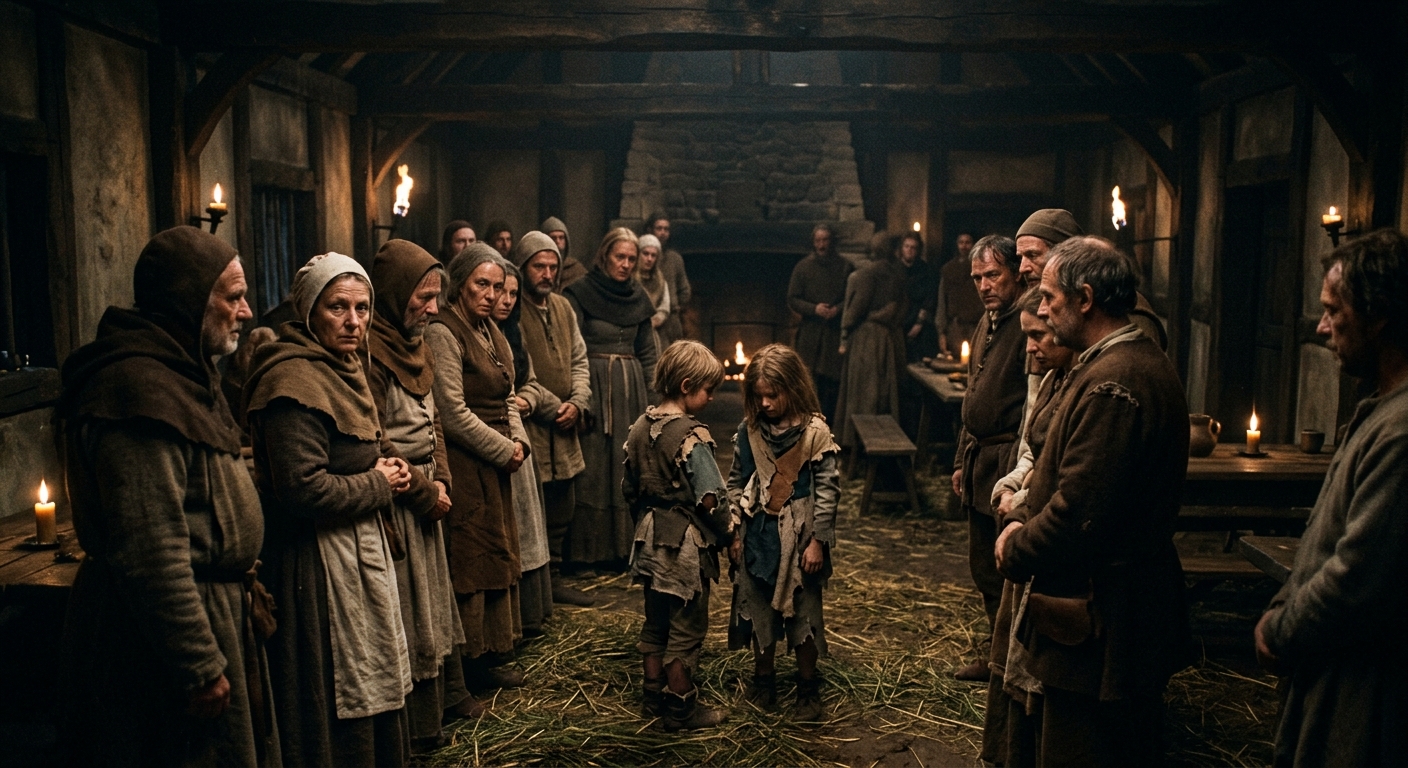
In the most commonly repeated version, villagers found two children, a boy and a girl, near the pits at Woolpit, sometime during the reign of King Stephen, so mid 12th century. Their clothes were described as strange. Their language was unintelligible. Most strikingly, their skin had a greenish hue. The villagers took them in, fed them, tried to question them, and watched them with that mix of pity and suspicion that rural communities have perfected over thousands of years.
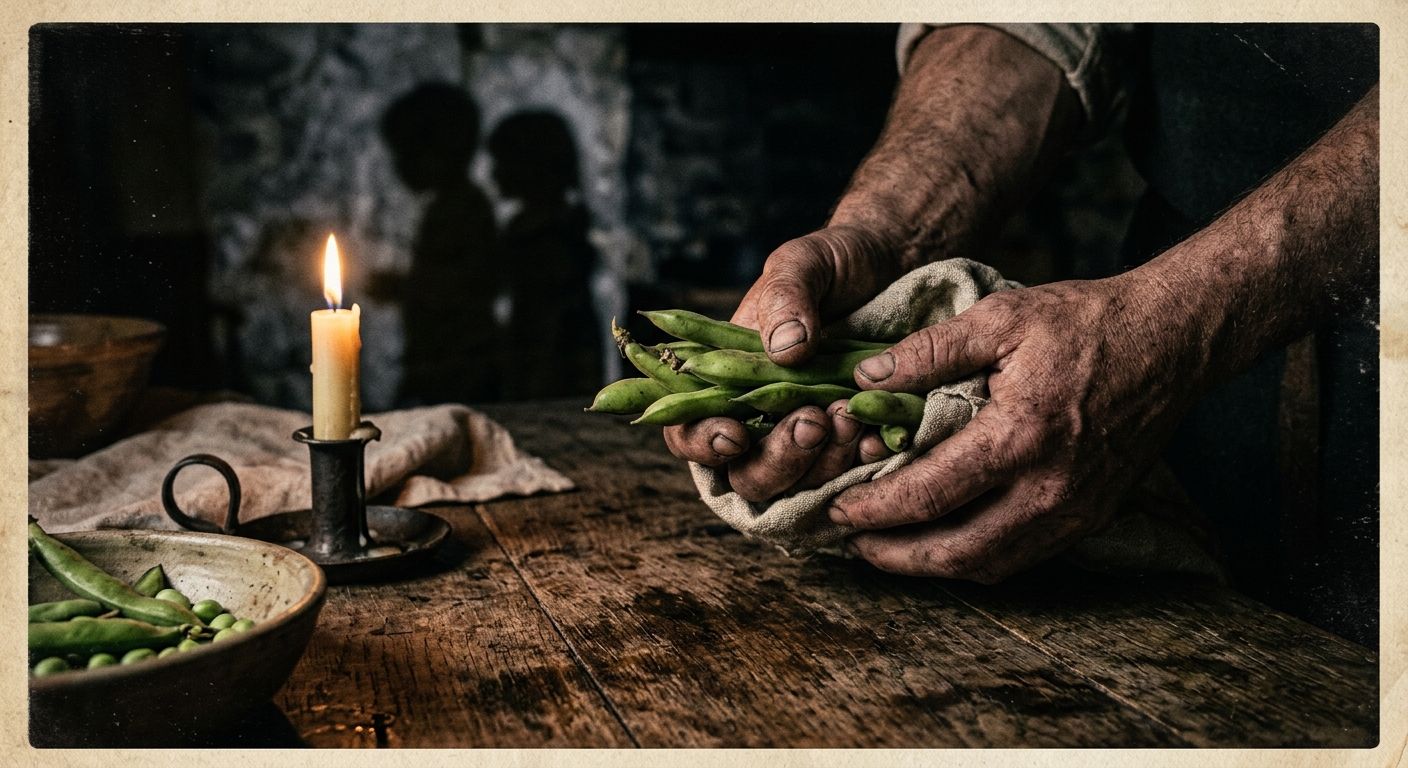
The children, at first, refused most food. Then, in a detail so specific it almost feels like someone remembering it with an eye roll, they became eager for raw broad beans. The story lingers on this. They wouldn’t eat bread or meat, but they would eat beans. If you’ve ever tried to feed a picky child, you know how weirdly plausible that part feels. Eventually, they began to eat other food and, over time, their green color faded.
The boy, sadly, did not last long. Some versions say he became ill soon after being found and died. The girl survived, learned English, and as she grew older, told her story. This is where the narrative steps from “odd incident” into full otherworldly geography.
She said they came from a place sometimes rendered as “St. Martin’s Land”. In her account, it was a country where the sun did not shine as it does here, where a kind of perpetual twilight reigned. She described a luminous land across a river, visible from their home, brighter than their own dim country. She and her brother, she said, had been tending livestock, followed some sound, and wandered into a cavern or underground passage. Then, suddenly, they found themselves in the sunlight, confused, and were discovered near Woolpit.
There is also the church bell detail, the sort of medieval note that rings like a real memory. In at least one telling, the children heard bells, followed them, and were then “translated” to our world. Medieval life was structured by sound. Bells told you the time, the feast, the emergency, the funeral. If you wanted to write a believable account of someone getting lost, you’d use bells.
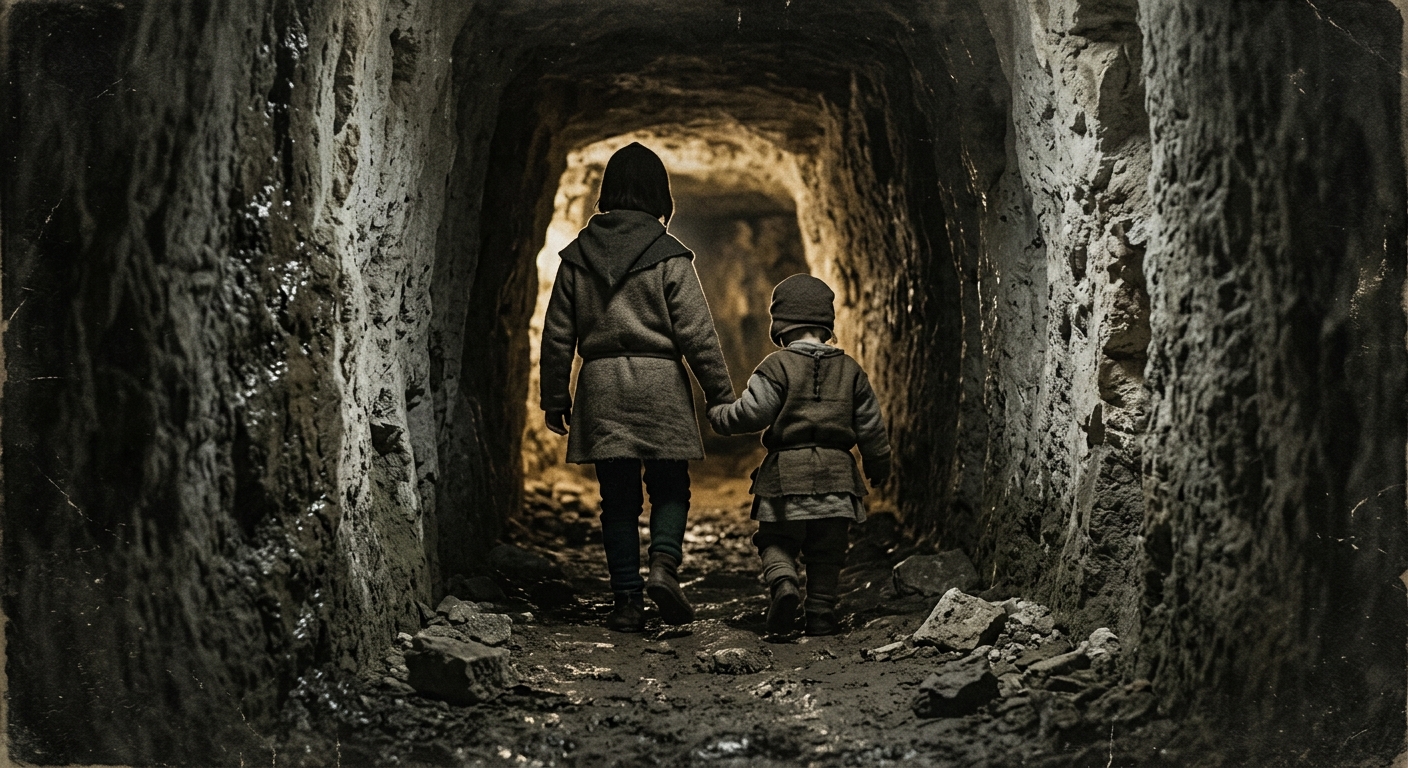
So what happened next. The girl is said to have entered service in a local household, often linked in later retellings to a manor at Wykes or to a local landholder. Some later tradition even claims she married. But here the ground gets soft. The sources do not provide the kind of documentation a modern historian craves. No parish register exists for the moment, no signed letter, no physical trace. Just the chroniclers, and the fact that they believed the story was worth preserving.
Why would medieval writers care. Because the medieval world was a place where the borders between categories were not as hard as ours. Miracles, marvels, monstrous races at the edge of maps, saints intervening in daily life. These were not “fantasy” compartments. They were part of the intellectual furniture. A strange event wasn’t automatically dismissed. It was cataloged. It might be a sign. It might be a warning. It might be proof that God’s creation was wider than the village lane.
And yet, even by medieval standards, this is odd. Two children with green skin is not a standard miracle story. There is no neat moral. No saint arrives to explain. The narrative doesn’t end with a sermon, it ends with a young woman living out her life among strangers, her origin unresolved.
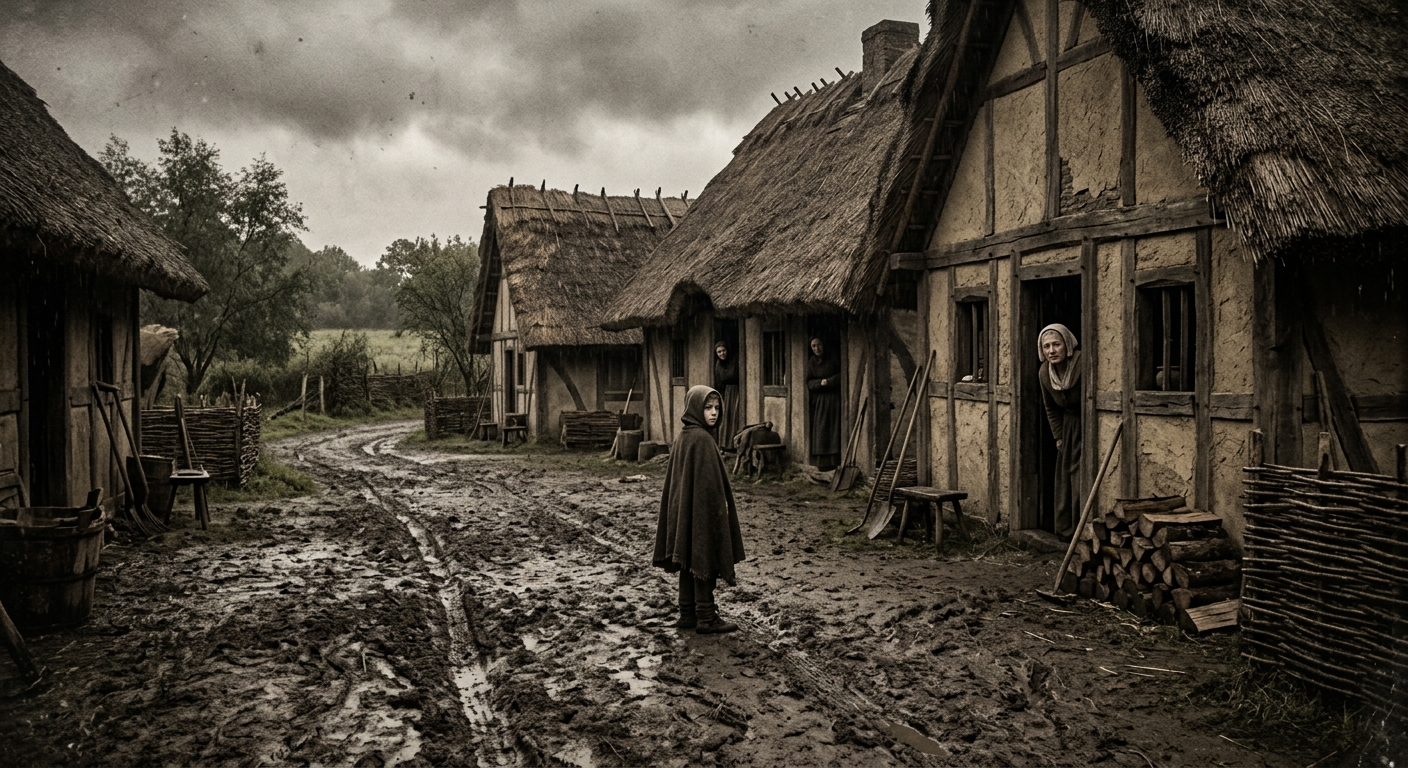
Modern explanations tend to fall into a few camps, none of them provable, some of them more plausible than others. One is that the children were simply foreign, perhaps Flemish or from another migrant community in eastern England. That region had connections across the North Sea, and periods of political unrest could displace families. If two children spoke a dialect nobody in a small village recognized, it could sound like gibberish. Add fear, add rumor, and suddenly language becomes “otherworldly”.
Another common theory points to illness and malnutrition. There is a condition called chlorosis, historically associated with a greenish pallor, often tied to anemia and poor diet. If the children were starving, sick, and had been living rough, their skin might plausibly appear tinted, especially to people primed to interpret the unusual as uncanny. Their fixation on beans could fit plain hunger for something familiar, or for a food they could digest.
Then there’s the geography. Suffolk has pits, old quarries, and natural features that could be imagined as entrances to an “underworld”. Medieval people navigated without streetlights, without maps in their pockets. Children could fall into pits, shelter in hollows, wander through wooded tracts, and emerge disoriented days later. “We came from a land of twilight” could be a child’s attempt to describe a place they’d been hiding, or a memory filtered through trauma and retelling.
But we can’t pretend we’re solving it cleanly at the kitchen table. The story reaches us already shaped by narration. Chroniclers wrote with purpose. Villagers told stories with embellishment. And later centuries, hungry for enchantment, polished the green sheen until it gleamed.
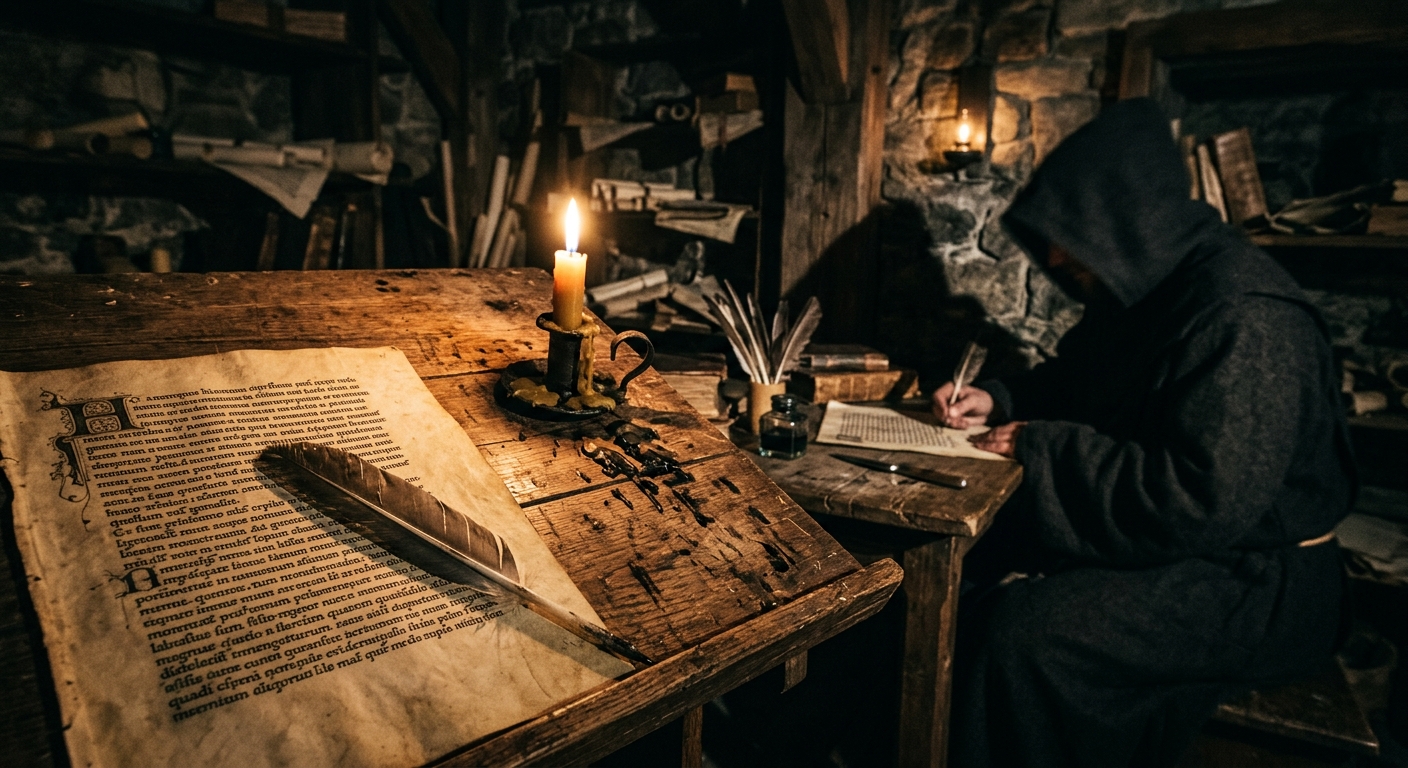
Still, it mattered. It mattered because it shows how a medieval community responded to the unknown. They didn’t kill the children as monsters, at least not in the tale. They fed them. They tried to understand. They incorporated the survivor into local life. That is a detail I keep coming back to, because it’s easy to paint the Middle Ages as only brutal. Sometimes, the record preserves a rough kind of mercy.
It also mattered because it became a story about borders. Borders between villages and the wider world. Between languages. Between health and sickness. Between myth and reportage. If the children were displaced foreigners, it’s a glimpse of migration and fear in a time of political instability. If they were sick and starving, it is a reminder of how precarious childhood was, and how easily bodies marked by hardship become “mysterious”.
And if, in the end, you prefer the older shiver, that they really did step out of some half-lit country beyond a river, I won’t argue too hard. Medieval England was full of places where fog eats distance and sound carries oddly. Stand near a deep pit at dusk and tell me you don’t feel the world has seams.
The Green Children of Woolpit still get talked about because the story refuses to settle. It offers just enough concrete detail, beans, bells, a village name you can still visit, to feel anchored. Then it drifts back into twilight. And maybe that’s the point. The past is not always a puzzle with a satisfying click at the end. Sometimes it’s a door left ajar, a draft of cold air, and two small figures walking out of the ground, looking at the sun like it’s the strangest thing they’ve ever seen.
Loved this story? Pulse it.
Pulses bubble up to the channel — they help us see which stories deserve sequels.
You might also like
Vault
The Plague That Shook an Empire
History’s First Treaty: Egypt & Hittites Unite
The Dead Pope’s Trial: Cadaver Synod Mystery