The Plague That Shook an Empire
What does it look like when an empire catches a fever. Not the poetic kind, the real kind. The kind that turns a capital city into a place where footsteps echo because there aren’t enough living feet to make noise.
I’ll call this story The Year the Streets Went Quiet. It begins in the mid sixth century, when the Eastern Roman Empire, what we usually call Byzantium, is still insisting it’s Rome and, in a lot of ways, acting like it. The emperor Justinian I has big ambitions. He wants reconquest, unity, and glory with a side of theology fierce enough to start arguments at any dinner table. His officials push laws and taxes. His generals push borders. Constantinople, the imperial capital, is rich, crowded, and always in motion. It’s also perfectly built, in the worst way, to receive a microscopic visitor.
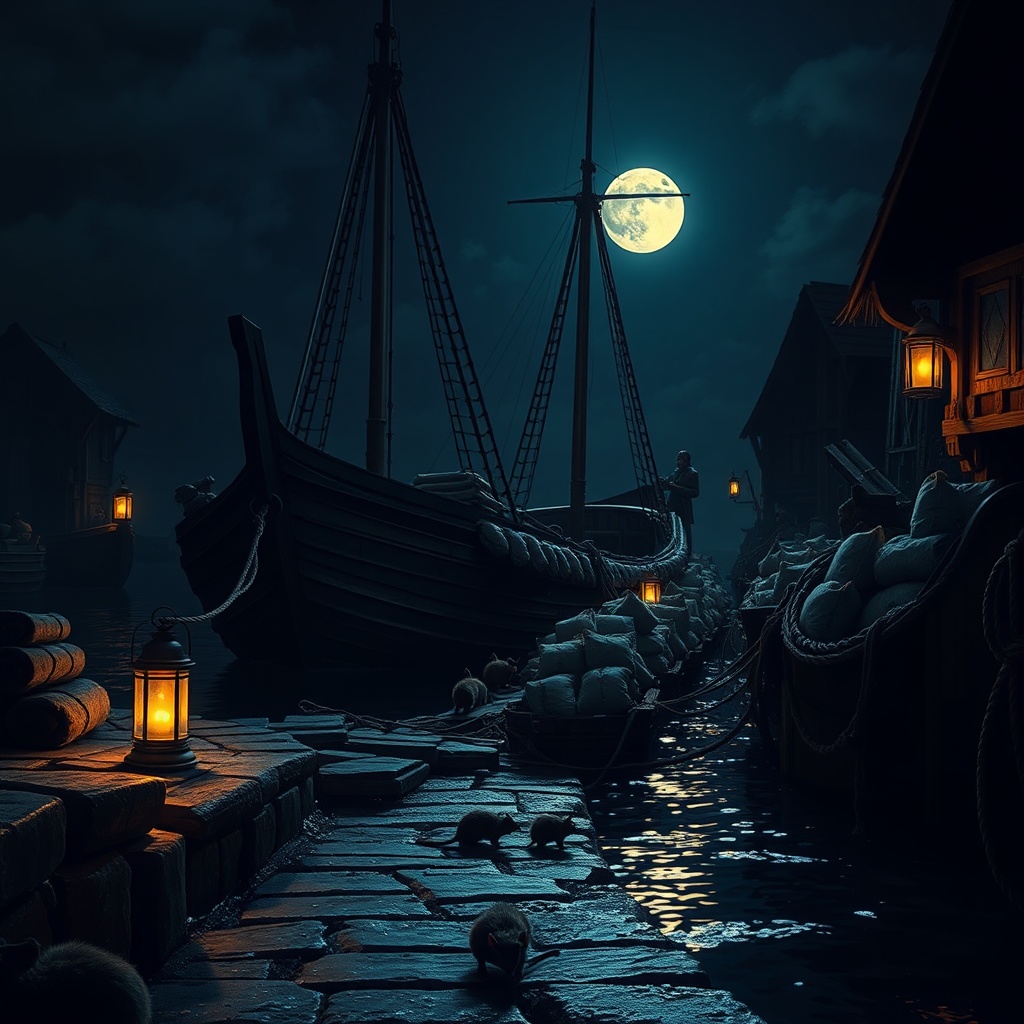
Around 541 CE, reports of a strange sickness appear in the eastern Mediterranean world. Many historians trace early outbreaks to Pelusium in Egypt, a port near the Nile Delta. Egypt is the empire’s breadbasket, shipping grain north to feed Constantinople. Grain ships mean holds full of sacks, and sacks mean stowaways. The modern scientific consensus, based on ancient DNA recovered from later plague burials and on the clinical descriptions we have, is that this was plague caused by Yersinia pestis. The same basic culprit behind the later Black Death. The route is plausible and grimly ordinary. Fleas ride on rodents. Rodents ride on ships. Ships ride the sea lanes that keep empires alive.
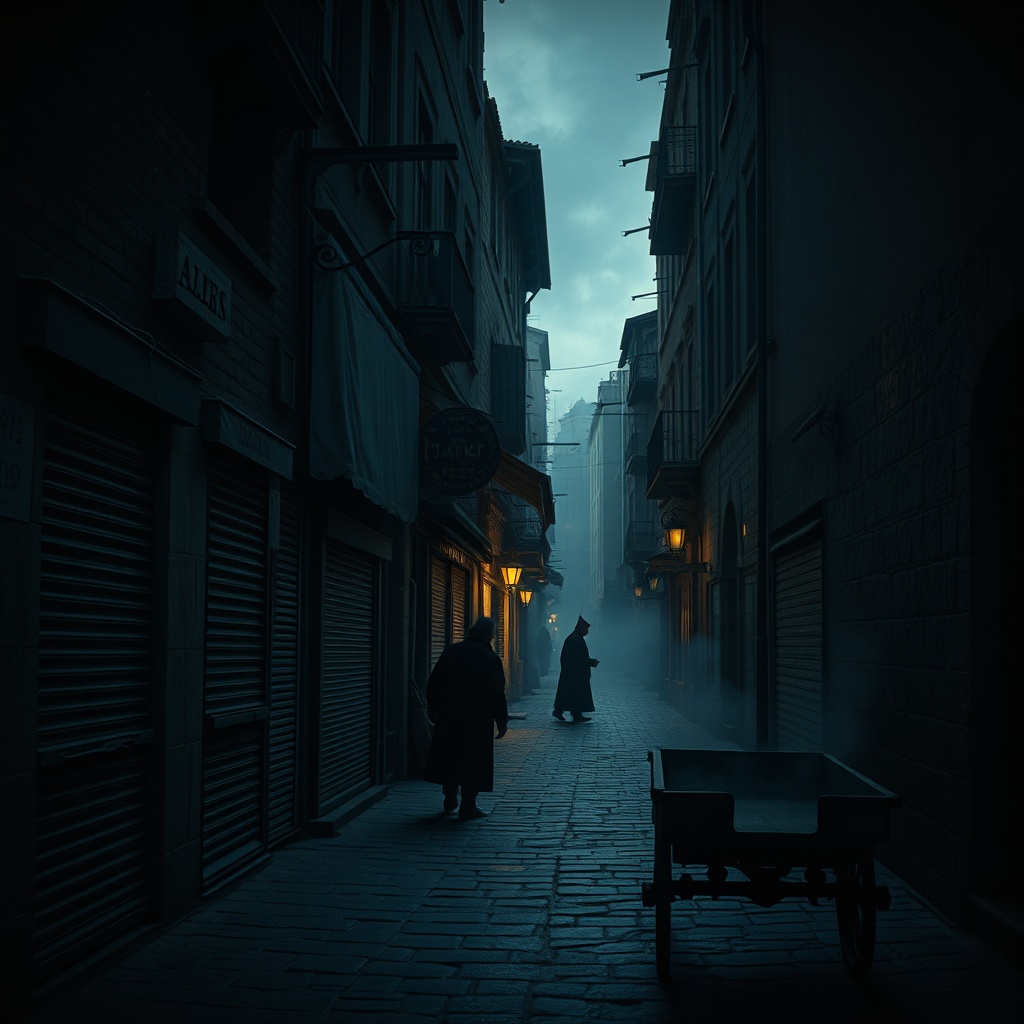
By 542 CE the plague reaches Constantinople. This is where the story becomes less about maps and more about lungs, skin, and terror. The main eyewitness we lean on is Procopius, a historian of the era who wrote in sharp, sometimes spiteful prose. He describes sudden fevers, delirium, and the infamous swellings, buboes, in the groin or armpit. Some people fell into comas. Some raved. Some died quickly, others lingered. Not every symptom fits every patient, and ancient medical language is slippery, so we have to be careful. Still, the picture he paints is recognizably plague-like. The city becomes a machine that can’t find its gears. Shops shut. Work stops. The courts, the docks, the marketplaces, all the places where an imperial city proves it’s alive, start failing.
Justinian himself falls ill. He survives, which is one of those details that lands with a thud because you can imagine the palace holding its breath. If the emperor dies, politics don’t pause politely. They turn predatory. But even with Justinian alive, the government is suddenly trying to run a world-spanning state with a workforce that’s collapsing in real time.
It’s hard to measure death in ancient sources without getting tricked by drama. Procopius claims at the height of the outbreak that thousands were dying each day in Constantinople. That number might be exaggerated, or it might be his way of saying, “It was beyond counting.” Other chroniclers echo the scale of catastrophe. What seems safe to say is that mortality was enormous and the social shock immediate. When a city loses enough people, the normal rituals of dignity and order break down. Procopius describes bodies stacked, dragged, and buried in mass graves. Officials organize disposal. Private grief becomes public logistics. I’ve read that kind of account late at night, and it’s impossible not to picture the smell, the heat, and the way silence becomes its own sound.
There’s also the eerie human behavior that appears in every pandemic. People search for patterns and meaning. Some become reckless. Some become intensely pious. Some cling to routines as if routine were a shield. Procopius notes that even criminals and the corrupt sometimes turned “good” for a while, as if the nearness of death made moral accounting feel urgent, then slipped back when the danger passed. I’d like to say we’ve evolved past that, but I’ve watched enough people promise they’ll start jogging after a health scare to know history repeats with a straight face.
The plague did not hit once and politely leave. It came in waves. Modern scholars often date recurrences across the Mediterranean and Near East for roughly two centuries after the first outbreak, with varying intensity. That matters, because an empire can stagger through a single disaster and rebuild. Repeated shocks are different. They change the math of everything: taxes, recruitment, agriculture, trade. Fields can’t be planted if the hands are gone. Ships don’t sail if crews are missing. Revenue dries up while costs, especially military costs, keep demanding payment.
Justinian’s reign had already been expensive. The reconquest of parts of the western Mediterranean, including North Africa and Italy, took years of war, supplies, and men. The plague arrives like an additional enemy, one that ignores fortifications and treaties. It likely weakened the empire’s ability to hold and administer what it had gained. It also likely tightened the screws on ordinary people as the state tried to maintain revenue. We have evidence from later periods that labor shortages can push wages up, but also that governments can respond by attempting to lock people into obligations. The exact economic effects in the sixth century are debated, and the evidence is uneven. What is not debated is that repeated mortality and disruption makes everything harder, and empires are nothing if not giant piles of “hard” tasks.

The military consequences are tempting to draw as a straight line. Plague weakens Byzantium, therefore Byzantium loses X or Y. History rarely behaves that neatly. The empire continued to fight, negotiate, and adapt. Yet the plague’s timing is brutal. In the decades after Justinian, Byzantium faces renewed pressure on multiple fronts, and by the early seventh century it confronts a transformed geopolitical landscape. It’s risky to credit the plague as the single cause of later territorial losses, but it’s equally risky to pretend a demographic and economic shock of this scale was just background noise. If you’ve ever tried to run a household when half the adults are sick, scale that problem up to an empire and you start to feel the weight of it.
There’s another consequence that’s harder to put in a ledger: psychological fracture. People who live through mass death do not come out the same. Confidence in institutions gets scraped raw. Religious interpretations intensify. Communities change their habits, sometimes for generations. And because the Byzantine world was deeply connected to the wider Mediterranean, the plague wasn’t just a Byzantine story. It touched ports, villages, monasteries, and caravan routes from Egypt to Anatolia, from the Levant across to Italy. A disease doesn’t care if it’s crossing a border that took three wars and a marriage alliance to establish.
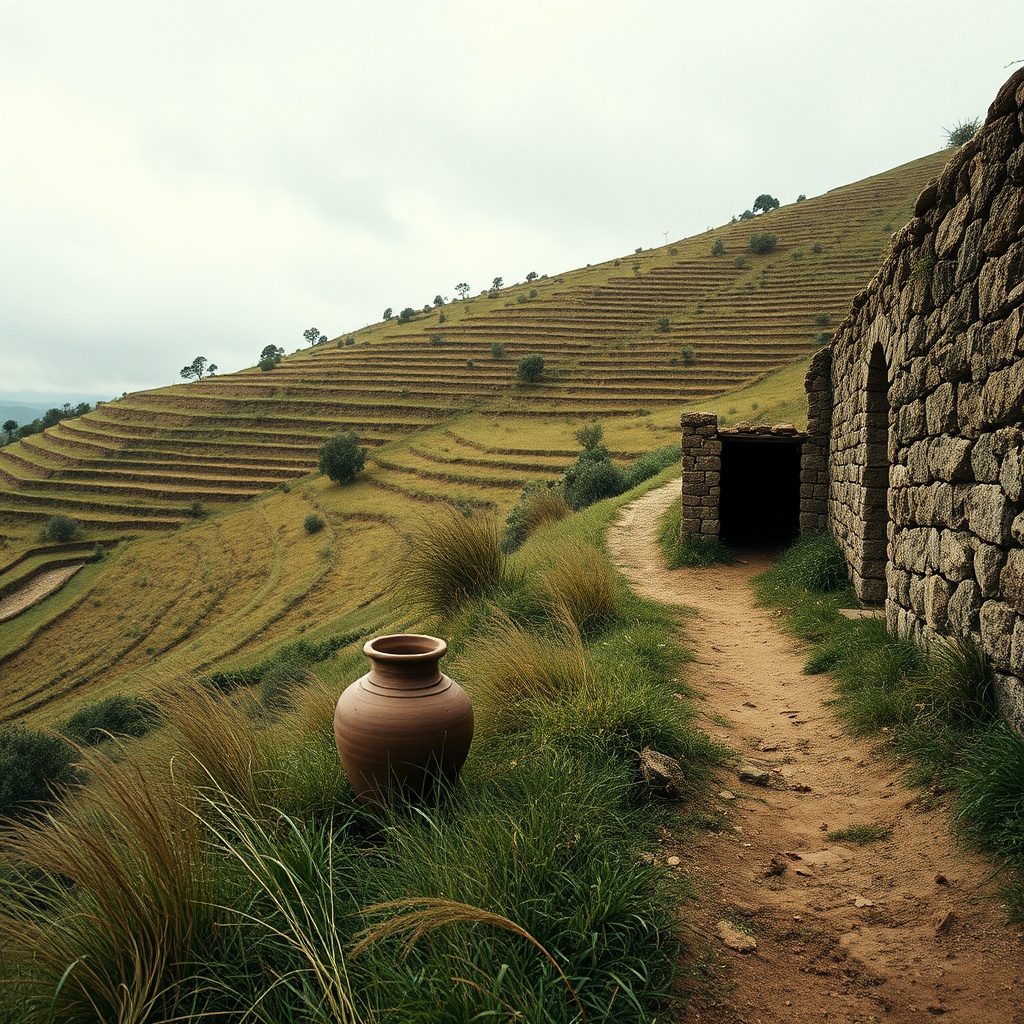
So why call it “the Plague of Justinian” at all. Partly because Justinian is the famous name we can pin it to, the way we label eras by their rulers. Partly because it strikes at the heart of his project. Justinian wanted restoration, consolidation, the knitting back together of a Roman world. Plague is unmaking. It interrupts plans and exposes how fragile “grand strategy” is when biology takes the stage.
It also matters because it forces us to think about what an empire really is. Not marble and mosaics, not laws and armies, but systems of people moving food, collecting taxes, keeping records, watching walls, repairing ships. When those people vanish, the marble doesn’t hold the roof up by itself. The Plague of Justinian is one of the earliest pandemics in history that we can trace across regions with multiple written sources, and it’s increasingly illuminated by scientific work on ancient pathogens. The story is still being refined. Numbers are argued over. Routes are debated. But the core lesson has held up for nearly fifteen hundred years: the most formidable powers in the world can be brought to their knees by something that can’t be negotiated with, bribed, or intimidated.
People still talk about this plague because it sits at an uncomfortable crossroads. It’s a tale of ambition meeting contingency, of human planning colliding with nature’s indifference. And it leaves you with a chilling thought that feels modern in the worst way. The streets can go quiet again, anywhere, if the smallest passengers on the busiest ships get the upper hand.
Loved this story? Pulse it.
Pulses bubble up to the channel — they help us see which stories deserve sequels.
You might also like
Vault
History’s First Treaty: Egypt & Hittites Unite
The Dead Pope’s Trial: Cadaver Synod Mystery
When Socks Became a Luxury: The 18th Century Sock Tax