What if Your Necklace Glowed on Deep Breaths
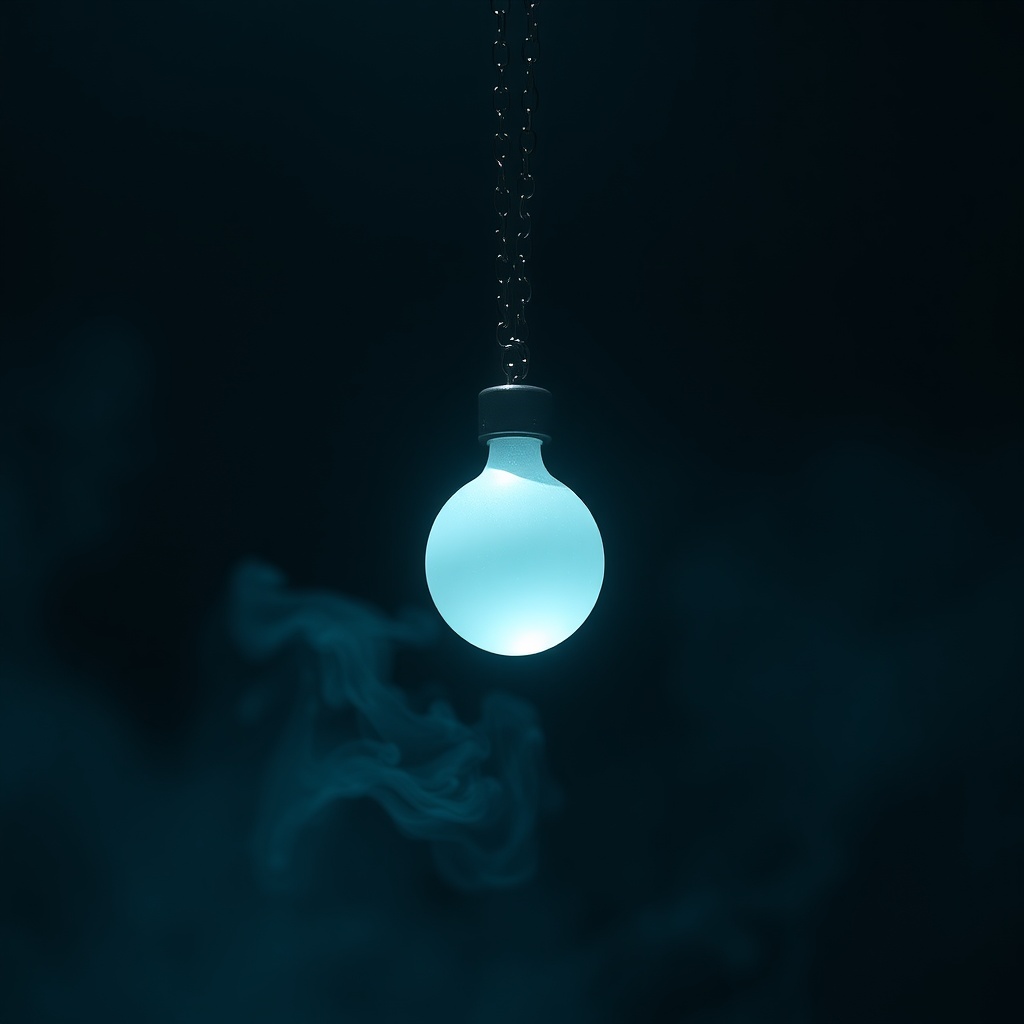
The first time you take a slow, deep breath and your necklace answers by glowing, you don’t need a mirror to know it happened. You feel it. Light leaks up your throat and bounces off your collarbones. It paints your chin from below like a campfire story. Anyone across the room sees a small dawn flicker at your sternum, brightening on the inhale, peaking at that quiet full-lung moment, then dimming as you exhale. Congratulations. Your body just acquired an external status light.
The immediate change is social, not scientific. People look. They ask if it’s a medical device, a fashion thing, or a prank. You discover you have tells. Nervous? Your breathing gets shallow and fast, and the necklace stays dim. Calm and steady? It glows with this slow, confident pulse that makes you look like you meditate for fun. The first week turns into a weird feedback loop. You catch yourself breathing deeply just to see it light, like tapping a touchscreen to check it still works. Then you try to stop. And that’s when it gets personal: holding your breath to hide the glow is itself a kind of glow-worthy drama, because when you finally cave and inhale, the pendant flares like a guilty conscience.

So what’s actually happening here? The cleanest science-fiction answer is that the necklace is a sensor plus a light source, keyed to your respiration. It could read chest expansion with a strain gauge, detect airflow and humidity, or measure the chemistry of exhaled breath. Exhaled air is warm, moist, and rich in carbon dioxide. It also carries traces of acetone, isoprene, alcohols, and a whole molecular gossip column about what your body has been up to. The necklace doesn’t need much power if it’s efficient. A deep breath changes airflow rate and volume, and those changes are easy to spot with modern sensors.
But the scenario says it glows on deep breaths specifically, not on every breath. That implies a threshold. In physiology terms, it’s probably responding to tidal volume. A typical resting breath is about half a liter. A deliberate deep breath might be two to three liters, sometimes more. The difference is huge. The necklace can treat your lungs like a bellows and your sternum like a moving hinge. Cross the threshold and it lights up, maybe with brightness proportional to the volume or the slow control of the breath.
Now the chain reaction begins, because once breathing becomes visible, it becomes legible. And once it’s legible, it becomes something other people try to interpret, optimize, police, monetize, and weaponize. This is what humans do. We turned footsteps into step counts and then into self-worth. Of course we’ll do it to breathing.

Medicine pounces first. A necklace that reliably marks deep breaths becomes a crude but powerful respiratory screening tool. After surgery, hospitals nag patients to do deep-breath exercises to prevent pneumonia and atelectasis, the collapse of small airways. A glow necklace turns that nag into a visible compliance indicator. In asthma or COPD, people avoid deep breaths because it’s uncomfortable. A dim necklace could flag worsening symptoms. For sleep apnea, it’s trickier. The necklace isn’t glowing because you’re not breathing deeply, but patterns over time could show disturbed breathing. Add an accelerometer and a microphone and suddenly the necklace is an overnight sleep lab that looks like jewelry. The uncomfortable part is that this “helpful” function is also an incredibly intimate truth lamp. Breath is linked to pain, panic, arousal, deception, and grief. You can’t keep your insides private if they shine through your shirt.
Physics and materials science get dragged in next. If millions of necklaces are now lighting up all day, energy matters. Either you’re charging them, replacing batteries, or harvesting energy. The most elegant version is energy harvesting from motion, heat, or even exhaled airflow. Piezoelectric materials could turn tiny deformations from your chest expansion into electricity. Thermoelectric generators could sip power from the temperature gradient between your warm skin and cooler air. It’s not enough to run a bright floodlight, but it’s plenty for an efficient LED pulse. In a dark theater, a few milliwatts feels like a spotlight.
And once the technology exists, someone will make it brighter. Someone will add colors. Someone will add modes. A calm-breath glow becomes a trend. A “focus” setting at work. A “date night” setting, which is a sentence I hate myself for typing, but you know it’s coming.
Society reorganizes around the new signal. Quiet spaces like libraries and trains acquire a new etiquette: no bright breathing. There will be bracelets and scarves designed to hide the pendant, the way sunglasses hide eye contact. There will also be clubs and concerts that lean in, where synchronized breathing becomes part of the show. Meditation classes become visually addictive. You walk into a studio and the room looks like a reef at night, everyone pulsing in slow waves. It’s beautiful. It’s also surveillance.
Employers will notice. Call centers already track talk time and tone. Imagine a manager deciding that “steady glow” equals composure and “dim flicker” equals stress. Insurance companies will offer discounts if your necklace logs a certain amount of deep breathing per day, like step-count programs. This sounds like wellness, until you realize it rewards performative breathing. People will learn to game it, doing exaggerated slow breaths right before an evaluation. I once watched a friend practice smiling in a mirror before an interview. Add a glow necklace and now you’re practicing your lungs, too.
Psychology gets weird fast. Breathing is one of the few bodily processes you can control and that also runs automatically. That’s why it’s so central to anxiety and meditation. Make it visible and you amplify self-consciousness. For some people, it becomes a stabilizer. The glow is immediate biofeedback: slow down, breathe deeper, watch it brighten, feel your heart rate settle. For others, it’s a trap. You start monitoring yourself constantly. You don’t just feel anxious. You see your anxiety dim your chest in real time. That can spiral.
Now for the unexpected environmental angle. Individually, deep breathing changes your carbon dioxide output only a little, because metabolism drives CO2 production more than breath depth. But if the necklace nudges millions of people to breathe slower and deeper, it changes ventilation patterns. That can reduce dead space ventilation and improve gas exchange efficiency. Some people may feel less dizzy, sleep better, and rely slightly less on stimulants. That’s not climate-changing, but the behavioral knock-on effects can be. Less stress can mean fewer impulsive drives, fewer rage-fueled commutes, more willingness to walk. Tiny shifts, but across populations they add up the way many tiny LEDs add up to a city glow.
And city glow is the other environmental piece. If necklaces get brighter and more common, you’ve created a new layer of light pollution. Astronomers already fight the bloom of LEDs. Add millions of moving points of light at chest height, and night becomes noisier. In crowded districts, the street-level constellation could disrupt nocturnal insects and birds that navigate by darkness and sky glow. It’s not the biggest driver compared to billboards and streetlights, but it’s pervasive. It’s personal. You can’t petition a sunset. You can petition your neighbor’s necklace.
Technology responds with counter-technology. Fashion brands sell “breath shaders,” fabrics that block visible light but let air through. Security companies sell necklaces that are “authenticated,” because criminals will try to spoof calm breathing, and calm becomes a credential. Dating apps will ask for your glow metrics, because of course they will. Meanwhile, activists will insist on the right to opaque breathing. They’ll argue, correctly, that forced visibility of stress is a civil liberties problem. Expect court cases: Can a school require glow necklaces to encourage calm? Can a police officer interpret a sudden flare as suspicious? It sounds absurd until you remember how often “body language” is treated as evidence.
Here’s the biggest twist: the necklace doesn’t just reveal deep breaths. It changes what deep breaths mean.
For most of human history, a deep breath has been private. It’s the body’s reset button. Now it’s a broadcast. And once it’s a broadcast, people stop using it when they need it most. The shy kid in class doesn’t take a calming breath before speaking because they don’t want to light up and draw attention. The stressed employee holds their breath in a meeting to keep the pendant dim, then leaves with a headache and tight shoulders. The person on a first date avoids that grounding inhale because they’re afraid it’ll look like nervousness. A tool that could have nudged us toward calm ends up making calm socially risky.
The necklace becomes a lesson in a single, sharp fact: visibility changes behavior. When your body’s most basic self-regulation signal turns into public theater, the technology isn’t just measuring you. It’s rewriting you. And the brightest glow of all might be the one you don’t take, because you’re busy trying not to be seen.
Loved this story? Pulse it.
Pulses bubble up to the channel — they help us see which stories deserve sequels.