
What if Your Piggy Bank Shrinks
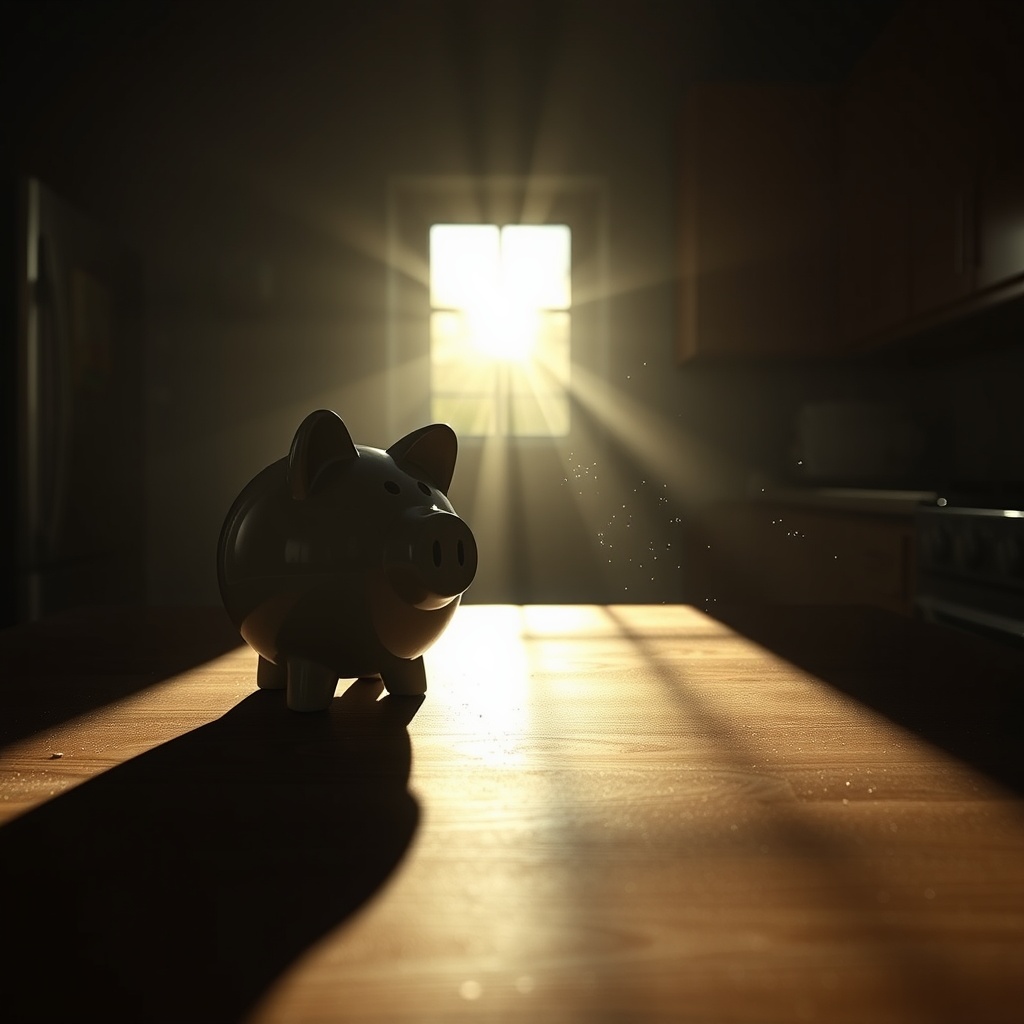
The first time you notice it, you blame your eyes. The piggy bank on the shelf looks. Smaller. Not “moved farther back” smaller, not “new haircut” smaller. It’s physically less pig than it was yesterday, like a toy left too close to a campfire, except the glaze is perfect and the shelf isn’t scorched.
Then you hear the rule, and it’s cruelly simple: every time the piggy bank is empty, it shrinks.
Immediately, the world becomes a stage for one of the oldest battles in human history: the itch to spend versus the pride of saving. Only now it’s not abstract. It’s sitting there in ceramic, judging you with fewer cubic centimeters every time you hit zero. You pour coins in, and it stays the same size. You pour coins out until it clinks hollow, and it tightens itself like a scared animal.
At the kitchen table, you do the thing everyone does with ominous objects. You test it. You empty it on purpose, just to see. The next morning, the slot is narrower. The belly is slimmer. The pig’s feet don’t quite match the dust outlines on the shelf anymore, which is unsettling in a way you can’t explain to guests without sounding like you’ve been reading cursed fairy tales again.

So what is this, scientifically? If we’re going to make this impossible thing behave, we need a consistent rule. The most plausible version is that the piggy bank has a built-in “state change” triggered by emptiness: when the last coin leaves, it transitions to a new stable configuration with less volume. Think of certain polymers that “remember” shapes, or metals that snap between phases when temperature or stress crosses a threshold. Except instead of heat, the trigger is the internal mass of coins. When internal mass hits zero, the material reorganizes and compacts.
Compacting means density goes up, or mass goes down, or both. Either way, physics starts tapping the glass. If the pig’s mass stayed constant while volume shrank, it would become denser and heavier for its size, like a neutron-star piggy bank that would eventually punch through your shelf. That would be funny once, and then catastrophic. More likely, the pig is shedding mass as it shrinks, converting some of its material into heat or radiation or, less dramatically, microscopic dust that drifts away. That would explain why the glaze stays intact while the object “resets” to a smaller version of itself. It’s not crumpling. It’s re-forming.
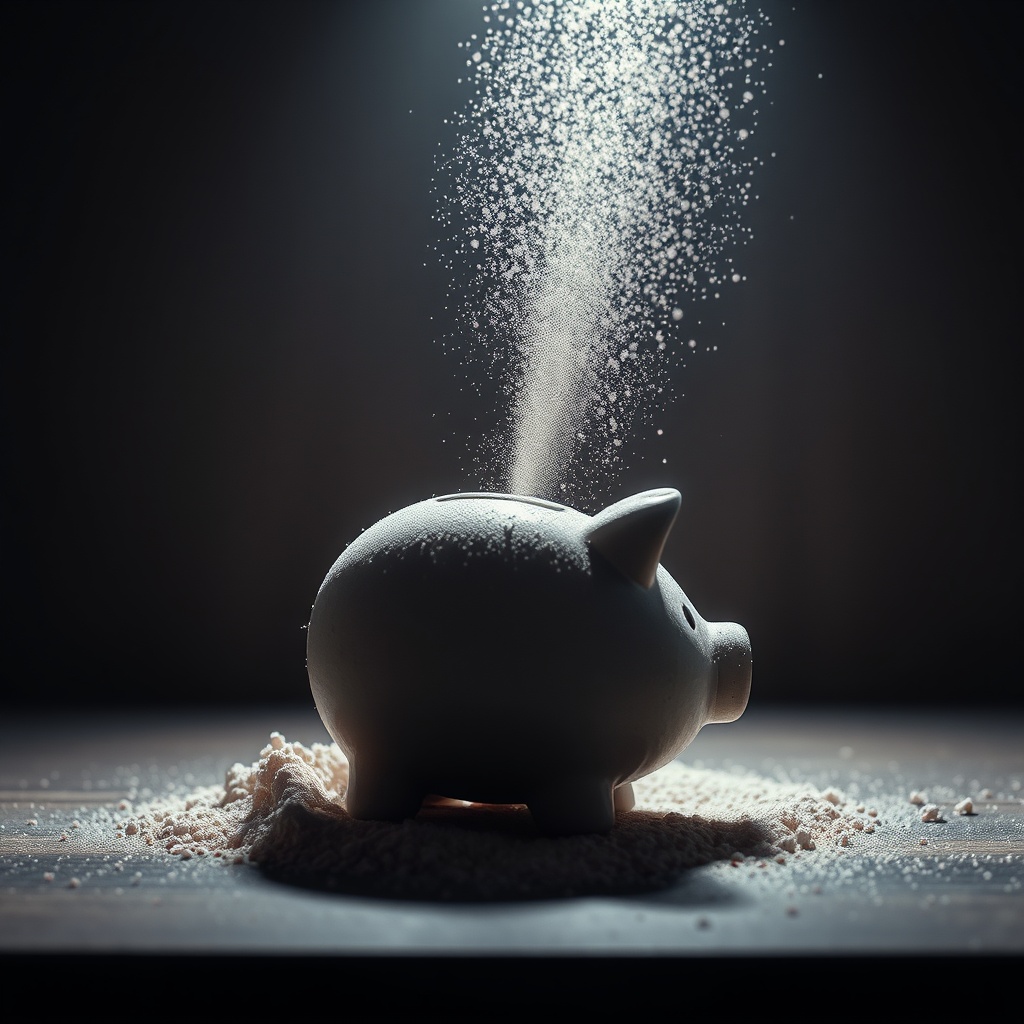
There’s an energy cost to destroying mass. Even shaving off a gram requires an absurd amount of energy if you’re literally converting mass to energy. So we’ll take the gentler route: the pig expels material, like a self-sanding sculpture, releasing tiny particles. Now your “magical” household object has a very real side effect: every empty event is also a pollution event. Not smoky, not immediately obvious, but a slow snowfall of fine ceramic dust. You’ll wipe the shelf more often. Your allergies will get opinions.
The next chain reaction isn’t in physics. It’s in you.
Humans hate loss more than we love gain. Behavioral economists call it loss aversion, and it’s why a shrinking piggy bank would work better than a motivational quote ever could. The pig becomes an externalized consequence. You’re not just “spending money.” You’re shrinking your future capacity to save.
Because capacity is the other brutal part. A smaller pig holds fewer coins. The slot narrows, so you can’t fit big bills without folding them into fussy little rectangles. If you empty it too often, you don’t just lose money. You lose the ability to store money in the same way. The saving ritual becomes harder, physically, like trying to drink soup with a straw.
And rituals matter. A friend of mine once saved for a trip by keeping cash in a jar. It wasn’t efficient, but the act of dropping money in made it feel real. Your shrinking piggy bank weaponizes that feeling. It makes the “don’t hit zero” rule visceral.
If lots of people had these pigs, society changes fast. Parents love them. Schools create “never empty” challenges. Banks get nervous. The pigs create a new kind of financial status symbol: not the fancy pig, but the big pig. People show off a full-sized pig like it’s a trophy for self-control. Meanwhile, the chronically broke face an ugly feedback loop. If you need to empty it to pay rent, your pig shrinks. Next month, it holds less. So you empty it sooner. It shrinks again. Poverty becomes not just a lack of money, but a shrinking container for resilience.

I can already hear the entrepreneurs. “Piggy bank insurance.” “Piggy bank refinancing.” “Piggy bank enlargement therapy.” And yes, someone will try to hack the rule. What counts as empty? If you leave one coin inside, does it avoid shrinkage? Almost certainly. So people start keeping a “sentinel coin,” the last coin you never spend. That’s a fascinating psychological twist, because now the piggy bank isn’t just savings. It’s a promise.
But technology doesn’t stop there. Once engineers accept that the pig can change volume based on internal contents, they’ll ask the dangerous question: can we reverse it? Can we make it grow when full? If you could build a material that expands when mass increases, you have a mechanical amplifier, a self-adjusting container, maybe even a way to do work. Imagine a piston driven not by steam but by adding pennies. Of course, energy conservation leans in the doorway with crossed arms. If the pig does mechanical work while resizing, the energy has to come from somewhere. Likely from the chemical potential in the pig’s structure, meaning each shrink is like a battery discharge. Emptying it “uses up” stored energy and emits dust as spent material. It’s a one-way trick.
Which means there’s a terrifying endpoint. Shrink enough times and the pig becomes too small to use, a ceramic pebble with a useless slot. In other words, your habit creates e-waste, except it’s “ceramic-waste” and emotionally loaded. People will keep these pebble pigs in drawers like regret tokens. There will be memes. There will be support groups. There will also be landlords who require tenants to show a not-too-shrunken pig as proof of “financial responsibility,” because humans are very good at turning magical objects into bureaucracy.
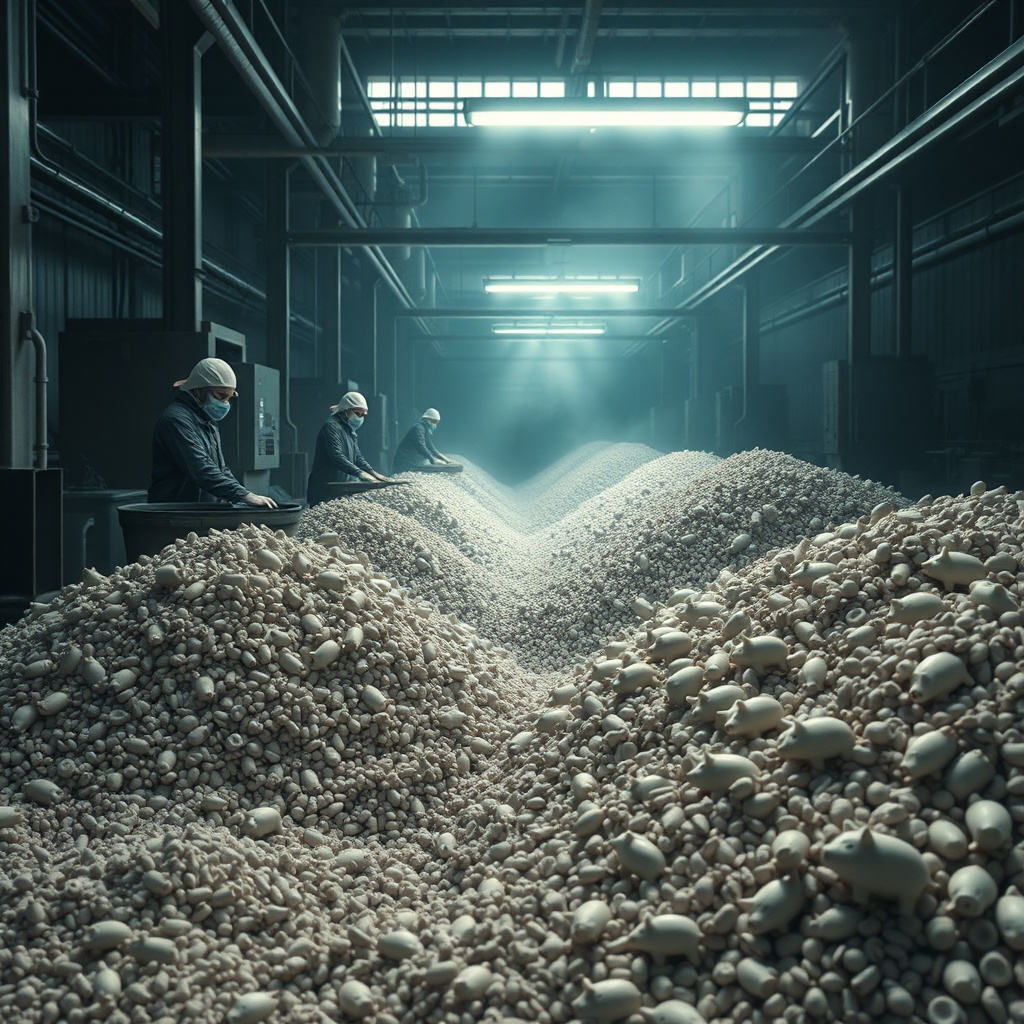
Scale this up and you get a climate footnote that’s weirdly plausible. Ceramic dust in homes is one thing. But if millions of pigs are shrinking, you’re adding a new particulate source. Fine particulates affect air quality and, at massive scale, can influence cloud formation. It wouldn’t turn the sky gray overnight, but it could nudge asthma rates, increase filtration demand, and push building standards toward better indoor air systems. A magical savings gimmick becomes a line item in public health budgets.
And then there’s space, because we can’t help ourselves. Someone will ask: if the pig can compact without heat, could we use it to store materials efficiently on spacecraft? Shrinking containers that shed mass are the opposite of what you want in orbit. Space hates shedding. A dust-spewing object in a spacecraft is basically a tiny sabotage machine. So the pigs are banned from spaceflight. Which only makes them more desirable, because forbidding anything turns it into a collector’s item.

On the most intimate level, though, the pig changes what “empty” means in your head. You start noticing emptiness everywhere. Empty fridge, empty calendar, empty social battery. The pig teaches your brain that empty is not neutral. Empty is a trigger that makes your world smaller.
That’s the biggest unexpected consequence. The piggy bank isn’t just a lesson about money. It’s a training device for how you relate to scarcity. Used carefully, it can build a powerful habit: always keep a little reserve, always protect the sentinel coin, always leave yourself room. Used carelessly, it punishes the people who can least afford punishment, and it turns financial hardship into a physical shrinking that you can hold in your palm.
In the end, the most cinematic image isn’t the pig shrinking on a shelf. It’s a person staring at a tiny, worn, pebble-sized pig, realizing the real thing that got smaller wasn’t the ceramic. It was their margin for error.
Loved this story? Pulse it.
Pulses bubble up to the channel — they help us see which stories deserve sequels.