The Paperclip That Saved the Day

Have you ever noticed how it’s rarely the big, dramatic things that keep a day from falling apart, but the tiny, almost ridiculous ones, like a paperclip that stops a stack of papers from turning into a blizzard?
That’s the emotional problem hiding inside a simple story like “The Paperclip That Saved the Day.” A lot of us are carrying more than we admit, and we’re waiting for a big rescue. The big talk. The big plan. The big breakthrough. Meanwhile, life is happening on random Tuesday afternoons, and the real make-or-break moments are often microscopic. A small gesture. A small system. A small reminder. We don’t always struggle because we’re broken. We struggle because we’re overloaded, and we keep overlooking the little supports that would quietly hold things together.
I think this is why tiny objects and tiny moments hit us emotionally. They bring up a specific kind of tired: the tired of trying to be “fine” through willpower alone. It’s exhausting to feel like you should be able to handle things because, technically, other people do. It’s also lonely when your inner world is messy and everyone else looks like they have neatly stapled packets. Spoiler: most people are held together by paperclips too. They just don’t show them.
Why do people end up feeling this way? A few common reasons show up again and again.
One is accumulated stress. It’s not the single huge thing, it’s the ten small things: unanswered messages, a sinking bank balance, a tense conversation you keep replaying, a body that’s tired, a home that’s slightly chaotic. Your nervous system starts treating everything like evidence that you’re falling behind.
Another is the belief that if help is “small,” it doesn’t count. We discount tiny actions because they don’t create a dramatic before-and-after. We forget that stability is often boring. It’s a glass of water. It’s a five minute reset. It’s a paperclip.
And then there’s perfectionism, which is basically the urge to throw the whole stack away because you can’t make it flawless. Perfectionism doesn’t always feel like arrogance. Sometimes it feels like fear. “If I can’t do it properly, I can’t do it at all.” That’s how papers end up on the floor.
The patterns that keep people stuck are usually sneaky, because they look logical from the inside.
Pattern one is all-or-nothing fixing. You wait until you have energy, time, and clarity all at once. You tell yourself you’ll start when you can do it “right.” But the day-to-day doesn’t need “right.” It needs “enough to keep the pages together.”
Pattern two is self-talk that turns fatigue into shame. Instead of “I’m overwhelmed,” it becomes “I’m failing.” Instead of “I need support,” it becomes “I shouldn’t need support.” Shame is heavy. It makes small solutions feel pointless, because it wants a grand redemption arc, not a humble paperclip.
Pattern three is avoidance that masquerades as preparation. You read tips, save videos, make lists, and wait for the feeling of readiness. Meanwhile the actual stack gets looser.

So what helps? The point of a paperclip isn’t magic. It’s leverage. It’s a tiny tool that turns chaos into “manageable enough.” Here are practical steps, gentle but real, that you can start today.
First, name your stack. Not your whole life, just the stack. Ask, “What is the pile of loose papers in my brain right now?” Pick one category. Work stress. A relationship tension. Household clutter. Money worry. Health habits. If you name everything, you’ll feel like you’re drowning. If you name one stack, you can clip it.
Reflection question: “If my overwhelm had a title, what would it be this week?”
Second, choose one paperclip action. Make it so small it’s almost funny. A friend of mine once told me she started her “mental health era” by putting a glass by the sink so drinking water didn’t require a decision. Not inspirational. Effective.
Paperclip actions might look like this: Put tomorrow’s clothes in one spot. Reply to one message with, “I saw this, I’ll respond tomorrow.” Set a five minute timer and clear one surface. Write the next step on a sticky note, not the full plan. Move your charger to where you actually sit.
Simple action: Pick one paperclip action that takes under two minutes. Do it before you read the next paragraph. Yes, I’m that person. Kindly, with love.
Third, practice “good enough containment.” When life feels messy, we try to solve it by fixing everything. Containment is different. It’s saying, “I can’t resolve this today, but I can keep it from spreading.”
Containment examples: Put all loose mail into one tray. Not sorted, just contained. Make a single note titled “Things I’m carrying,” and dump thoughts into it. Create a one sentence boundary: “I can’t take that on this week.” Choose one repeat meal for the next two days.
Reflection question: “What would containment look like for me, if I stopped demanding closure?”
Fourth, build a tiny support loop. A paperclip works because it connects pieces. Most of us isolate when we’re stressed, then wonder why everything feels heavier. Support doesn’t have to be a big heart-to-heart. It can be a small tether.
Support loop ideas: Text someone, “Could you check in with me on Friday?” Ask a coworker, “Can we clarify the top priority?” Tell a friend, “I don’t need solutions, I just need a little witness.” If you’re feeling persistently low, panicky, or stuck in hopeless thoughts, consider reaching out to a therapist, counselor, or a trusted professional. If you ever feel at risk of harming yourself or feel unsafe, seek immediate help through local emergency services or a crisis line in your country. You deserve real support, urgently and without having to earn it.

Fifth, watch for the “snap back” moment. This is the moment after a small win when your brain says, “That’s it? Pathetic.” That voice is not truth. It’s an old strategy that confuses intensity with effectiveness. The real question isn’t whether the step was impressive. It’s whether it made your life 5 percent easier.
Try this reframe: “Small is not shallow. Small is sustainable.”
Sixth, create a paperclip ritual for bad days. Bad days are predictable. We act like they’re surprising, but they’re not. A ritual reduces decision fatigue and gives you a script.
A simple ritual: Drink water. Open a window or step outside for two minutes. Pick one surface and reset it. Send one honest message: “Today is a slower day for me.” Do one body-based reset: shower, stretch, or a short walk.
Reflection question: “When I’m struggling, what is the first kind thing I can do that doesn’t depend on motivation?”
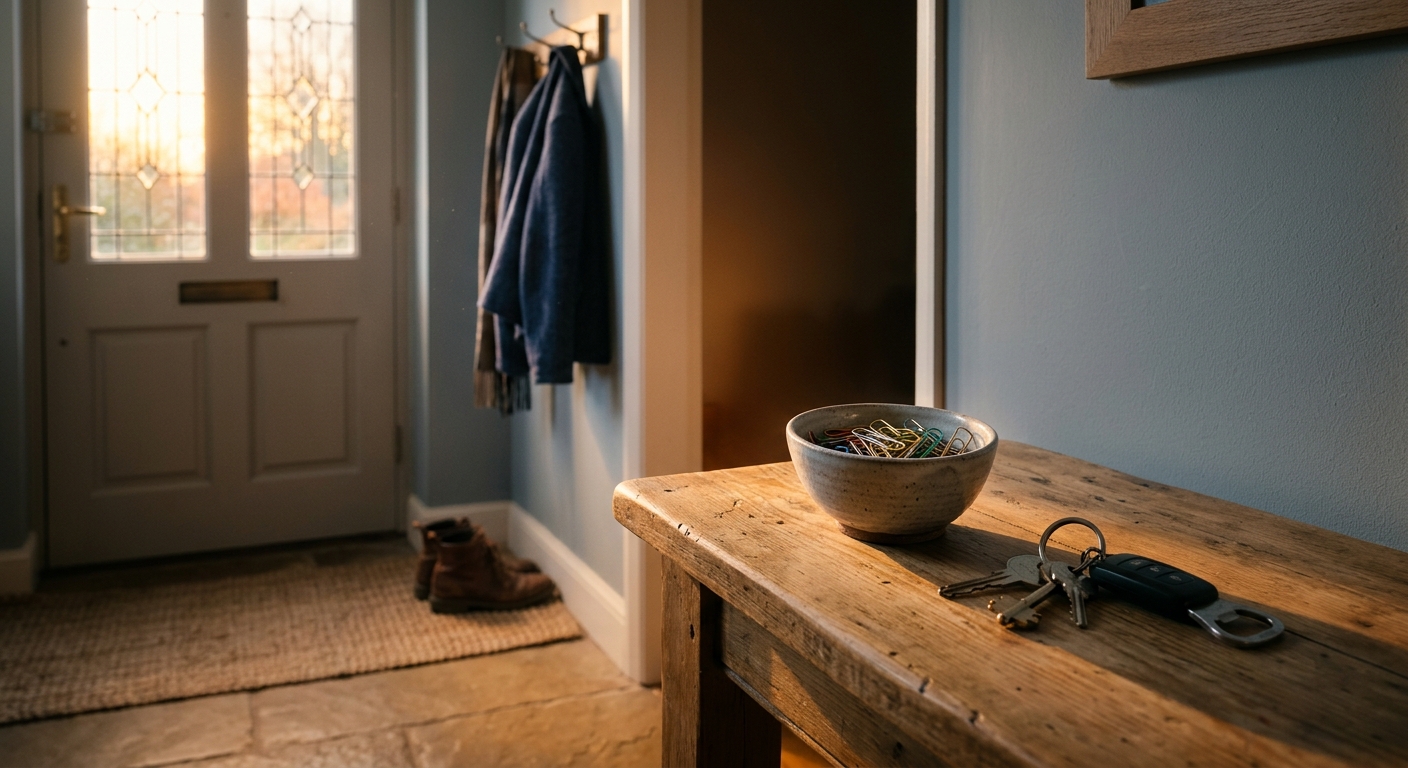
The quiet truth is that many “saved the day” moments don’t look like saving at all. They look like prevention. They look like not spiraling. They look like pausing before you send the reactive text. They look like putting a bill in a folder. They look like eating something with protein instead of running on vibes and caffeine. Very heroic. Very glamorous. Someone call the awards committee.
If you take only one thing from this, let it be this: you don’t need to earn small supports by first proving you’re strong. Small supports are how you become steadier. The paperclip doesn’t ask the papers to deserve it. It just holds.
Try this today: pick one loose part of your life, and clip it. Not forever. Not perfectly. Just enough to keep the pages together until you have more time, more sleep, more help, more you.
And if you can’t find a paperclip right now, borrow one. That’s what other people are for.
Loved this story? Pulse it.
Pulses bubble up to the channel — they help us see which stories deserve sequels.