
The Feather That Refused to Fall

Have you ever noticed how the last bit of hope can feel almost annoying. Like, “Really. We’re doing this again.” You’re tired. You’ve tried. You’ve fallen. And yet some stubborn feather inside you refuses to drop.
That’s the emotional problem at the center of The Feather That Refused to Fall. Not just struggling, but struggling while also carrying the strange pressure to keep believing. The kind of pressure that comes when you want to be resilient, but you’re also human, and humans get worn down. People don’t talk enough about that middle place: you’re not giving up, but you’re not okay either. You’re functioning. You’re showing up. You’re holding it together with a grip that cramps.
Resilience gets framed like a highlight reel. You rise, you conquer, you glow. Real resilience is quieter. It’s you making cereal when you don’t care. It’s sending the email you’ve been avoiding. It’s getting through a day you didn’t want to have. It’s also messy, because part of you might be grieving the fact that you even have to be strong right now.

Why do people end up feeling this way. Usually it’s not one dramatic event. It’s accumulation. Tiny disappointments stacked like plates in the sink. A long stretch of uncertainty. A relationship that kept asking you to shrink. A job that slowly trained your nervous system to stay on alert. Or simply the experience of trying hard and not seeing results, over and over, until your hope starts to feel naive.
There’s also a sneaky belief that often fuels the exhaustion: “If I rest, I’ll fall apart.” So you keep going, not because you’re energized, but because stopping feels dangerous. I once caught myself cleaning my kitchen at midnight, not because I cared about the counter, but because stillness meant feelings might show up. The sponge was basically emotional avoidance with lemon scent.
When hope refuses to fall, it can create a confusing mix of emotions. You may feel proud of yourself and resentful at the same time. You may feel grateful for your life and also deeply tired of it. You may feel like you “should” be past this by now, which adds a layer of shame to an already heavy load.

A few common patterns tend to keep people stuck in that place.
One is the all-or-nothing definition of progress. If it’s not a big win, it “doesn’t count.” If you don’t feel confident, you assume you’re failing. But most growth is incremental and unglamorous. The feather doesn’t become a bird overnight. It just refuses to stop being what it is.
Another pattern is treating your emotions like a verdict. If you feel discouraged, you conclude the situation is hopeless. If you feel anxious, you conclude you’re not capable. Feelings are real, but they’re not always accurate narrators. Sometimes they’re just your mind’s weather report. Rain doesn’t mean the house is broken.
A third pattern is isolating. When you’re tired, you conserve energy by pulling away. That makes sense. But isolation can turn into a feedback loop where your brain starts insisting, “It’s just you. You’re the only one who can’t handle this.” That story feels convincing at 2:00 a.m. It’s also usually wrong.
And finally, there’s the pattern of using harshness as motivation. The inner voice that says, “Come on. Toughen up. Stop being dramatic.” It may have helped you survive earlier seasons. But long-term, it creates chronic stress and emotional numbness. You can’t bully yourself into hope. You can only build conditions where hope can breathe.

So what actually helps. Not in a quote-on-a-poster way, but in a Tuesday-afternoon way.
Start by changing the job description of hope. Hope doesn’t have to mean, “Everything will turn out perfectly.” Sometimes hope is simply, “I can take one more step.” Or, “I can ask for help.” Or, “This feeling won’t last forever.” If your hope feels too big to hold, shrink it until it fits in your pocket.
Try this simple reframe today: instead of asking, “Do I feel motivated.” ask, “What would be a kind next move.” Motivation is moody. Kindness is steadier.
Next, separate pain from prophecy. Write down the sentence your brain keeps repeating. Something like, “I’m always behind,” or, “Nothing works out,” or, “I’ll never get it together.” Then add three words at the beginning: “I’m having the thought that…” It sounds small, but it creates space. Now it’s not a truth carved into stone. It’s a mental event passing through.
Then build a “two-minute bridge.” When you’re overwhelmed, the goal is not to fix your life. The goal is to connect this moment to the next moment. Set a timer for two minutes and do one tiny stabilizing action: drink water, open the curtains, stand outside for ten breaths, wash your face, put one dish away, send one message that says, “Can you check in with me later.” The feather stays afloat one breath at a time.
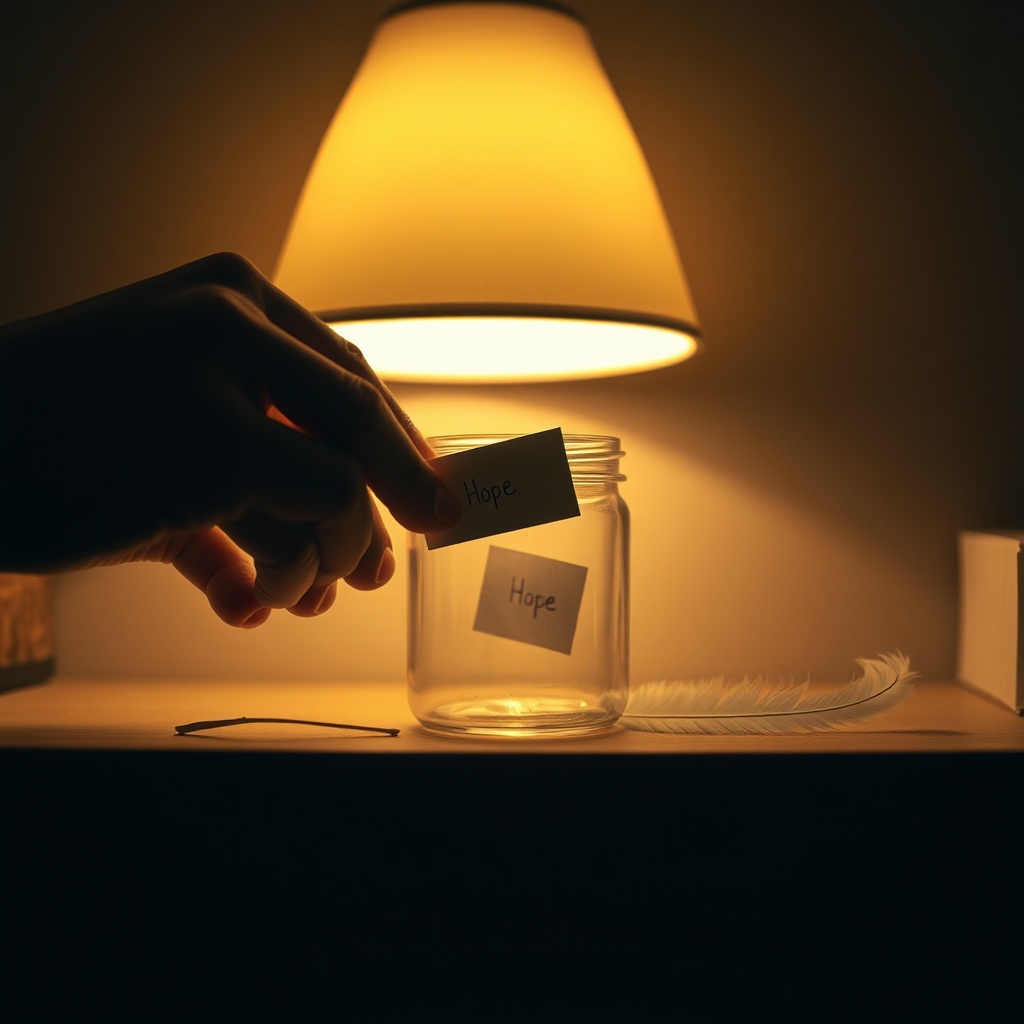
A practical tool that helps many people is making a resilience menu. Not a schedule, a menu. Schedules can feel like demands. Menus feel like options.
Write three categories:
Comfort. Things that soothe you without wrecking you. A shower. A warm drink. A familiar show. A blanket. Music. A slow walk.
Competence. Things that remind you you can do hard things. Paying one bill. Clearing one corner of a room. Replying to one email. Cooking something simple.
Connection. A voice note to a friend. Sitting near people at a cafe. Petting a dog. Therapy or a support group if you have access. Even being honest with one person can loosen the knot.
When you feel low, pick one from any category. You’re not solving everything. You’re keeping yourself in the game.
Also, check the standards you’re using to judge yourself. A lot of people are living with invisible burdens while comparing themselves to an imaginary person who sleeps eight hours, has perfect boundaries, never procrastinates, and presumably has a personal assistant. If you’re measuring yourself with a ruler designed for someone else’s life, you’ll always come up short.

Here are a few reflection questions that can shift something gently.
What has my “refused to fall” feather been protecting in me. A dream. A value. My dignity. A promise to myself.
Where am I trying to earn rest instead of allowing it. What do I fear would happen if I stopped pushing for one day.
What does my discouragement want me to know. Is it asking for support. Simplicity. A boundary. A different plan.
If a close friend told me they felt exactly what I’m feeling, what would I say to them. What tone would I use. Can I offer myself even ten percent of that.
And one action question: What is the smallest step that would make tomorrow one percent easier.
If you want a simple starting plan for today, here it is. Pick one two-minute bridge action. Send one connection message. Then choose one competence task so small it feels almost silly. The goal is not to prove you’re unstoppable. The goal is to show your nervous system, “We’re safe enough to take a step.”
If your thoughts ever shift into wanting to harm yourself, or you feel like you might not be safe, please treat that as a sign to get immediate support. Reach out to a trusted person right now, or contact local emergency services. If you’re in the U.S., you can call or text 988 for the Suicide and Crisis Lifeline. You don’t have to carry that alone, and getting help is not failure, it’s care.
That feather that refused to fall. It isn’t asking you to perform heroism. It’s asking you to stay in relationship with yourself. To keep choosing the next kind step, even if it’s small, even if no one applauds. Hope doesn’t always look like soaring. Sometimes it looks like hovering, stubbornly, quietly, until the air changes.
Loved this story? Pulse it.
Pulses bubble up to the channel — they help us see which stories deserve sequels.