The Snowman’s Last Winter: A Story of Hope
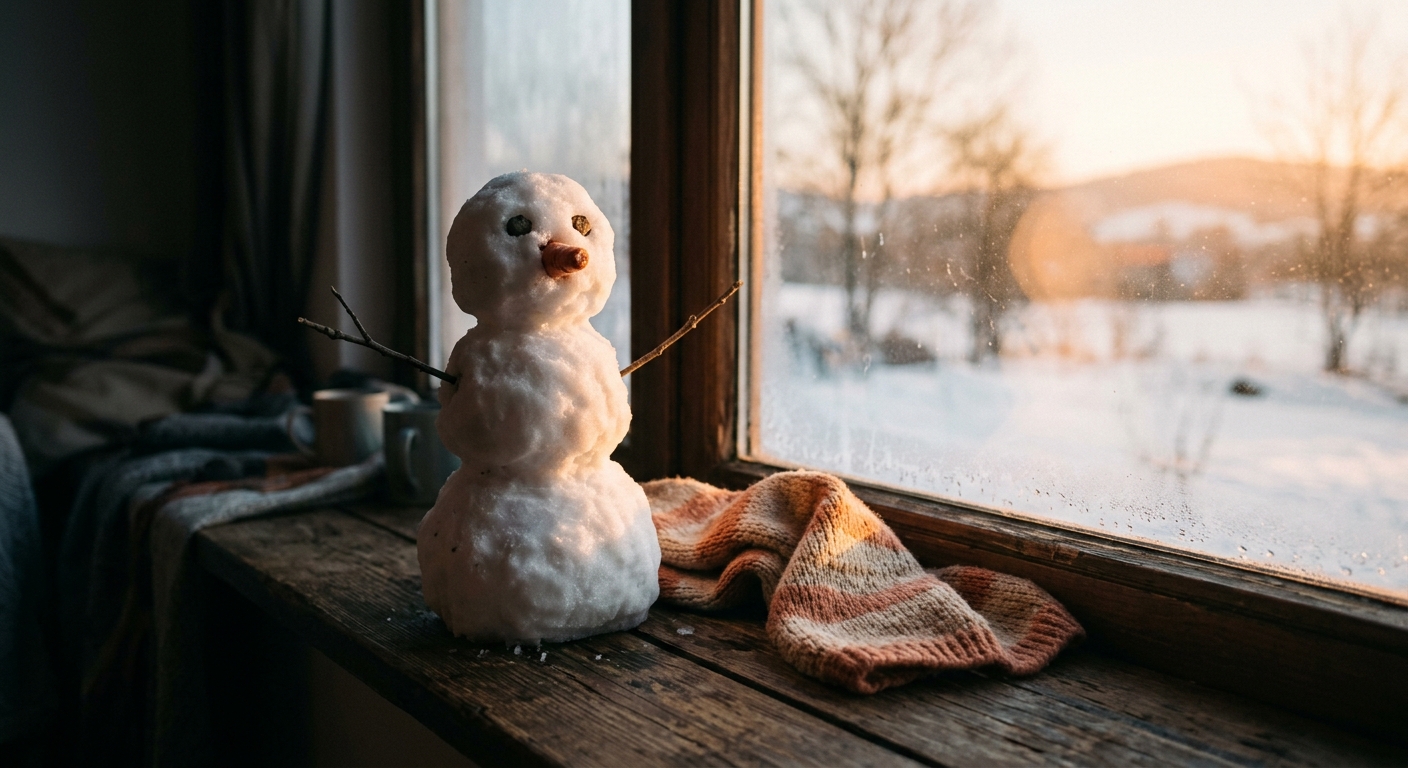
Have you ever watched something you cared about slowly disappear, and felt weirdly guilty that you couldn’t stop it. A melting snowman is a simple thing, sure. But it hits a nerve. It’s the picture of a truth we spend a lot of energy avoiding: some seasons end, even when we loved them, even when we built something beautiful inside them.
The emotional problem underneath “The Snowman’s Last Winter” is often this. We’re grieving a change we didn’t choose, or a version of life that’s slipping away, and we’re trying to force ourselves to feel “positive” about it before we’re ready. Hope, in that moment, can feel like betrayal. Like if you move forward, you’re admitting the loss didn’t matter. So you get stuck in a painful middle place. Not fully letting go, not fully rebuilding. Just watching the drip, drip, drip of time and telling yourself you should be handling it better.
People end up here for so many ordinary reasons. A relationship ends, and the “future you rehearsed” evaporates. A job changes, and your identity wobbles. Someone you love gets sick, or you move cities, or you realize the dream you chased isn’t actually your dream anymore. Sometimes it’s not even one big event. It’s a slow thaw. The body changes. Friendships shift. Your energy, attention, or tolerance for chaos isn’t what it used to be. And no one hands you a script for how to mourn a life you’re still living.
There’s also a quieter reason this hurts: many of us learned that sadness is a problem to solve, not a feeling to carry. So we rush to “new beginnings” as a way to skip the messy middle. Or we cling to the past because at least it’s familiar. I once caught myself re-reading old messages like they were a museum exhibit, as if memory could reverse time. It can’t. It can only remind you what mattered.

The patterns that keep people stuck tend to look like this.
First, bargaining with reality. “If I just try harder, if I just fix myself, if I just say the right thing, maybe I can keep this from changing.” This is understandable. Your brain is trying to protect you. But bargaining often turns into self-blame, and self-blame is exhausting. It drains the energy you need to actually adapt.
Second, all-or-nothing thinking. “If this ended, it means it was pointless.” Or, “If I feel sad, I must be doing life wrong.” But endings don’t cancel meaning. Snowmen are not failures because spring arrives. (If they were, winter would be the most passive-aggressive season of all.)
Third, avoidance disguised as productivity. You stay busy, you reorganize the closet, you take on extra tasks, you scroll, you plan. Anything to avoid sitting with the truth that something is changing. The issue isn’t that productivity is bad. It’s that it can become a lid on your feelings. And lids eventually pop.
Fourth, waiting to feel ready. Many people believe hope arrives like a mood: you wake up and it’s there, bright and steady. But hope is more often a behavior. It’s the small decision to do the next kind thing, even while you’re uncertain.

So what helps. Not a forced smile. Not pretending. A gentle transition from “I can’t stop this” to “I can choose how I meet it.”
Start with naming the season you’re in. Out loud, if possible. “This is an ending season.” Or, “This is a thaw.” It sounds simple, but naming reduces the internal argument. You stop spending so much energy debating whether you’re allowed to feel what you feel.
Then practice what I call two-handed truth. Hold both things at once: “This hurts, and I can keep going.” “I miss what was, and I’m open to what’s next.” Hope doesn’t require you to edit your grief. It just asks you not to let grief be the only voice in the room.
A practical step you can take today is a five-minute goodbye ritual. Choose something small and symbolic. Light a candle and sit quietly. Step outside and notice the air. Write a short note that begins with: “What I’m releasing is…” and “What I’m keeping is…” You’re not erasing anything. You’re sorting. You’re letting your nervous system feel the shift, safely.

If you tend to get stuck in self-blame, try this reframe: change isn’t proof you failed. It’s proof you’re alive. Ask yourself, “What did this season teach me about what I value.” Not what you did wrong. What you learned. Values are portable. They move with you, even when circumstances don’t.
If you tend to numb out, use a “tiny contact” practice. Once a day, take 30 seconds to feel one true thing in your body without fixing it. Tight throat. Heavy chest. Warm cheeks. Then add a soft sentence: “This is here, and I’m here.” That’s it. Small contact builds tolerance. Tolerance builds resilience.
If you tend to cling, try “one step toward.” Pick one action that honors the future without disrespecting the past. Update a resume. Text a friend. Put your walking shoes by the door. Clean one drawer. Not the whole house. We’re building proof that you can move, not punishing you with a makeover montage.
And if your hope feels very far away, borrow it. Borrow it from routine. Borrow it from a therapist, coach, clergy member, or trusted friend. Borrow it from a story you’ve already lived, the time you didn’t think you’d get through something and you did. If your sadness feels intense, persistent, or you’re having thoughts of harming yourself, you deserve immediate support. Reach out to a local emergency number or crisis line in your country, or tell someone you trust right now. Getting help is not “being dramatic.” It’s being alive on purpose.
Here are a few reflection questions you can sit with gently. No perfect answers required.
What am I trying to preserve, and what am I afraid will happen if I let it change.
What part of this ending deserves to be honored, not rushed past.
What would “hope” look like if it didn’t feel like happiness, but like steadiness.
What is one small thing I can do this week that my future self will quietly appreciate.
Who makes me feel more like myself, even in transition.
And here are simple actions you can start today, even if you’re tired.
Choose one “anchor” habit for the next seven days: a morning glass of water, a ten-minute walk, making your bed, stepping outside and taking three slow breaths. Keep it ridiculously small. The point is reliability, not intensity.
Do a two-sentence journal check-in each night: “Today felt like…” and “Tomorrow I will…” The second sentence should be kind and doable.
Create a “warming list” of five things that soften you back into yourself. A certain song. A shower. Calling your cousin. Soup. Sitting near a window. When you’re melting inside, warmth is medicine in the ordinary sense, not the medical one.
The snowman’s last winter is sad, yes. But it’s also evidence that something was built with care, even temporarily. And that matters. Hope isn’t denying that the snowman melts. Hope is realizing your hands still exist after the snow is gone. You can build again, differently, maybe smaller at first. You can carry forward what was true. You can step into the next season without rushing, without pretending, and without abandoning yourself.
Loved this story? Pulse it.
Pulses bubble up to the channel — they help us see which stories deserve sequels.